12 High-Protein Dinner Ideas for Busy Weeknights
By Chef John | Easy Recipes & Smart Cooking Hacks
When 5 PM Hits Like a Wall
It is 5:15 on a Tuesday. The kids are home, someone is already complaining about being hungry, you just got off a work call, and you are staring into a refrigerator that feels like it is judging you. Sound familiar?
This is the reality for millions of American families, and it is exactly why high-protein dinner ideas that actually work under pressure matter so much. Not Pinterest-perfect recipes that take ninety minutes. Real food. Fast food — the good kind.
I have mapped out, tested, and timed dozens of quick-prep combinations to isolate the exact meals that deliver maximum protein with minimal clean-up. I cooked these on weeknights with the clock running, with kids underfoot, and with nothing but a decent skillet, a sheet pan, and whatever was left in the fridge by Thursday.
What I found surprised me. The best weeknight protein meals are not complicated. They follow simple patterns — hot pan, right fat, correct internal temp, two minutes of rest. Master those patterns and you can turn almost any lean protein into a dinner your family will actually finish.
These 12 ideas are the ones that earned a permanent spot in my weeknight rotation.
The Science of Why Protein Keeps Your Family Full
Here is something worth understanding before we get into the recipes, because once you know this, it changes how you think about building weeknight meals.
When you eat protein — whether it is chicken breast, ground beef, eggs, or Greek yogurt — your gut releases a hormone called peptide YY. This hormone travels to your brain and essentially signals: “We are good. Stop eating.” Simultaneously, protein helps stabilize leptin, the hormone responsible for long-term satiety regulation. Fat and carbohydrates trigger hunger cycles that peak and crash. Protein creates a slower, steadier fullness curve.
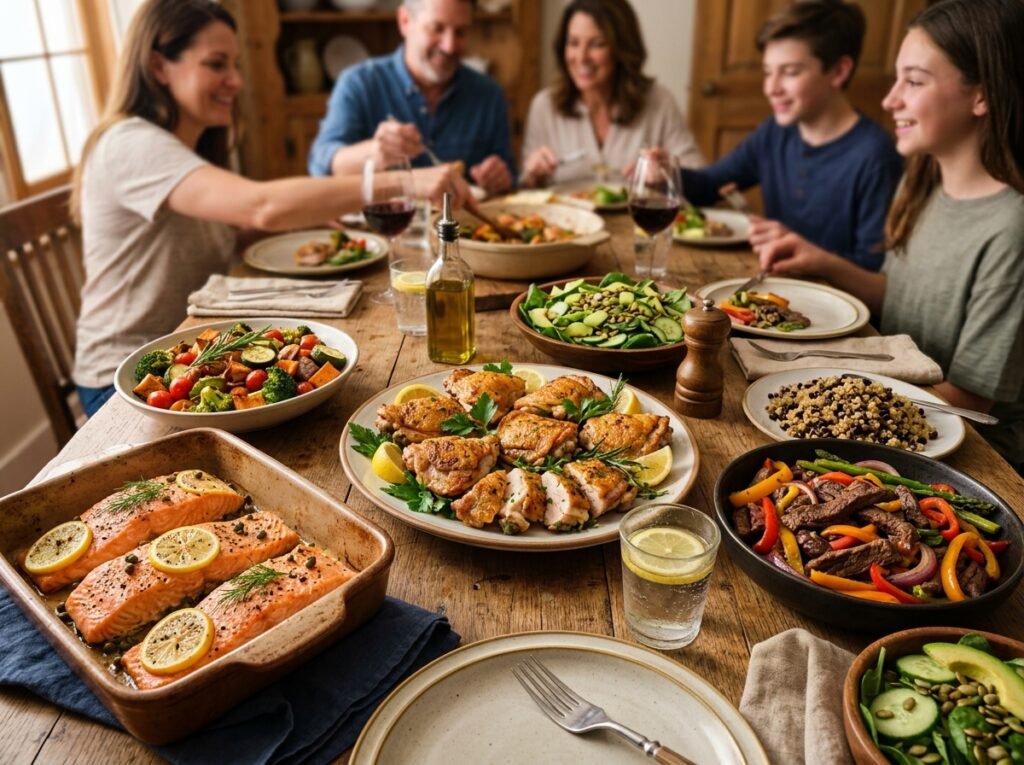
In simple terms: a high-protein dinner does not just fill your family up right now. It keeps them full through homework, through bath time, through that hour before bed when everyone suddenly decides they are starving again.
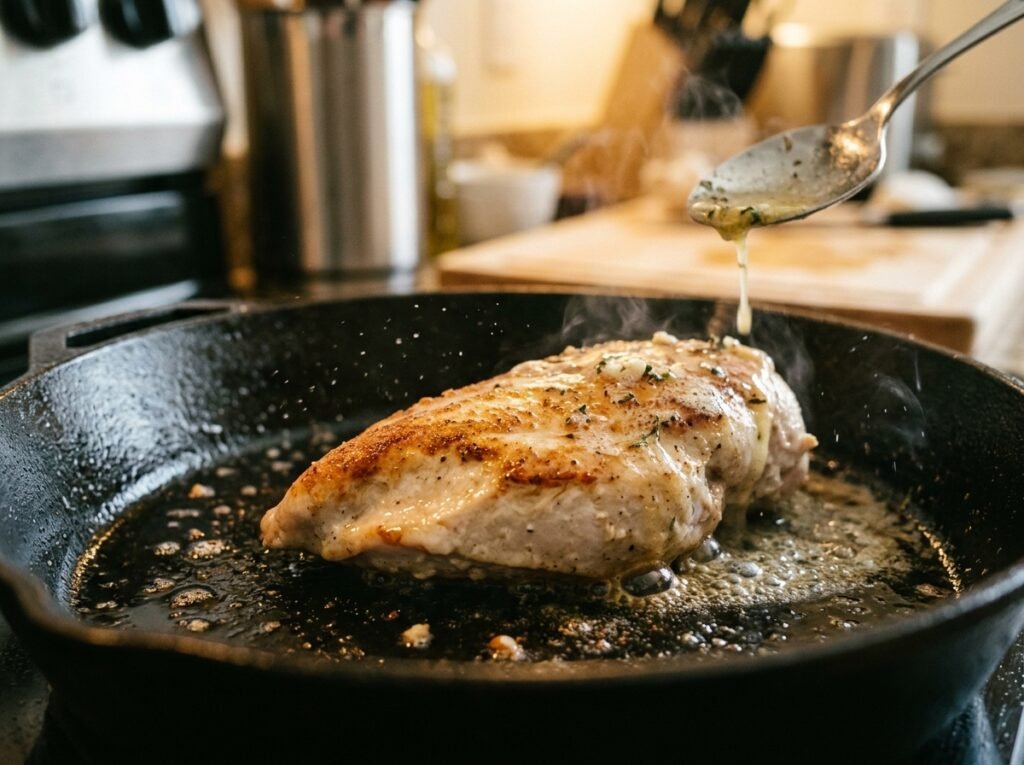
Now, the cooking method matters too. When you apply high, direct heat to a lean protein — flash-searing in a cast iron skillet or rapid air-frying at 400°F / 204°C — something beautiful happens on the surface. The Maillard reaction kicks in, creating that golden crust that locks surface moisture and builds flavor simultaneously.
Amino Acids + Reducing Sugars→Browned Crust + Flavor Compounds
That crust is not just delicious. It creates a physical barrier that slows moisture loss during the final minutes of cooking, which is why a properly seared chicken thigh stays juicier than one that was cooked low and slow in a dry pan.
The lesson here: hot pan, dry protein surface, do not move it for ninety seconds. That patience is where the flavor lives.
Pro Buying Guide — What to Stock for Weeknight Wins
The difference between a stressful weeknight and a smooth one often happens at the grocery store, not in the kitchen. Here is what I keep on hand, and where I get it.
At Walmart, the Tyson individually frozen chicken breasts are a genuine weeknight lifesaver. Each breast is separately wrapped, which means you can pull exactly what you need without thawing a whole bag. The Great Value 93% lean ground beef is well-priced and performs reliably for quick skillet meals. Walmart also stocks Fairlife high-protein milk, which doubles beautifully as a post-dinner protein boost for kids.
At Trader Joe’s, the pre-marinated proteins in the refrigerated section — particularly their lemon pepper chicken thighs and teriyaki beef strips — can cut your weeknight prep time nearly in half. Their pre-washed organic baby spinach and shredded Brussels sprouts make genuinely effortless sides.
At Whole Foods, look for Wild Planet canned wild salmon and sardines. These are not second-best proteins. They are legitimate high-protein powerhouses that require zero cooking time. The 365 brand boneless skinless chicken thighs are also consistently well-trimmed and competitively priced.
At Kroger and Target, Good Culture cottage cheese is increasingly available and worth stocking. Two percent fat, clean ingredients, 14 grams of protein per half cup, and it folds into dozens of quick recipes. Simple Mills almond flour crackers alongside it make a respectable five-minute protein plate on the nights when you truly have nothing left.
For your pantry backbone: Bob’s Red Mill lentils and chickpeas, Kirkland canned chicken breast from Costco, a quality extra virgin olive oil, and a jar of tahini. These are the items that turn a half-empty refrigerator into a real dinner.
🥩 The 12 High-Protein Dinner Ideas
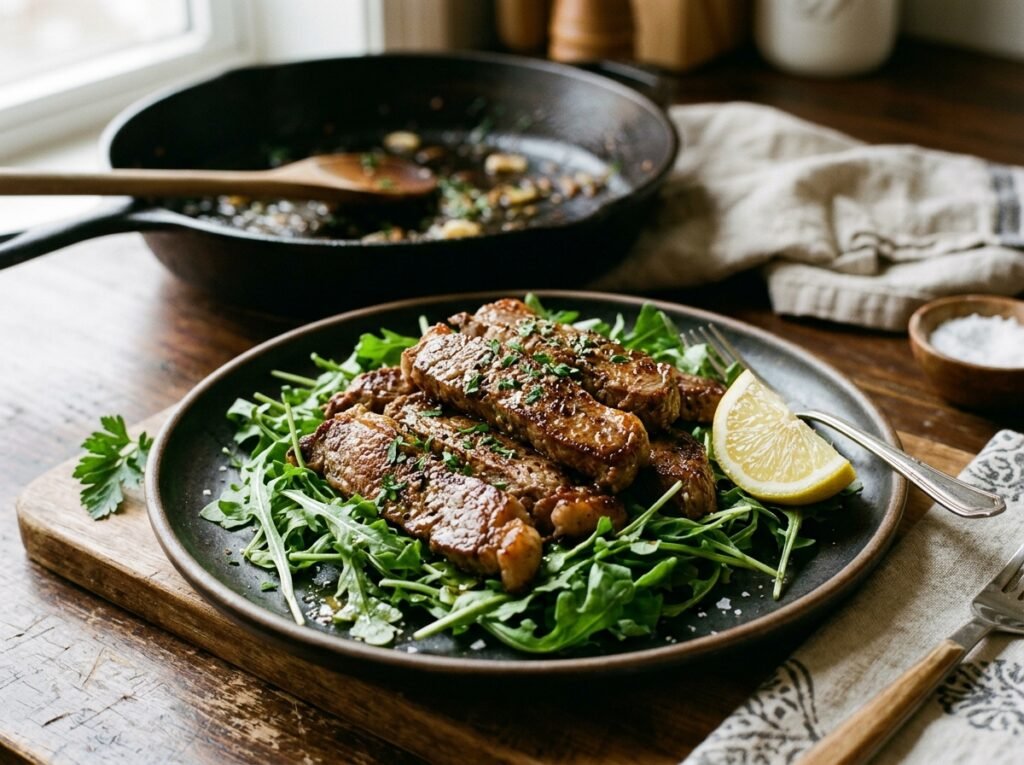
1. 15-Minute Garlic Butter Beef Strips
Slice a 1 lb / 450g sirloin steak into thin strips, season generously with salt, pepper, and garlic powder, then hit a screaming-hot cast iron pan with a tablespoon of Kerrygold butter. Cook in a single layer for sixty to ninety seconds per side — no more.
Serve over pre-washed arugula or alongside microwave-ready frozen green beans. Estimated protein per serving: 38 grams.
Science Tip: Slicing the beef thin against the grain shortens the muscle fibers mechanically before cooking, making even a budget cut of sirloin feel tender and restaurant-quality.
2. Sheet Pan Chicken Thighs with Roasted Broccoli
Bone-in chicken thighs go into a 425°F / 218°C oven on a foil-lined sheet pan — skin side up, no flipping required. Broccoli florets tossed in olive oil go on the same pan around the twenty-minute mark. Total active time: maybe eight minutes.
Bone-in thighs have higher fat content than breasts, which means they are extraordinarily forgiving if you run five minutes over. They will not dry out. Estimated protein per serving: 34 grams.
Science Tip: The bone conducts heat inward more slowly than the surrounding meat, which creates a gentler, more even cook and dramatically reduces the risk of drying out the center.
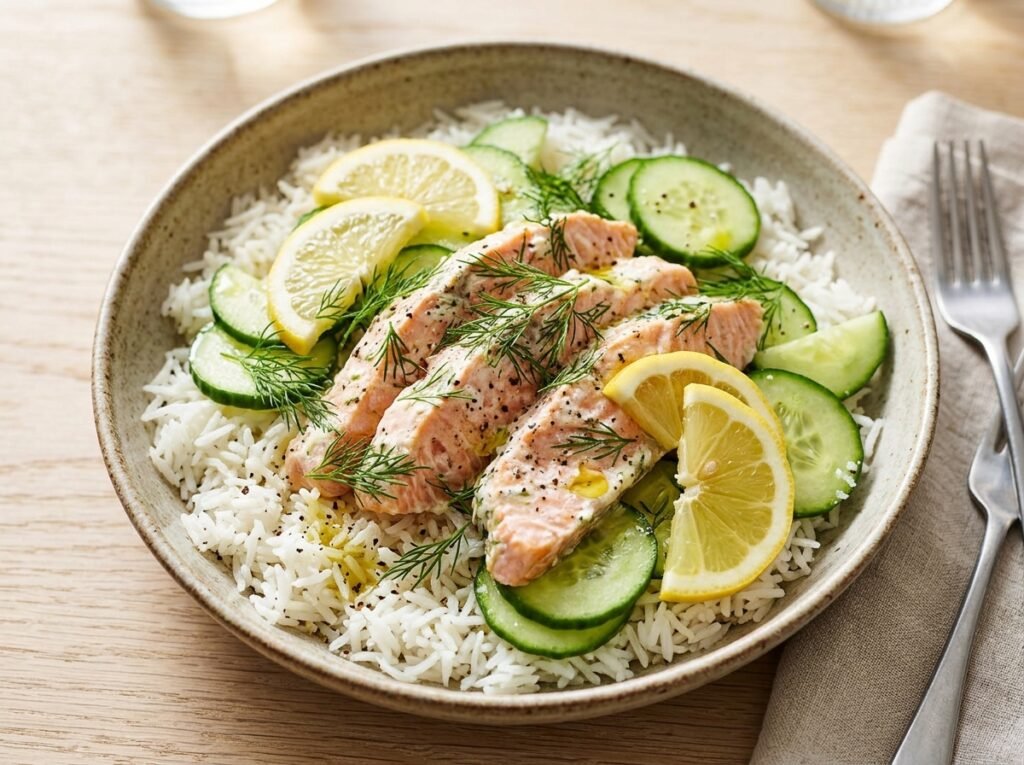
3. Greek Yogurt Marinated Salmon Bowls
Stir together full-fat plain Greek yogurt, lemon zest, a clove of minced garlic, and a pinch of cumin. Spread generously over 6 oz / 170g salmon fillets and broil on high for eight to ten minutes. Serve over pre-cooked microwaveable brown rice packets with sliced cucumber.
This is one of those meals that sounds fancier than the effort required. Estimated protein per serving: 42 grams.
Science Tip: The lactic acid in Greek yogurt gently denatures the surface proteins of the salmon, creating a more tender texture and helping the yogurt coating caramelize beautifully under the broiler.
4. Egg and Turkey Scramble Skillet
This is the meal I reach for on the nights when I have exactly nothing planned. Brown 1/2 lb / 225g lean ground turkey in a non-stick skillet, drain any excess liquid, then pour in four beaten eggs. Fold, do not stir aggressively. Add a handful of baby spinach at the last moment and let it wilt.
Season with Frank’s RedHot or your family’s preferred hot sauce, and serve with whole grain toast. Estimated protein per serving: 36 grams.
Science Tip: Folding rather than scrambling creates larger, pillowy egg curds that retain more moisture. Aggressive stirring breaks the protein network into small, dry pieces — which is why diner eggs so often disappoint.
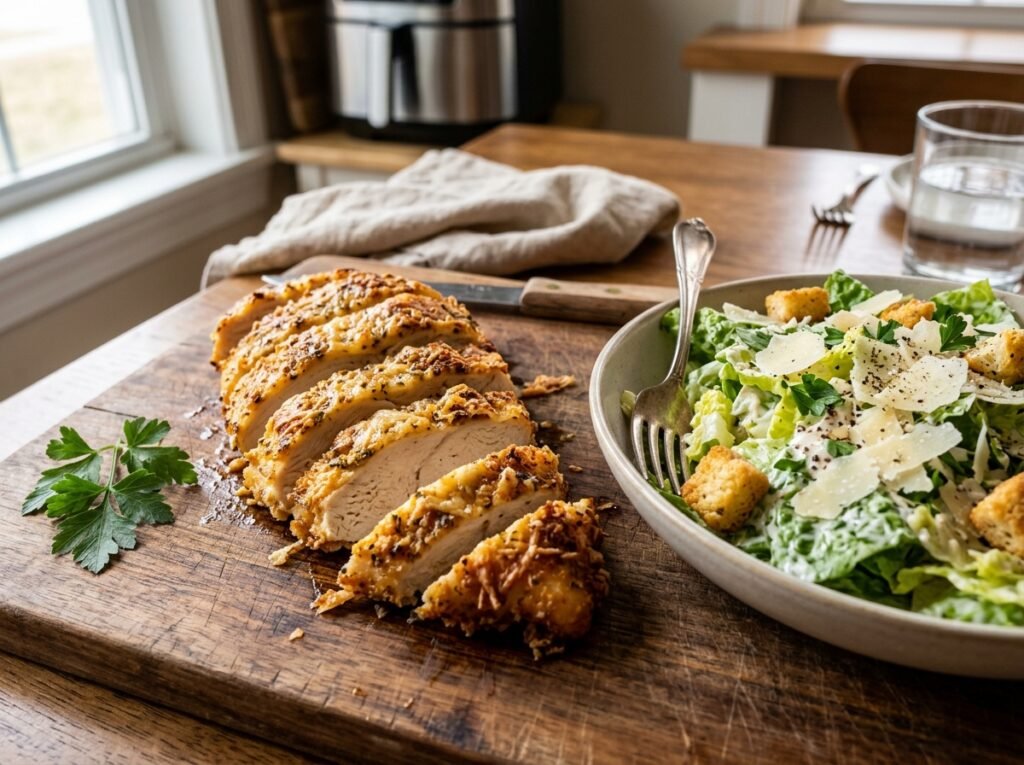
5. Air Fryer Parmesan Crusted Chicken Breast
Press 1/2 cup / 50g grated Parmesan into pounded-thin chicken breasts, dust with garlic powder and Italian seasoning, and air fry at 390°F / 199°C for twelve to fourteen minutes. The crust goes golden and genuinely crunchy without a drop of extra oil.
Pair with a bagged Caesar salad kit from Trader Joe’s for a dinner that looks assembled but required almost nothing. Estimated protein per serving: 46 grams.
Science Tip: Pounding the breast to even thickness — about 3/4 inch / 2cm — is the single most reliable way to ensure uniform doneness without overcooking the thin end before the thick end catches up.
6. 20-Minute Turkey Taco Bowls
Brown 1 lb / 450g lean ground turkey with a packet of taco seasoning and a splash of water. Spoon over pre-cooked microwaveable rice or cauliflower rice, top with black beans, shredded cheddar, and a dollop of Good Culture cottage cheese in place of sour cream.
The cottage cheese swap alone adds another 7 grams of protein per serving while cutting saturated fat. Estimated protein per serving: 40 grams.
Science Tip: Ground turkey releases more moisture than beef during browning. Letting that liquid evaporate completely before seasoning creates a better texture — more crumble, less steam.
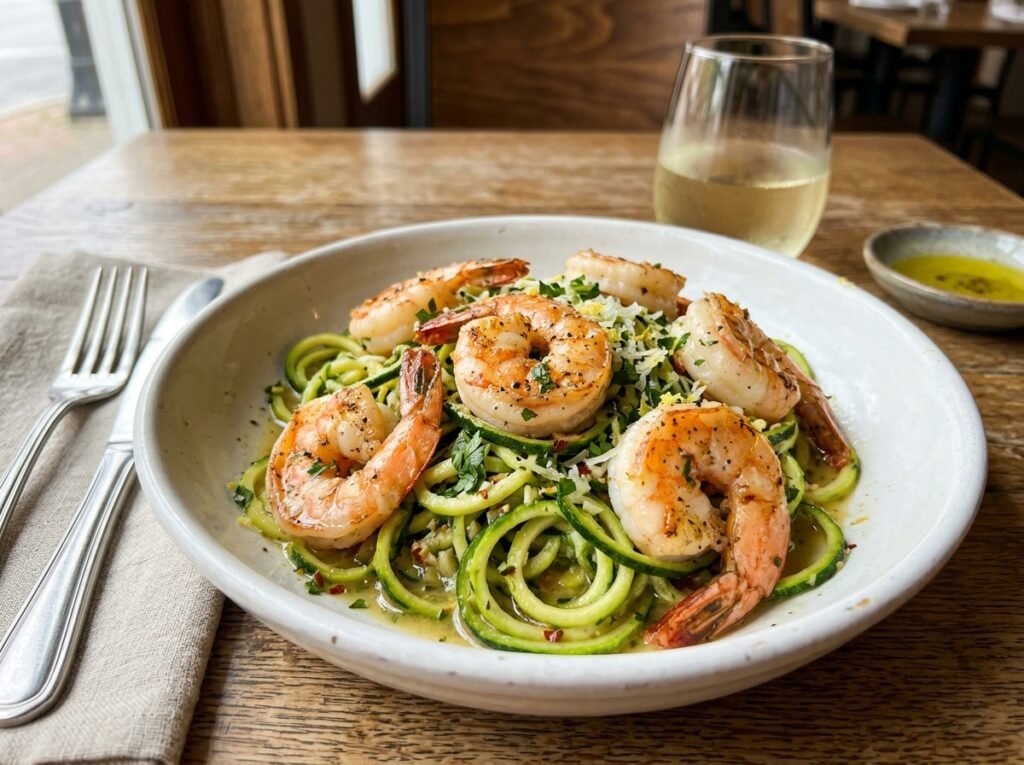
7. Lemon Garlic Shrimp Over Zucchini Noodles
Frozen shrimp thaws under cold running water in roughly four minutes. Sauté peeled shrimp in olive oil, butter, garlic, and lemon juice for two to three minutes per side. Serve over store-bought zucchini noodles that you warmed in the same pan for sixty seconds.
This entire dinner from frozen to plated takes under fifteen minutes on a bad night. Estimated protein per serving: 30 grams.
Science Tip: Shrimp are done the moment they curl into a loose “C” shape. An “O” shape means overcooked — the proteins have contracted so tightly that moisture has been squeezed out entirely.
8. One-Pan Pork Tenderloin with Apple and Onion
Slice pork tenderloin into 1-inch / 2.5cm medallions and sear in a hot skillet for three minutes per side. Remove the pork, deglaze with apple juice, throw in sliced onion, and let it reduce for two minutes. Return the pork to finish for another two minutes.
One pan. Real flavor. Elegant enough to feel like effort. Estimated protein per serving: 35 grams.
Science Tip: Pork tenderloin is the leanest cut on the pig — nearly as lean as skinless chicken breast. This also means it needs a quick rest of three to four minutes before slicing to allow the juices to redistribute.
9. High-Protein Tuna Pasta in 18 Minutes
Cook whole wheat penne to al dente, drain, and reserve a cup of pasta water. While pasta cooks, combine two cans of Wild Planet albacore tuna with olive oil, capers, lemon zest, and red pepper flakes in the same pot. Add the drained pasta and a splash of pasta water to bind everything.
This is weeknight pantry cooking at its best — deeply satisfying and nearly effortless. Estimated protein per serving: 38 grams.
Science Tip: The starchy pasta water acts as a natural emulsifier, helping the olive oil and tuna juices cling together into a light, cohesive sauce without needing cream or butter.
10. Black Bean and Egg Power Tacos
Warm canned black beans in a skillet with cumin, chili powder, and a splash of lime juice. Fry two eggs per person in the same pan. Build in warm corn tortillas with avocado, salsa, and a handful of shredded Monterey Jack.
Plant-forward, fast, and deeply satisfying without relying on meat. Estimated protein per serving: 22 grams.
Science Tip: Black beans are one of the most complete plant proteins readily available — high in lysine, which is typically low in grain-based diets, making the tortilla-and-bean combination a genuinely complementary protein pairing.
11. Cottage Cheese Stuffed Bell Peppers (Microwave-Ready)
Mix Good Culture cottage cheese with cooked ground turkey, Italian seasoning, and marinara sauce. Stuff into halved bell peppers and microwave on high for six to eight minutes. Top with shredded mozzarella and return to the microwave for sixty seconds.
No oven required. Genuinely good. Estimated protein per serving: 37 grams.
Science Tip: Microwaving bell peppers breaks down their pectin-reinforced cell walls rapidly, softening them while preserving their vitamin C content far better than oven roasting at high heat.
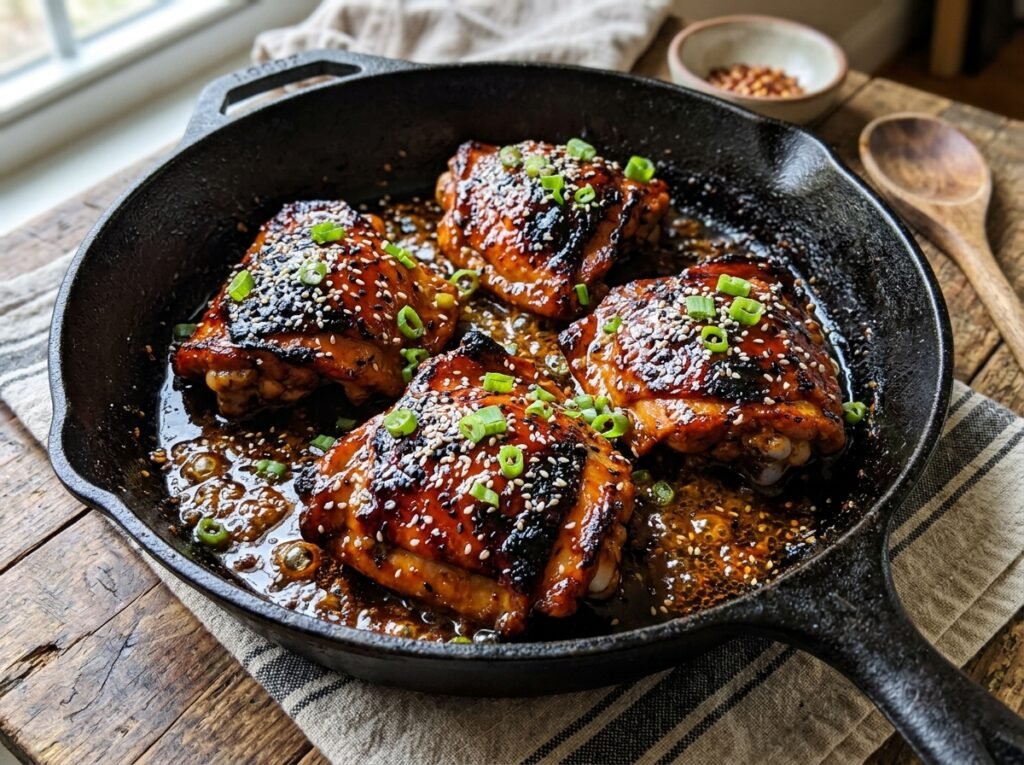
12. 25-Minute Honey Sriracha Chicken Thighs
Whisk together honey, Sriracha, soy sauce, and rice vinegar. Pan-sear boneless skinless chicken thighs in a hot oven-safe skillet for four minutes per side, pour the glaze over the top, then slide the entire pan into a 400°F / 204°C oven for ten minutes.
The glaze caramelizes against the hot pan into something that tastes like it took significantly more work than it did. Estimated protein per serving: 34 grams.
Science Tip: Honey contains invert sugars that caramelize at a lower temperature than refined sugar, which is why this glaze develops deep color quickly without requiring high oven temps that would dry the chicken out.
Common Weeknight Cooking Mistakes
| The Mistake | What Actually Happens | The Fix |
|---|---|---|
| Overcrowding the pan | The protein steams instead of sears — no browning, rubbery texture, no Maillard reaction | Cook in batches; leave space between every piece |
| Skipping the rest period | Juices run out immediately when cut — the center of the meat dries out on the plate | Rest for 3–5 minutes under foil before slicing |
| Cooking cold protein straight from the fridge | The outside overcooks before the cold center reaches a safe temperature | Let protein sit at room temp for 10–15 minutes before cooking |
| Overcooking lean chicken breast | The proteins contract and expel all moisture — dry, chalky, unpleasant texture | Pull at 160°F / 71°C; carryover heat finishes it to 165°F |
| Not drying the surface of the protein | Moisture on the surface converts to steam before browning can occur | Pat dry thoroughly with paper towels before seasoning |
| Adding garlic too early in a hot pan | Garlic burns in seconds at high heat, turning bitter and unpleasant | Add garlic after the protein is mostly cooked, or lower heat first |
📊 Estimated Nutrition Guide
Per average serving across this style of high-protein weeknight meals. Values are estimates and will vary by specific recipe and portion size.
| Nutrient | Per Serving (Estimate) |
|---|---|
| Calories | 380–520 kcal |
| Protein | 30–46g |
| Total Fat | 12–18g |
| Saturated Fat | 3–6g |
| Total Carbohydrates | 18–35g |
| Sodium | 480–720mg |
| Cholesterol | 85–145mg |
🌡️ Food Safety Temperature Guide
| Protein | USDA Minimum Internal Temp | Notes |
|---|---|---|
| Poultry (chicken, turkey) | 165°F / 74°C | Use an instant-read thermometer — color alone is not reliable |
| Ground beef and pork | 160°F / 71°C | Ground meat requires a higher temp than whole cuts |
| Whole cuts of beef and pork | 145°F / 63°C | Followed by a 3-minute rest period |
| Fish and shellfish | 145°F / 63°C | Shrimp is done when opaque throughout |
| Eggs (dishes containing eggs) | 160°F / 71°C | Scrambles and frittatas should be fully set, not wet |
| Danger Zone | 40°F–140°F / 4°C–60°C | Never leave cooked protein in this range for more than 2 hours |
For optimal food safety, always cook your poultry to a minimum internal temperature of 165°F (74°C) and beef to 145°F (63°C) as recommended by the USDA Guidelines.
❄️ Storage & Reheating Guide
| Item | Refrigerator | Freezer | Best Reheat Method |
|---|---|---|---|
| Cooked chicken (sauced) | 3–4 days | Up to 3 months | Low microwave power with a splash of broth, covered |
| Cooked chicken (unsauced) | 3–4 days | Up to 3 months | Skillet with a teaspoon of butter, medium-low heat |
| Cooked ground beef or turkey | 3–4 days | 2–3 months | Microwave in 30-second intervals, stir between each |
| Cooked shrimp | 2 days | 1–2 months | Quick 60-second skillet warm — do not microwave |
| Cooked fish | 2 days | 2 months | Oven at 275°F / 135°C, covered, 10 minutes |
| Cooked pork | 3–4 days | 2–3 months | Skillet with a splash of apple juice, covered |
| Cooked eggs (scrambles) | 2 days | Not recommended | Low microwave power, covered, 45-second intervals |
| Assembled bowls (taco, grain) | 3 days | Not recommended | Reheat protein and grains separately for best texture |

12 High-Protein Dinner Ideas for Busy Weeknights
Ingredients
Equipment
Method
- Pat the protein completely dry using paper towels to remove surface moisture. Season all sides generously with kosher salt and black pepper.
- Heat avocado oil in a large cast-iron skillet over high heat until it just begins to smoke.
- Add the protein in a single layer without overcrowding the pan. Sear undisturbed for 2 minutes to let a deep, golden-brown crust develop.
- Flip and toss the pieces to flash-cook the remaining sides for another 1 to 2 minutes, then reduce the heat to medium-low.
- Add the butter and minced garlic to the center of the skillet. Spoon the melted, foaming butter continuously over the protein for 1 minute
- Remove the skillet from the heat, stir in finely chopped fresh parsley, and let the protein rest in its pan juices for 3 minutes before serving.
Notes
- You can easily swap the beef sirloin for boneless chicken breasts, pork chops, or salmon fillets cut into 1-inch cubes. Just adjust the flash-cooking time slightly to ensure poultry reaches its safe internal temperature.
- The Dry Surface Rule: Always pat the meat completely dry with paper towels before seasoning. Residual surface moisture creates steam in the hot pan, which drops the temperature and prevents the deep brown Maillard crust from forming.
- High-Smoke Point Oil: Use avocado oil or canola oil for the initial high-heat sear. Avoid using extra virgin olive oil or butter at the start, as their low smoke points will cause them to burn and taste bitter.
- Garlic Timing: Adding the minced garlic at the very end with the butter prevents it from scorching. Burnt garlic turns bitter and ruins the delicate flavor of the pan sauce.
- The Resting Period: Giving the protein 3 minutes to rest before serving allows the heat-constricted muscle fibers to relax, redistributing and locking in the savory juices.
Chef John’s Insight
There is a version of family dinner that exists in magazine spreads — calm, beautifully lit, everyone seated at the same time. I have never actually lived in that version, and I suspect most of you have not either. The real version is noisier. Someone is setting the table wrong, someone else just announced they do not like this anymore, and the sauce is threatening to boil over. But here is what I know after years of cooking for people I love: it does not have to be perfect to be powerful. The ten minutes you spend feeding your family something real — something with actual protein, actual nutrition, actual care — matters more than any beautiful plating ever could. A fast dinner made with intention beats a slow one made with resentment every single time. The meal does not have to be fancy. It just has to be there.
— Chef John, Food Hacks Hub
❓ FAQ — What Busy Families Actually Ask
Q: Can I meal prep these proteins on Sunday to use all week?
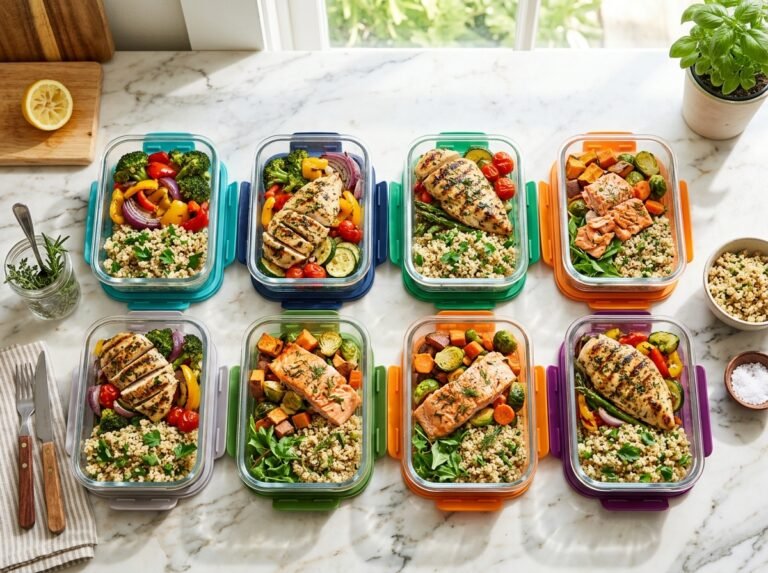
Absolutely, and I recommend it. Cooked chicken thighs, ground turkey, and even shrimp hold well for three to four days in the refrigerator in airtight containers. Store proteins unsauced when possible — this gives you flexibility to use the same batch in tacos Monday, a bowl Tuesday, and a wrap Wednesday without it feeling repetitive.
Q: What is the fastest high-protein dinner when I have almost nothing in the house?
Canned tuna or canned salmon plus whole grain pasta or rice, a can of white beans, olive oil, and lemon. That combination takes fifteen minutes and delivers roughly 35 grams of protein per serving without requiring a grocery run.
Q: My kids refuse to eat anything with visible vegetables. What do I do?
Build the vegetables into the protein. Finely diced zucchini blended into turkey meatballs, grated carrot folded into turkey taco filling, spinach wilted into the egg scramble while it is still hot. When it is mixed in and barely detectable, most kids stop objecting.
Q: Is it actually safe to cook chicken in an air fryer?
Yes — with one condition. Always verify with an instant-read thermometer that the thickest part of the chicken has reached 165°F / 74°C. Air fryers run at different actual temperatures depending on the model, and visual cues alone are not reliable indicators of doneness. A good thermometer costs under fifteen dollars at Walmart and is genuinely one of the most important tools in a family kitchen.
Q: How do I stop chicken breast from drying out every single time?
Three things: pound it to even thickness, do not overcook it past 165°F / 74°C, and rest it for at least three minutes before cutting. If you can do all three consistently, dry chicken breast becomes a thing of the pasts.
7 Amazing Crispy Air Fryer Chicken Wings Recipe
Easy Mexican Street Corn Salad Recipe
Easy Crispy Honey Garlic Chicken Bites Recipe