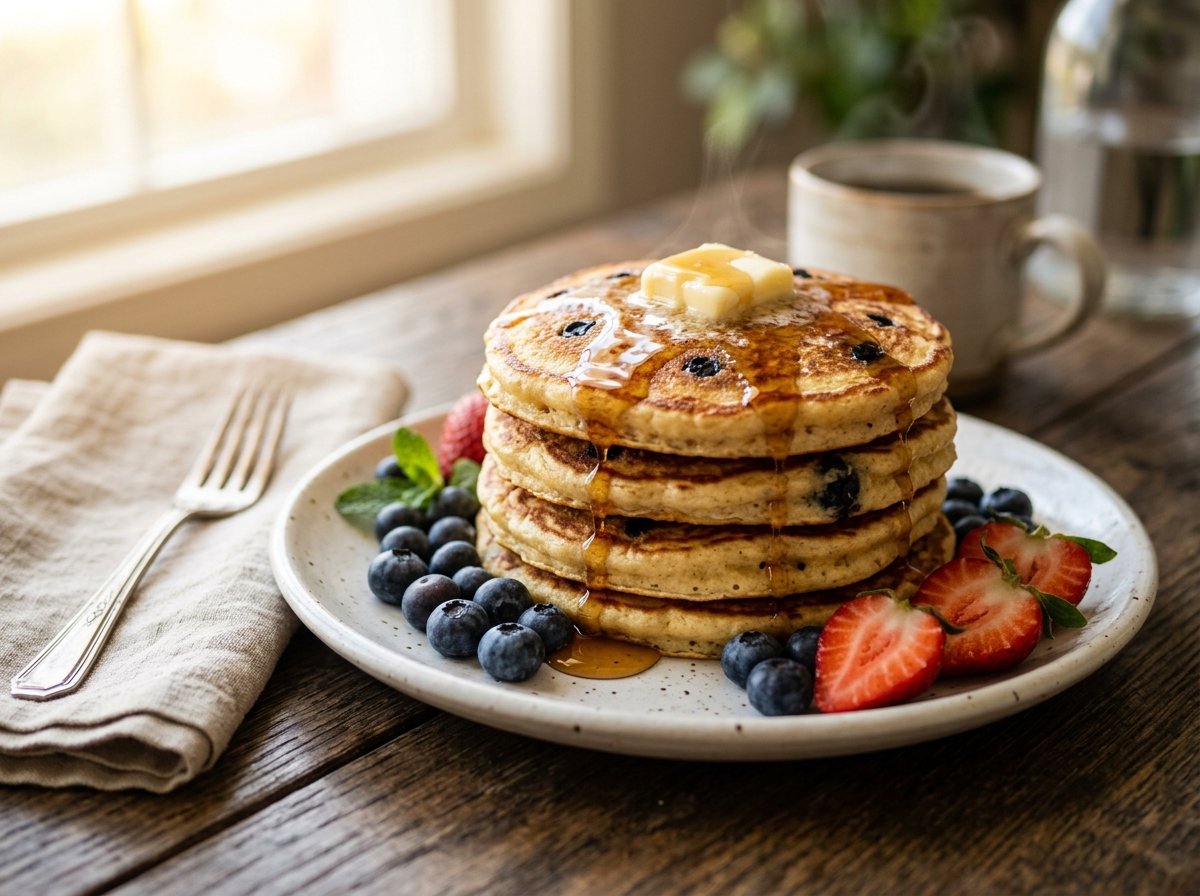
Cottage Cheese Protein Pancakes: The Fluffy, High-Protein Breakfast That Actually Works
By Chef John | Easy Recipes & Smart Cooking Hacks
The Problem Every Protein Pancake Maker Faces
Here is what keeps going wrong with most high-protein pancakes: they turn out rubbery, dry, or so dense you could use them as hockey pucks. The culprit is always the same — protein binds aggressively when heated, squeezing out moisture and creating that unfortunate texture somewhere between cardboard and a gym mat.
I have tested hundreds of variations in my kitchen, and the breakthrough came when I stopped treating protein pancakes like regular pancakes with protein added. Instead, I started with the protein source itself: cottage cheese. Not as a mix-in, but as the base.
I’ve flipped over 200 of these in my test kitchen to find the exact ratio that prevents that dreaded “soggy center” syndrome. The difference between a perfect Cottage Cheese Protein Pancake and a disappointing one comes down to three variables: moisture management, protein-to-starch ratio, and heat control.
What I discovered changed everything. Cottage Cheese Protein Pancakes are not just edible — they are legitimately fluffy, tender, and satisfying. They hold syrup without dissolving. They reheat beautifully. And each serving delivers 25+ grams of protein without a single scoop of powder.
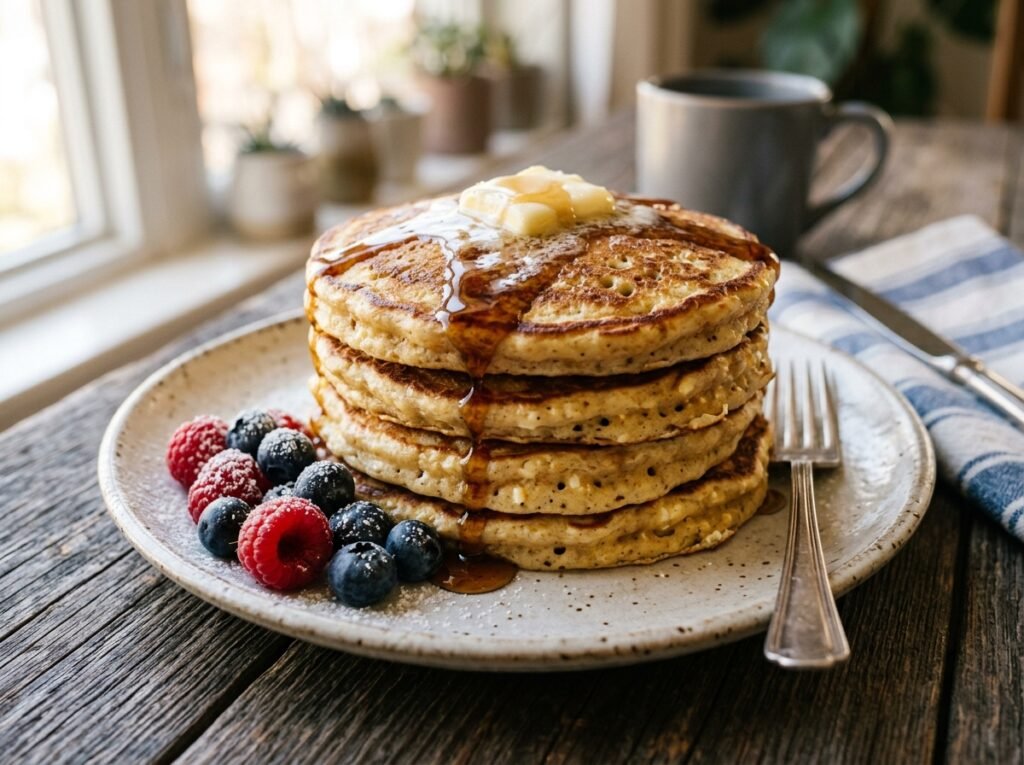
The Science of the Flip: Why Cottage Cheese Changes Everything
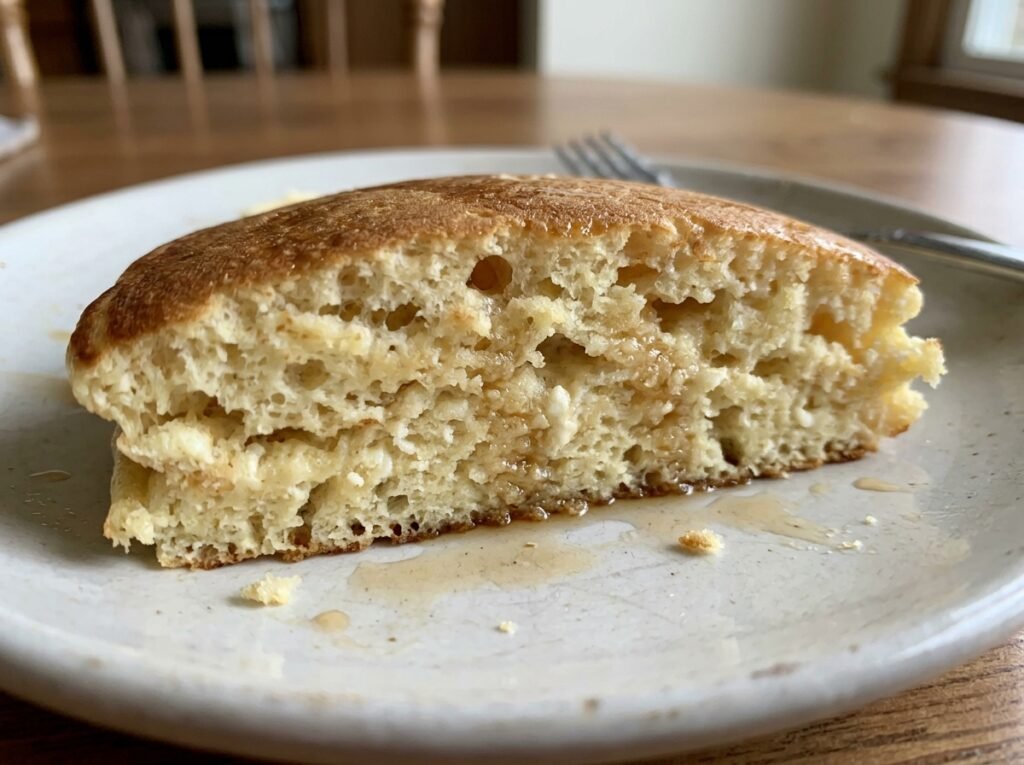
The secret to perfect Cottage Cheese Protein Pancakes lies in understanding protein denaturation and moisture dynamics. Cottage cheese contains both casein protein and whey protein suspended in moisture-rich curds. When you blend it, you create a custard-like base that behaves completely differently than milk or protein powder.
Here is what happens at the molecular level. The curds break down into a smooth emulsion. The proteins are already partially denatured during the cheese-making process, which means they will not tighten up as aggressively when you cook them. The moisture content — typically around 79% in full-fat cottage cheese — provides continuous steam during cooking.
That steam is everything. As the pancake hits the hot griddle, the moisture converts to vapor, creating lift from within:
Cottage Cheese (Moisture)+Heat→Steam Lift
In simple terms: the cottage cheese releases tiny bursts of steam that puff up the batter while the proteins set gently around those air pockets. You get structure without density.
The addition of oat flour or almond flour provides just enough starch to create a network that traps those air bubbles. Too much flour, and you lose the protein advantage. Too little, and the pancakes spread thin and never set properly.
Eggs add additional binding, but they also contribute to the Maillard reaction — that golden-brown crust you want. The lactose in cottage cheese caramelizes beautifully at the surface, giving you a sweet, toasted flavor without adding sugar.
This is not just chemistry — it is functional texture engineering. And once you understand it, you will never go back to chalky protein powder pancakes.
Pro Buying Guide: USA Market Recommendations
To make the best Cottage Cheese Protein Pancakes, ingredient quality matters more than you might think.
Cottage Cheese: I prefer Good Culture (available at Whole Foods and Target) because it has live probiotics and a cleaner ingredient list. Daisy is a solid budget option at Kroger or Walmart. Go for full-fat or 2% — not fat-free. The fat content improves texture and flavor dramatically.
Oat Flour: Bob’s Red Mill Gluten-Free Oat Flour is my standard. You can find it at Trader Joe’s, Whole Foods, or any major grocery chain. If you cannot find oat flour, pulse old-fashioned oats in a blender for 30 seconds.
Eggs: Pasture-raised eggs make a noticeable difference in flavor and color. Vital Farms or Happy Egg Co. are widely available at Target and Whole Foods.
Butter for Cooking: I use Kerrygold unsalted butter for the griddle. It has a higher smoke point than most American butters and adds a subtle richness.
Optional Add-Ins: If you want extra fiber, add a tablespoon of Bob’s Red Mill Flaxseed Meal. For a slight sweetness, a teaspoon of vanilla extract or a handful of blueberries works beautifully.
Equipment: A nonstick griddle or cast-iron skillet is essential. I use a Lodge 12-inch cast iron preheated to exactly 325°F / 163°C. A digital infrared thermometer (around $15 at Walmart) removes all guesswork.
Ingredients Table
| Ingredient | US Customary | Metric |
|---|---|---|
| Full-fat cottage cheese | 1 cup | 225g |
| Large eggs | 2 whole | 100g |
| Oat flour | ½ cup | 50g |
| Baking powder | 1 tsp | 4g |
| Vanilla extract | 1 tsp | 5ml |
| Salt | ¼ tsp | 1g |
| Cinnamon (optional) | ½ tsp | 1g |
| Butter for cooking | 2 Tbsp | 28g |
Common Mistakes Table
| The Mistake | What Actually Happens | The Fix |
|---|---|---|
| Over-blending the batter | Breaks down too much structure; pancakes turn gummy and flat | Blend just until smooth — 20-30 seconds max |
| Using cold eggs | Batter does not emulsify properly; uneven texture | Bring eggs to room temperature first |
| Cooking on high heat | Outsides burn before insides set; raw center syndrome | Keep griddle at 300–325°F / 149–163°C |
| Flipping too early | Pancakes tear and deflate | Wait for bubbles to form and edges to look dry — about 2.5 minutes |
| Using fat-free cottage cheese | Dry, rubbery texture; no richness | Always use full-fat or 2% cottage cheese |
| Skipping the rest period | Oat flour does not hydrate; batter too thin | Let batter sit 3–5 minutes before cooking |
Why These Cottage Cheese Protein Pancakes Are So Fluffy
The Method: How to Make Perfect Cottage Cheese Protein Pancakes
Step 1: Prepare Your Batter Base
Start by bringing your eggs to room temperature — this takes about 15 minutes on the counter. Cold eggs will not emulsify properly with the cottage cheese, and you will end up with a grainy batter.
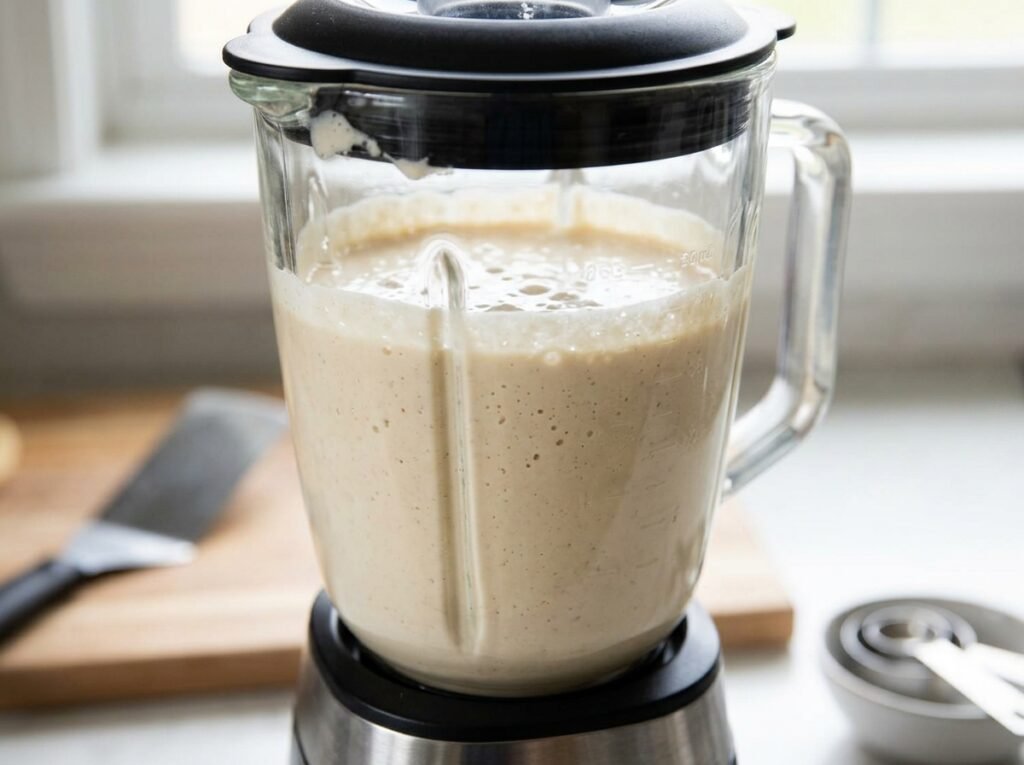
Add the cottage cheese, eggs, oat flour, baking powder, vanilla extract, salt, and cinnamon (if using) to a high-speed blender. Blend on medium speed for 20 to 30 seconds, just until the mixture is smooth and the curds have completely broken down. The batter should look like a thick crepe batter — pourable but not runny.
Do not over-blend. If you run the blender for more than 45 seconds, you will break down the protein structure too much, and the pancakes will not hold their lift.
Step 2: Rest the Batter
Pour the batter into a bowl or large measuring cup and let it rest for 3 to 5 minutes. This step is critical. The oat flour needs time to hydrate fully, which thickens the batter and improves the final texture.
During this rest, the baking powder also begins its first phase of leavening, creating tiny air pockets before the batter even hits the heat. You will notice the batter thickens noticeably — this is exactly what you want.
Step 3: Preheat Your Griddle Correctly
Heat a nonstick griddle or cast-iron skillet over medium-low heat. Add half a tablespoon of butter and let it melt completely, swirling to coat the surface. The pan is ready when a drop of water sizzles gently but does not pop aggressively.
If you have an infrared thermometer, aim for 325°F / 163°C. This is the sweet spot for Cottage Cheese Protein Pancakes. Any hotter, and the exterior will brown too fast. Any cooler, and they will not set properly.
Step 4: Pour and Wait
Pour ¼ cup of batter per pancake onto the griddle. Do not spread it — let it settle naturally into a round shape. The batter will be thicker than traditional pancake batter, so it will not spread as much.
Now comes the hardest part: wait. Do not touch them. Do not peek underneath. Just wait.
You are looking for two visual cues. First, small bubbles will begin to form on the surface and pop, leaving little craters. Second, the edges will start to look dry and matte instead of shiny. This takes about 2 to 2.5 minutes.
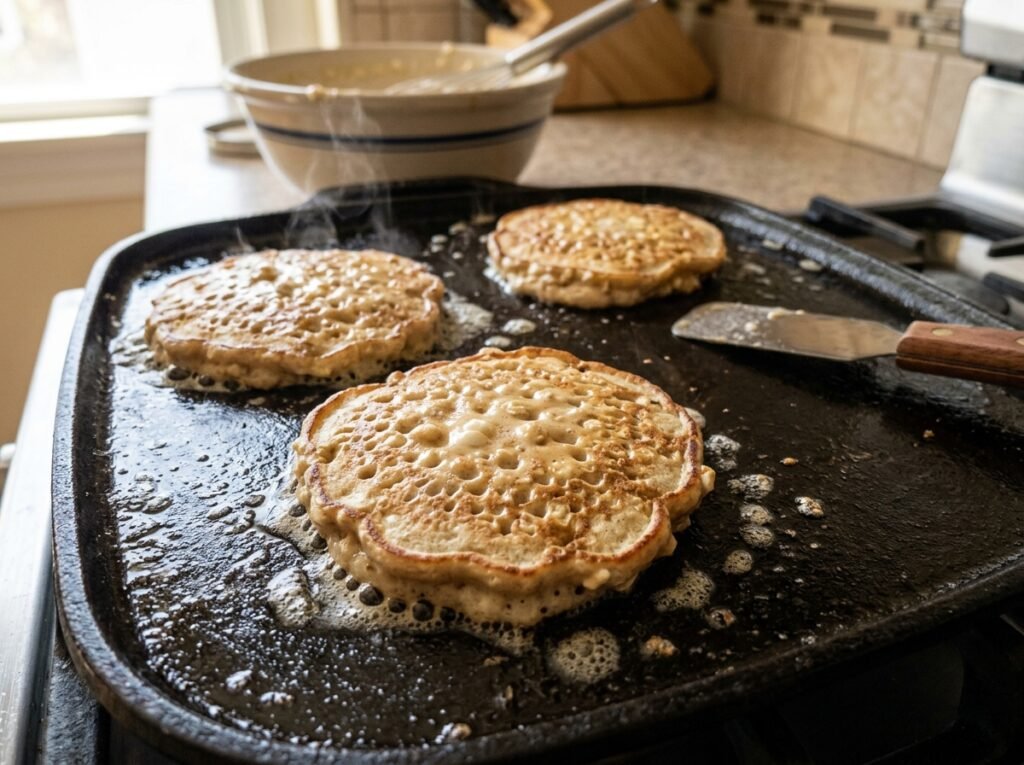
Step 5: The Flip
Slide a thin spatula under the pancake. It should release easily. If it sticks, wait another 20 seconds. Flip gently in one smooth motion.
The second side cooks faster — only about 1.5 minutes. You are just setting the interior and adding a bit of color. Do not press down on the pancakes. Let them finish cooking undisturbed.
Step 6: Keep Warm and Serve
Transfer finished pancakes to a plate and cover loosely with foil to keep them warm while you finish the batch. Add a little more butter to the griddle between batches.
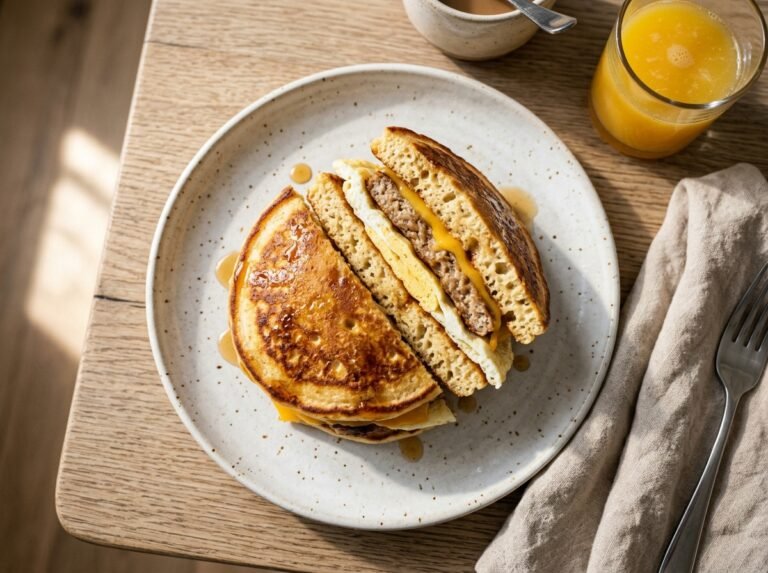
Serve your Cottage Cheese Protein Pancakes warm with butter, a drizzle of pure maple syrup, fresh berries, or a dollop of Greek yogurt. They are rich enough that you do not need much topping.
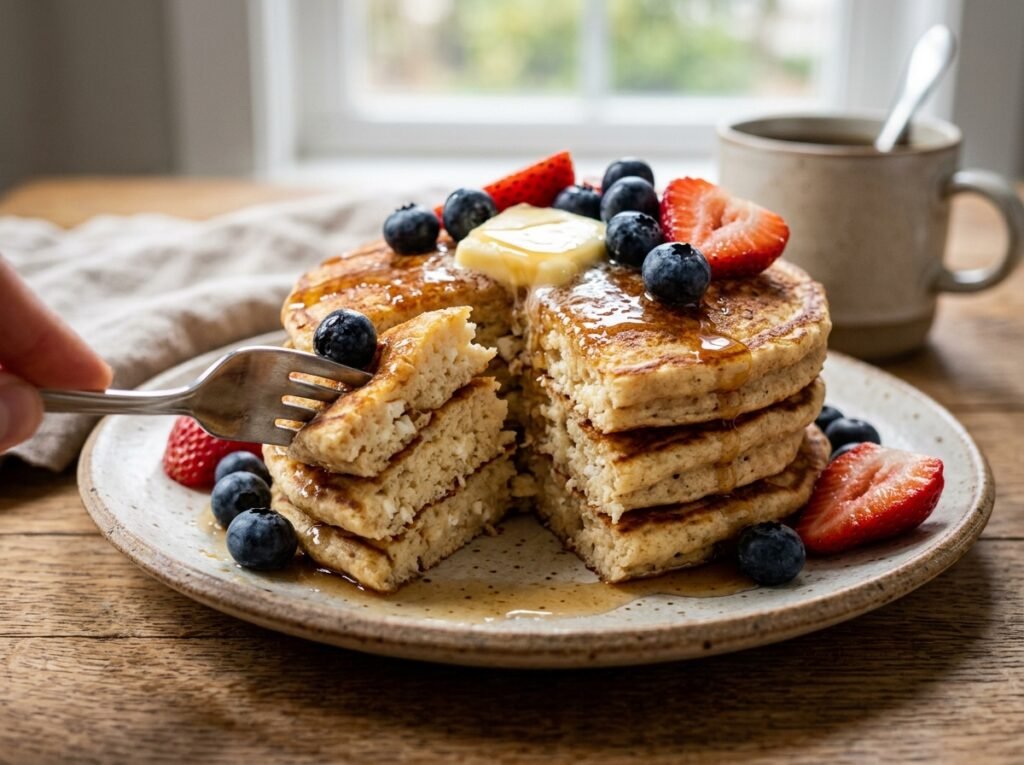
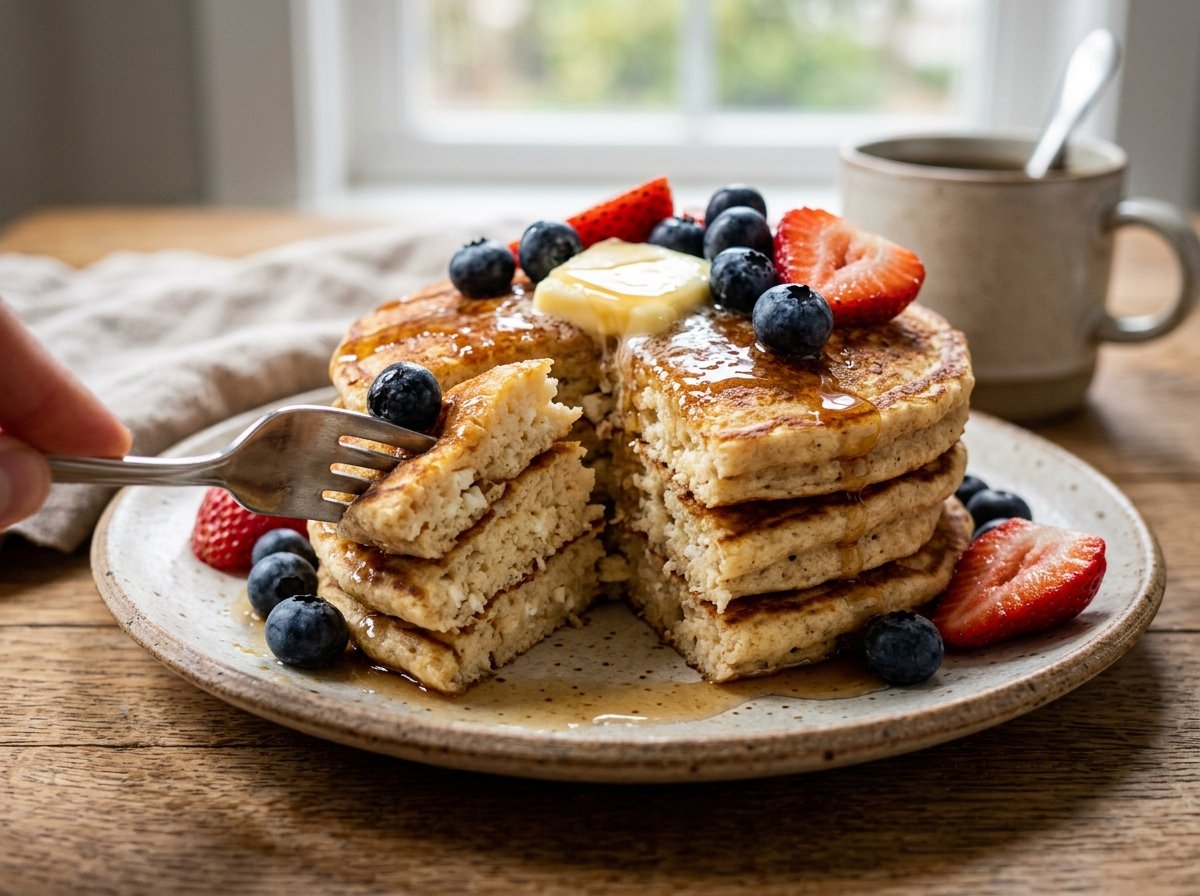
Ultimate Fluffy Cottage Cheese Protein Pancakes
Ingredients
Equipment
Method
- Add the cottage cheese, eggs, vanilla, and maple syrup into a high-speed blender. Pulse for 30 seconds until the mixture is completely smooth. This step is vital to break down the cheese curds, ensuring the Cottage Cheese Protein Pancakes have a uniform, silky crumb rather than a chunky texture.
- Add the oat flour, baking powder, cinnamon, and salt to the blender. Pulse briefly—just enough to incorporate. Over-blending at this stage can lead to a gummy texture. Let the batter rest for 5 minutes; this allows the oats to hydrate, which is the secret to a thick, stackable pancake.
- Preheat a non-stick griddle or cast-iron skillet over medium-low heat. Lightly coat with grass-fed butter or coconut oil. Using a 1/4 cup measure, pour the batter onto the hot surface.
- Watch for small bubbles to form on the edges. Because these Cottage Cheese Protein Pancakes are moisture-heavy, they take about 60 seconds longer than traditional flour pancakes. Flip gently once the bottom is golden brown.
- Cook for another 2 minutes on the second side. Serve immediately while the steam is still trapped inside, providing that signature souffle-like lift.
Notes
Chef John’s Insight
“There is something deeply satisfying about a breakfast that fuels your body without feeling like a compromise. Cottage Cheese Protein Pancakes remind me that nutrition and pleasure are not opposites — they are partners when you understand the science. The curds break down into something entirely new, almost magical. It is the same transformation that happens in a custard or a soufflé, where structure and tenderness exist in perfect balance. The best recipes do not fight against ingredients — they listen to what those ingredients want to become. And cottage cheese, it turns out, wants to be fluffy, golden, and completely satisfying. The lesson here is simple: start with real food, respect the process, and breakfast becomes something worth waking up for.”
— Chef John, The Flavor Bazaar
Nutrition Information (Per Serving: 2 Pancakes)
| Nutrient | Amount |
|---|---|
| Calories | 285 kcal |
| Protein | 26g |
| Total Fat | 12g |
| Saturated Fat | 5g |
| Carbohydrates | 18g |
| Fiber | 2g |
| Sodium | 520mg |
| Cholesterol | 215mg |
Note: Nutritional values are estimates based on standard ingredients. Values may vary based on specific brands used.
Food Safety & Temperature Guide
| Stage | Temperature (°F / °C) | Notes |
|---|---|---|
| Griddle Surface | 300–325°F / 149–163°C | Ideal cooking range |
| Internal Doneness | 160°F / 71°C | USDA safe minimum for eggs |
| Danger Zone | 40–140°F / 4–60°C | Do not leave out more than 2 hours |
| Reheating Minimum | 165°F / 74°C | For food safety |
Storage & Reheating Guide
| Storage Method | Duration | Best Practice |
|---|---|---|
| Room Temperature | Up to 2 hours | Cover loosely; do not stack while warm |
| Refrigerator | 4–5 days | Store in airtight container with parchment between layers |
| Freezer | Up to 3 months | Wrap individually in plastic wrap, then store in freezer bag |
| Best Reheat Method | Toaster or oven | Toaster at medium setting or 350°F / 177°C oven for 5 minutes |
Frequently Asked Questions
Can I freeze Cottage Cheese Protein Pancakes for meal prep?
Can I make Cottage Cheese Protein Pancakes without a blender?
Technically yes, but the texture will not be as smooth. You can mash the cottage cheese very thoroughly with a fork and whisk everything together, but expect a slightly lumpier result. A $20 immersion blender works just as well as a countertop blender for this recipe.
Can I substitute almond flour for oat flour?
Yes, but the texture changes. Almond flour makes the pancakes more tender and slightly crumbly, almost cake-like. Use the same measurement (½ cup / 50g). Keep in mind almond flour pancakes brown faster, so reduce your heat slightly.
Why are my Cottage Cheese Protein Pancakes soggy in the middle?
This happens when the heat is too high or you flip too early. The outside sets and browns, but the inside stays raw. Lower your temperature to 300°F / 149°C and wait the full 2.5 minutes before flipping.
Do these work for meal prep?
Absolutely. I make a double batch every Sunday. Let them cool completely, then stack with parchment paper between each pancake. They reheat beautifully in a toaster — better than most regular pancakes, actually, because the protein helps them hold structure.
Can I add protein powder to make them even higher in protein?
You can, but I do not recommend it. Each serving already has 26g of protein from whole food sources. Adding protein powder often makes them dry and chalky. If you must, replace 2 tablespoons of oat flour with unflavored whey isolate — no more.
🔗 More High-Protein Recipes You’ll Love
If you enjoyed this fluffy protein breakfast, check out these related recipes on The Flavor Bazaar:
[Crispy Hot Honey Chicken Sandwich Recipe]