10 Easy Salad Recipes for Healthy Lunches and Dinners
By Chef John | Easy Recipes & Smart Cooking Hacks
The Salad Problem Nobody Talks About
There is a particular kind of disappointment that hits when you sit down to a healthy lunch and realize you are staring at a bowl of limp romaine, a few pale tomato wedges, and a puddle of watery dressing at the bottom. You wanted to eat well. You tried. And somehow, it still feels like punishment.
I have been there. Most of us have. The problem is never the intention — it is the technique.
Salads are not just “toss and eat” situations. The best ones are built on a real understanding of texture contrast, emulsification science, protein temperature, and flavor layering. I have tested this method across dozens of batches, adjusting one variable at a time to isolate exactly what makes the difference.
What I found changed the way I approach every salad I make. When you understand why a good Caesar clings to every leaf, or why your grain salad stays fluffy for days in the fridge, you stop guessing and start cooking with real confidence.
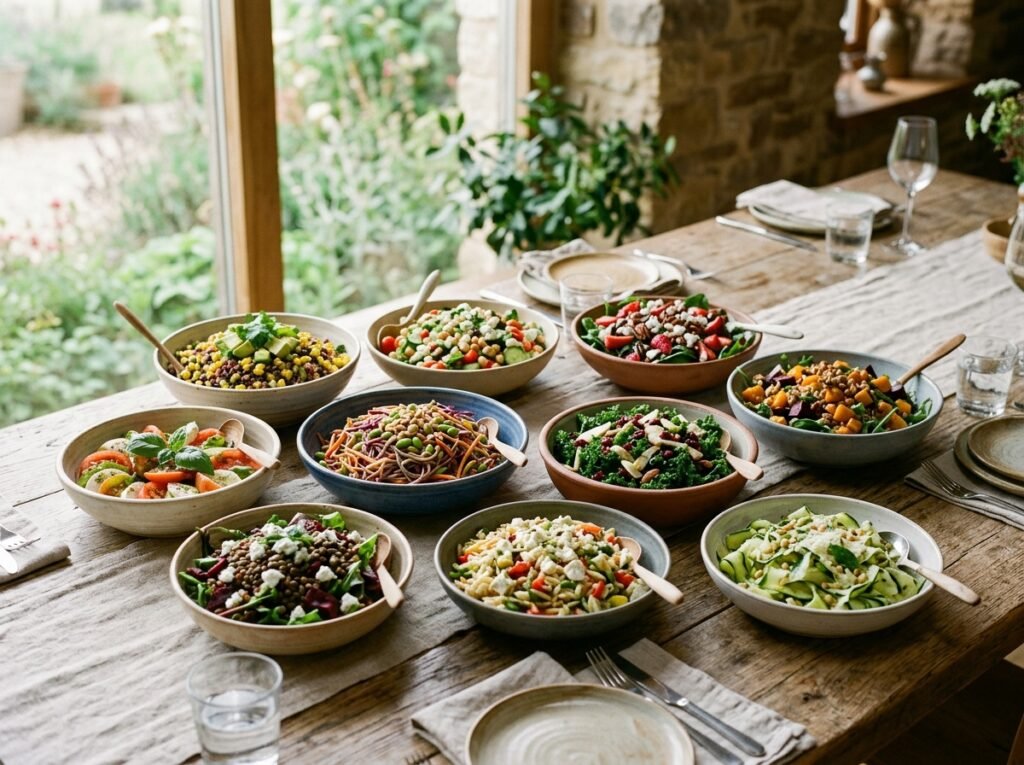
These 10 easy salad recipes are the result of that testing — healthy enough for weekday lunches, satisfying enough for weeknight dinners, and honestly good enough that you will actually want to make them again.
The Food Science Behind a Truly Great Salad
Most people treat a salad like an afterthought. Food science tells a completely different story.
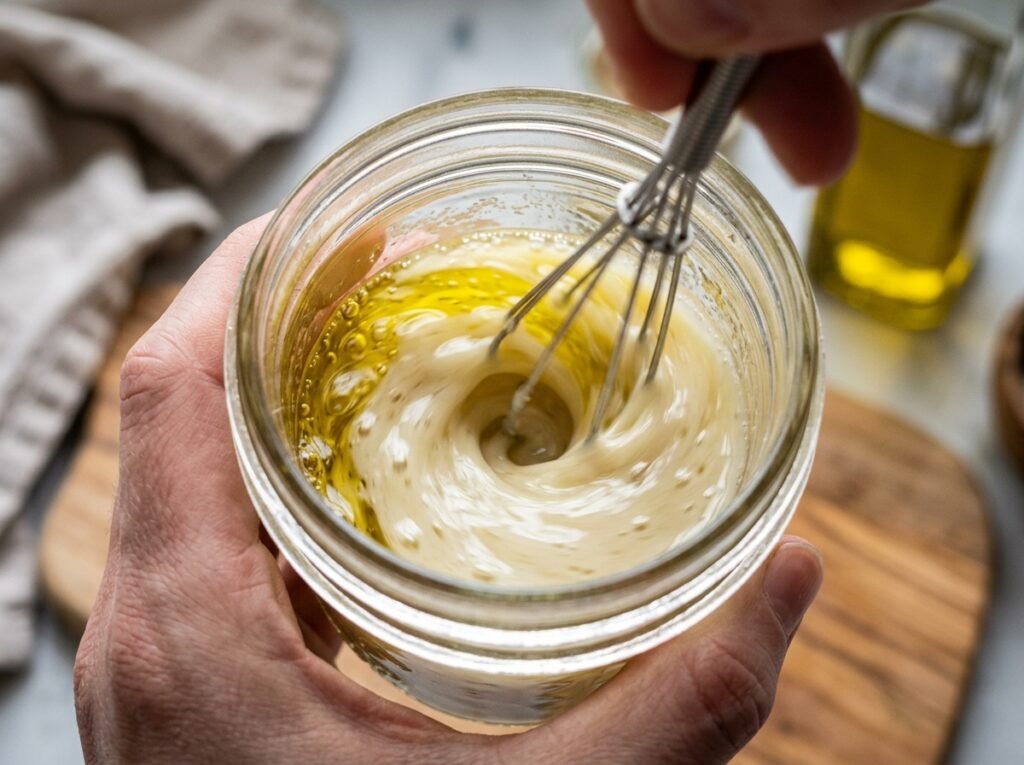
Emulsification is the first thing worth understanding. Oil and water do not mix on their own — they are chemically incompatible. A vinaigrette left alone will separate within minutes. But add an emulsifier like Dijon mustard or honey, and you create a molecular bridge. The emulsifier molecule has one end that bonds to oil and one end that bonds to water-based acids like lemon juice or vinegar. The result is a creamy, stable dressing that coats every leaf rather than pooling at the bottom of your bowl.
Hydrophobic Oil+Hydrophilic AcidEmulsifierStable Vinaigrette
In simple terms: that half-teaspoon of Dijon is not just for flavor. It is doing structural engineering work inside your dressing.
Cellular turgor pressure is why your greens stay crisp or go limp. Living plant cells hold water inside rigid cell walls — that internal pressure is what gives a fresh spinach leaf its satisfying snap. Heat, salt, and acid all break those cell walls down. Dress your salad too early and osmosis pulls moisture out of the leaves, turning them soft and sad before you even sit down.
Protein denaturation matters for your chicken, shrimp, and salmon additions. When proteins hit heat, their coiled molecular structures unwind and re-bond — permanently changing texture. Too much heat beyond the USDA minimum and the proteins contract too tightly, squeezing out moisture and leaving you with dry, rubbery meat sitting on top of otherwise beautiful greens.
Understanding these three forces means every salad you make from here on out has a structural foundation, not just a recipe.
Pro Buying Guide — USA Focused
Getting the right ingredients from the right sources matters more than most recipes admit. Here is what I actually keep in my pantry and where I find it.
For olive oil, Pompeian Extra Virgin Olive Oil is my everyday workhorse — widely available at Walmart and Kroger at a price that makes sense for regular cooking. For finishing and dressings where flavor really shows, I reach for California Olive Ranch, sold at Whole Foods and Target.
For greens, organic baby spinach and arugula from Whole Foods 365 brand hold up beautifully in meal prep. Trader Joe’s pre-washed butter lettuce is exceptional for quick weeknight salads. Avoid pre-cut romaine in bags if crispness matters to you — whole heads, torn by hand at home, retain turgor pressure far longer.
For grains, Bob’s Red Mill quinoa is consistent and clean — sold at almost every Kroger and Target nationwide. Their pearl couscous is equally reliable and cooks in under 10 minutes.
For proteins, Whole Foods Market 365 organic chicken breasts are worth the investment. For canned or pouched salmon, Wild Planet Wild Sockeye Salmon (available at Whole Foods and Thrive Market) is sustainably caught and flavor-forward.
For cheese, Trader Joe’s crumbled feta and Whole Foods Parmigiano-Reggiano wedges are non-negotiable quality upgrades. Kerrygold grass-fed butter is ideal when you are toasting croutons or finishing warm grain salads.
For nuts and seeds, Trader Joe’s dry-roasted pepitas, slivered almonds, and candied pecans are priced fairly and add real textural complexity to any of these recipes.
The 10 Easy Salad Recipes
1. Mediterranean Quinoa Salad
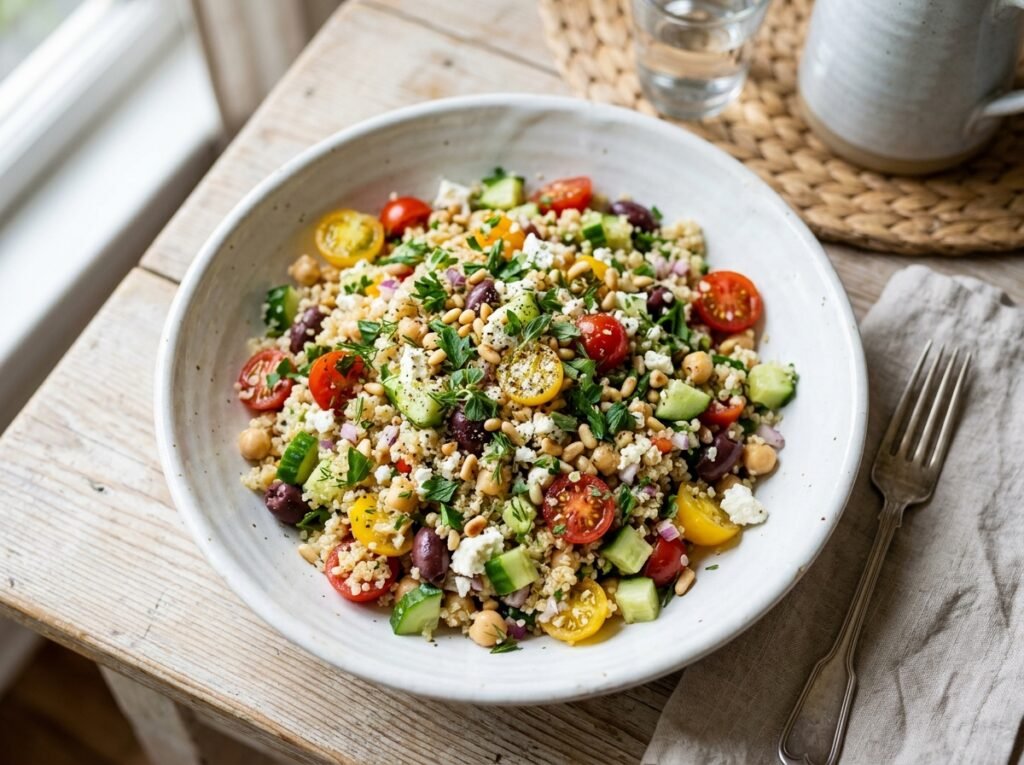
This one became a weekly staple in my kitchen for good reason. It is bright, protein-forward, and somehow gets better as it sits — which makes it one of the most meal-prep-friendly salads you can make. The quinoa holds its structure because the grain’s outer coating, called the pericarp, creates a slightly resistant texture that does not collapse under dressing the way pasta does.
Ingredients
| Ingredient | US Customary | Metric |
|---|---|---|
| Grains | ||
| Quinoa (dry) | 1 cup | 170g |
| Water or vegetable broth | 2 cups | 480ml |
| Vegetables | ||
| Cherry tomatoes, halved | 1 cup | 150g |
| English cucumber, diced | 1 medium | ~200g |
| Kalamata olives, halved | ½ cup | 80g |
| Red onion, finely diced | ¼ cup | 40g |
| Cheese & Herbs | ||
| Crumbled feta | ½ cup | 75g |
| Fresh parsley, chopped | ¼ cup | 15g |
| Fresh mint, chopped | 2 tbsp | 8g |
| Dressing | ||
| Extra virgin olive oil | 3 tbsp | 45ml |
| Fresh lemon juice | 2 tbsp | 30ml |
| Dijon mustard | 1 tsp | 5g |
| Garlic, minced | 1 clove | 3g |
| Salt and black pepper | To taste | To taste |
Method
Step 1 — Cook and Cool the Quinoa
Rinse the quinoa under cold running water for about 30 seconds before cooking. This removes the natural saponin coating, which tastes bitter if left on. Combine with broth or water in a medium saucepan and bring to a boil, then reduce to a simmer, cover, and cook for 15 minutes until all liquid is absorbed. Spread the cooked quinoa on a sheet pan and let it cool to room temperature before assembling — this step is critical because hot grains will wilt your vegetables and break the dressing emulsification.
Step 2 — Build the Dressing
Whisk together lemon juice and Dijon mustard first, then slowly drizzle in the olive oil while whisking continuously. This mechanical action combined with the mustard as emulsifier creates the stable vinaigrette discussed earlier. Season with salt, pepper, and minced garlic.
Step 3 — Assemble and Dress
Combine cooled quinoa with tomatoes, cucumber, olives, and red onion. Pour three-quarters of the dressing over the salad and toss gently. Taste and add more dressing as needed. Top with feta and fresh herbs.
Chicken Caesar Salad
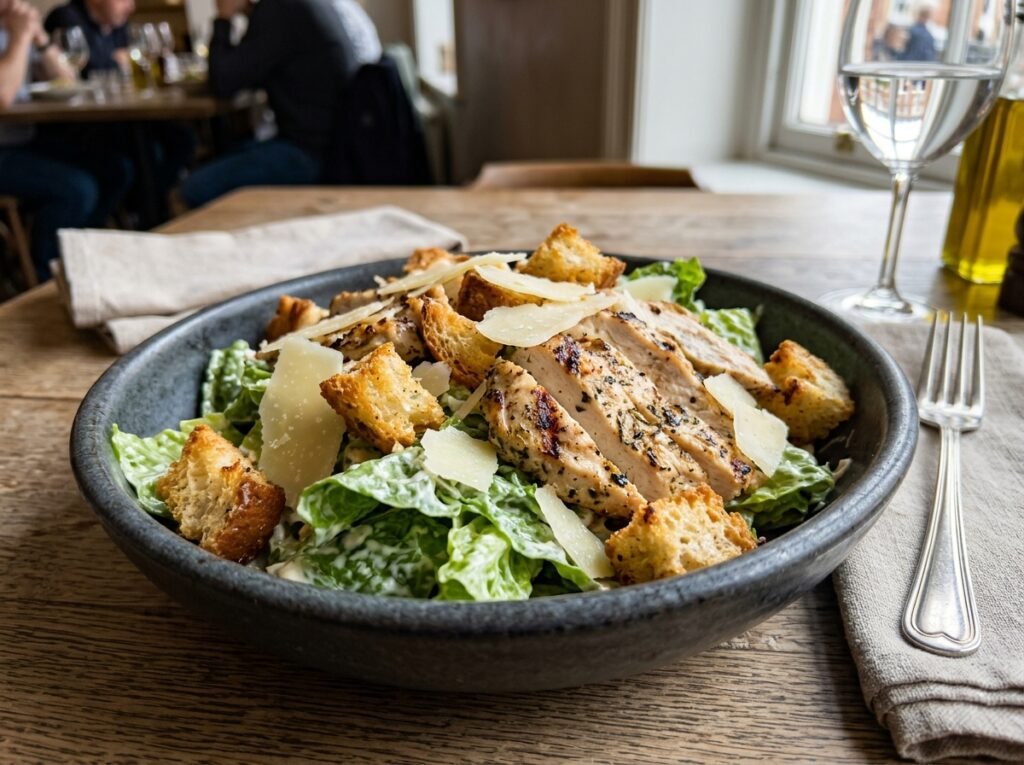
The Caesar has a deserved reputation as a crowd-pleaser, but it fails when the dressing is thin, the chicken is dry, or the croutons go soft within minutes of plating. The dressing here is built properly — emulsified, anchovy-forward, with real Parmigiano-Reggiano doing the heavy lifting on flavor.
Ingredients
| Ingredient | US Customary | Metric |
|---|---|---|
| Protein | ||
| Boneless chicken breast | 2 large (about 1 lb) | 450g |
| Greens | ||
| Romaine hearts, chopped | 2 large heads | ~300g |
| Dressing | ||
| Anchovy paste | 1 tsp | 5g |
| Garlic, minced | 2 cloves | 6g |
| Fresh lemon juice | 2 tbsp | 30ml |
| Dijon mustard | 1 tsp | 5g |
| Worcestershire sauce | 1 tsp | 5ml |
| Mayonnaise | 3 tbsp | 45g |
| Olive oil | 2 tbsp | 30ml |
| Parmigiano-Reggiano, grated | ½ cup | 50g |
| Croutons | ||
| Day-old sourdough bread | 2 cups, cubed | ~100g |
| Kerrygold butter, melted | 2 tbsp | 30g |
| Garlic powder | ½ tsp | 2g |
Method
Step 1 — Season and Sear the Chicken
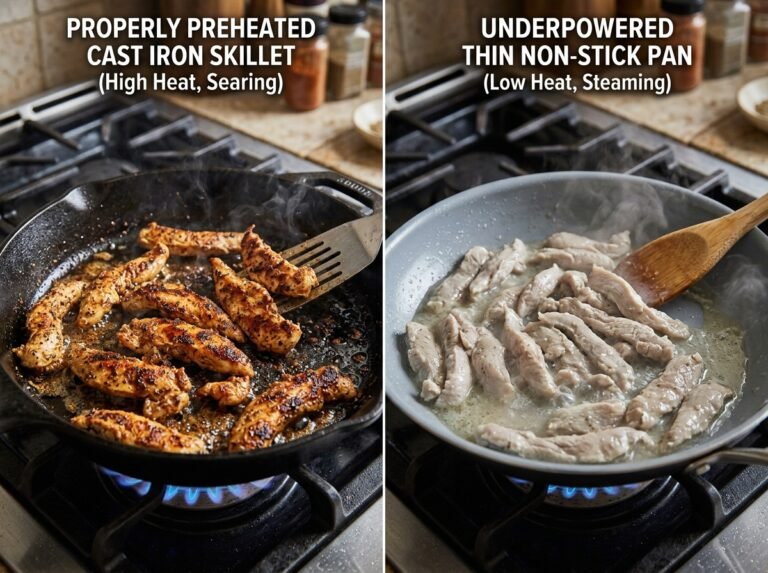
Season chicken breasts generously with salt and black pepper on both sides. Heat a cast iron skillet over medium-high heat until it just begins to smoke lightly. The Maillard reaction — the browning reaction that occurs above 285°F (140°C) — requires high surface heat to develop those deeply savory golden-brown exterior flavors. Sear chicken for 6–7 minutes per side until the internal temperature reads 165°F / 74°C on an instant-read thermometer. Rest for 5 minutes before slicing to allow juices to redistribute.
Step 2 — Make the Croutons
Toss bread cubes in melted Kerrygold butter and garlic powder. Spread on a sheet pan and bake at 375°F / 190°C for 12–15 minutes, turning once, until golden and crisp throughout.
Step 3 — Build the Dressing and Assemble
Whisk anchovy paste, garlic, lemon juice, Worcestershire, and Dijon until smooth. Whisk in mayonnaise, then slowly emulsify the olive oil into the mixture. Toss romaine in dressing immediately before serving — never ahead of time. Top with sliced chicken, croutons, and a generous snowfall of Parmigiano-Reggiano.
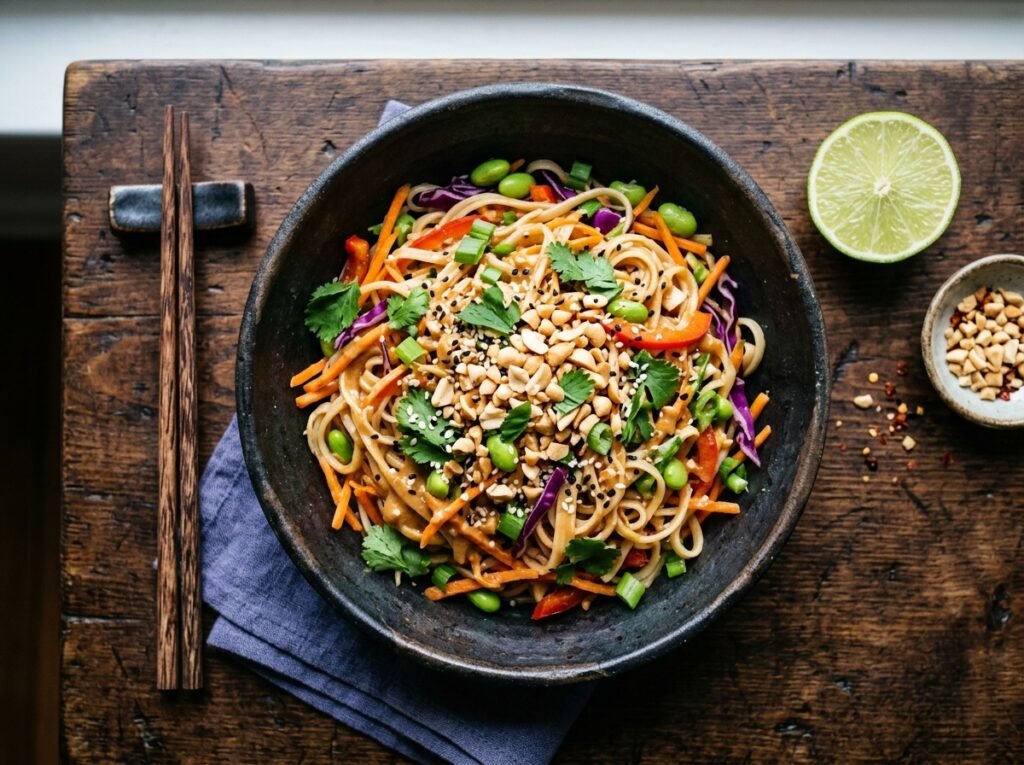
3. Thai Peanut Noodle Salad
Cold noodle salads work when the sauce is bold enough to stand up to the pasta’s neutral starch base. This peanut dressing leans hard into umami from soy and sesame, balanced by lime’s brightness and a gentle heat from Sriracha. It is make-ahead gold.
Ingredients
| Ingredient | US Customary | Metric |
|---|---|---|
| Noodles | ||
| Rice vermicelli or lo mein noodles | 8 oz | 225g |
| Vegetables | ||
| Purple cabbage, shredded | 1 cup | 90g |
| Carrots, julienned | 1 cup | 110g |
| Edamame, shelled | ½ cup | 75g |
| Green onions, sliced | 3 stalks | ~30g |
| Fresh cilantro | ¼ cup | 10g |
| Peanut Dressing | ||
| Creamy peanut butter | 3 tbsp | 48g |
| Soy sauce (low sodium) | 2 tbsp | 30ml |
| Sesame oil | 1 tbsp | 15ml |
| Fresh lime juice | 2 tbsp | 30ml |
| Sriracha | 1 tsp | 5ml |
| Honey | 1 tbsp | 21g |
| Warm water (to thin) | 2–3 tbsp | 30–45ml |
| Garnish | ||
| Roasted peanuts, crushed | ¼ cup | 35g |
| Sesame seeds | 1 tbsp | 9g |
Method
Step 1 — Cook and Rinse the Noodles
Cook noodles according to package directions, then drain and immediately rinse under cold water. This halts the cooking process and removes excess surface starch that would cause the noodles to clump. Toss lightly with a drop of sesame oil to keep them separated.
Step 2 — Whisk the Peanut Dressing
Combine peanut butter, soy sauce, sesame oil, lime juice, Sriracha, and honey in a bowl. Whisk vigorously, adding warm water one tablespoon at a time until the dressing pours smoothly. Warmth helps peanut butter’s fat molecules loosen and integrate evenly.
Step 3 — Toss and Garnish
Combine noodles with all vegetables in a large bowl. Pour dressing over and toss thoroughly. Top with crushed peanuts, sesame seeds, and fresh cilantro just before serving to preserve their textural contrast.
4. Berry Spinach Salad
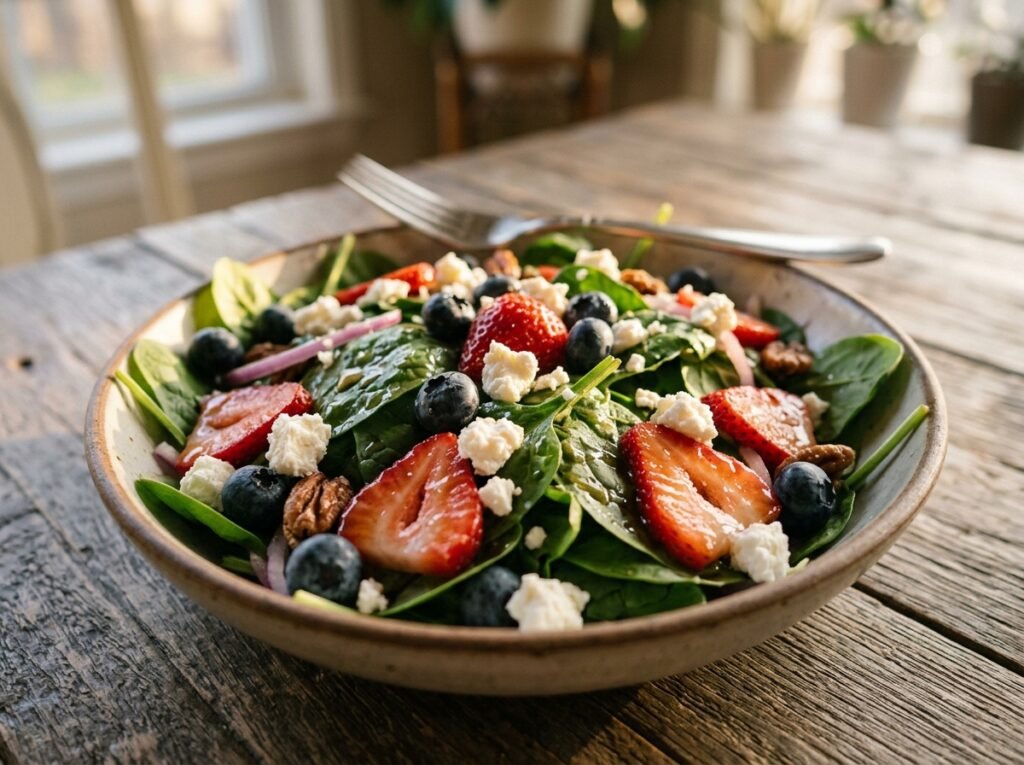
The genius of this salad is its tension between sweet and savory. Strawberries and blueberries sit alongside sharp goat cheese and toasted almonds, all tied together by a honey-balsamic vinaigrette. The acid in balsamic actually brightens the flavors of the berries through a pH-driven reaction that amplifies their anthocyanin pigment compounds.
Ingredients
| Ingredient | US Customary | Metric |
|---|---|---|
| Greens | ||
| Baby spinach | 4 cups | 120g |
| Fruit | ||
| Strawberries, sliced | 1 cup | 150g |
| Blueberries | ½ cup | 75g |
| Add-Ins | ||
| Crumbled goat cheese | ½ cup | 75g |
| Slivered almonds, toasted | ¼ cup | 28g |
| Red onion, very thinly sliced | ¼ cup | 40g |
| Dressing | ||
| Balsamic vinegar | 2 tbsp | 30ml |
| Honey | 1 tbsp | 21g |
| Olive oil | 3 tbsp | 45ml |
| Dijon mustard | ½ tsp | 2.5g |
| Salt and pepper | To taste | To taste |
Method
Step 1 — Toast the Almonds
Place slivered almonds in a dry skillet over medium heat, stirring constantly for 3–4 minutes until they turn golden and fragrant. The Maillard reaction on the nut surface releases new aromatic compounds — nutty, almost buttery — that you simply cannot get from raw almonds. Watch closely; they go from golden to burnt quickly.
Step 2 — Build the Vinaigrette
Whisk together balsamic, honey, and Dijon. Slowly stream in olive oil while whisking to emulsify. The honey acts as a secondary emulsifier alongside the Dijon, giving this dressing a notably silky, coating texture.
Step 3 — Assemble Gently
Place spinach in a large bowl and add berries and red onion. Drizzle dressing around the edges of the bowl and toss lightly from the bottom. Add goat cheese and almonds last, never tossing these in — they should rest on top to maintain their integrity.
5. Salmon Avocado Salad
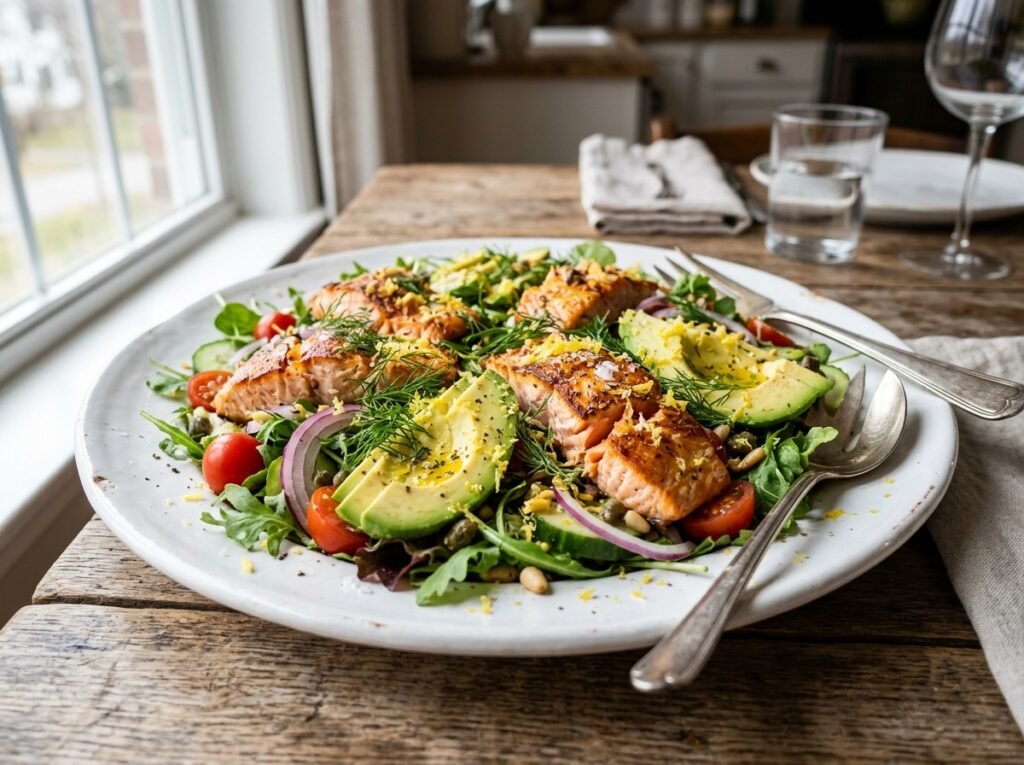
This is the salad that genuinely surprises people. Rich omega-3 salmon paired with creamy avocado and peppery arugula — dressed simply with lemon and olive oil — is a masterclass in fat-soluble flavor. The monounsaturated fats in avocado and the omega-3 fatty acids in salmon make fat-soluble vitamins in the arugula bioavailable in a way they simply are not in a fat-free salad.
Ingredients
| Ingredient | US Customary | Metric |
|---|---|---|
| Protein | ||
| Salmon fillet | 2 fillets (6 oz each) | 170g each |
| Greens & Base | ||
| Baby arugula | 4 cups | 80g |
| Cherry tomatoes, halved | 1 cup | 150g |
| Produce | ||
| Ripe avocado, sliced | 2 medium | ~300g |
| English cucumber, sliced | 1 cup | 130g |
| Capers | 2 tbsp | 17g |
| Dressing | ||
| Fresh lemon juice | 3 tbsp | 45ml |
| Extra virgin olive oil | 3 tbsp | 45ml |
| Dijon mustard | 1 tsp | 5g |
| Salt and pepper | To taste | To taste |
| Garnish | ||
| Fresh dill | 2 tbsp | 5g |
| Lemon zest | 1 tsp | 2g |
Method
Step 1 — Season and Cook Salmon
Pat salmon fillets completely dry with paper towels — surface moisture is the enemy of a good sear because water must evaporate before browning can begin. Season generously with salt and pepper. Heat an oven-safe skillet over medium-high heat with a thin film of olive oil. Sear skin-side down for 4 minutes, then transfer to a 400°F / 204°C oven for 6–8 minutes until internal temperature reaches 145°F / 63°C. Rest for 3 minutes before flaking.
Step 2 — Prepare the Dressing
Whisk lemon juice with Dijon, then emulsify in olive oil. This simple lemon vinaigrette is deliberately light so it complements the rich salmon without overwhelming it. Season and add lemon zest for a floral, bright top note.
Step 3 — Assemble
Lay arugula on a large platter. Scatter tomatoes, cucumber, and capers. Arrange avocado slices and flaked salmon over the top. Drizzle dressing all over and finish with fresh dill. Serve immediately — avocado begins oxidizing (browning) quickly once exposed to air.
6. Greek Salad
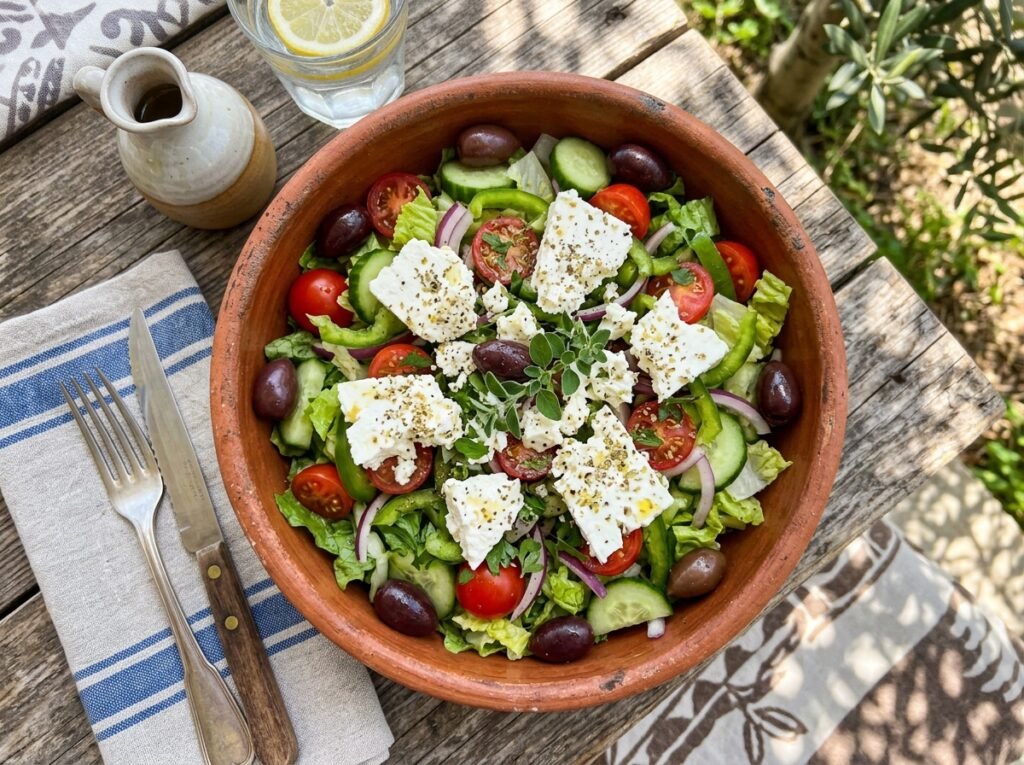
There are only a handful of places where simplicity truly wins, and Greek salad is one of them. The quality of your feta and your olives determines everything. This is not a recipe to use pre-crumbled processed feta — buy a block and crumble it yourself for a creamier, more complex flavor.
Ingredients
| Ingredient | US Customary | Metric |
|---|---|---|
| Vegetables | ||
| English cucumber, chunked | 2 cups | 260g |
| Cherry tomatoes, halved | 2 cups | 300g |
| Green bell pepper, chopped | 1 medium | ~150g |
| Red onion, thinly sliced | ½ medium | ~70g |
| Kalamata olives | ½ cup | 80g |
| Cheese | ||
| Block feta cheese, crumbled | 5 oz | 140g |
| Dressing | ||
| Extra virgin olive oil | ¼ cup | 60ml |
| Red wine vinegar | 2 tbsp | 30ml |
| Dried oregano | 1 tsp | 2g |
| Salt and black pepper | To taste | To taste |
Method
Step 1 — Chop Generously
Greek salad is rustic and intentionally chunky. Cut cucumber and tomatoes into large, bold pieces — not fine dice. Larger cuts retain more of their internal moisture and hold their structural integrity under the dressing far longer than fine pieces that expose too much cut surface area.
Step 2 — Make the Dressing
Whisk olive oil, red wine vinegar, and dried oregano together. Red wine vinegar’s acetic acid content is lower than white vinegar, giving a rounder, slightly fruity flavor that complements the briny olives and salty feta perfectly.
Step 3 — Assemble and Rest
Toss all vegetables with dressing. Allow to sit for 5–10 minutes before serving — unlike leafy green salads where resting destroys texture, firm vegetables like cucumber and bell pepper benefit from a short marination period that allows the dressing to penetrate slightly. Top with crumbled feta and olives last.
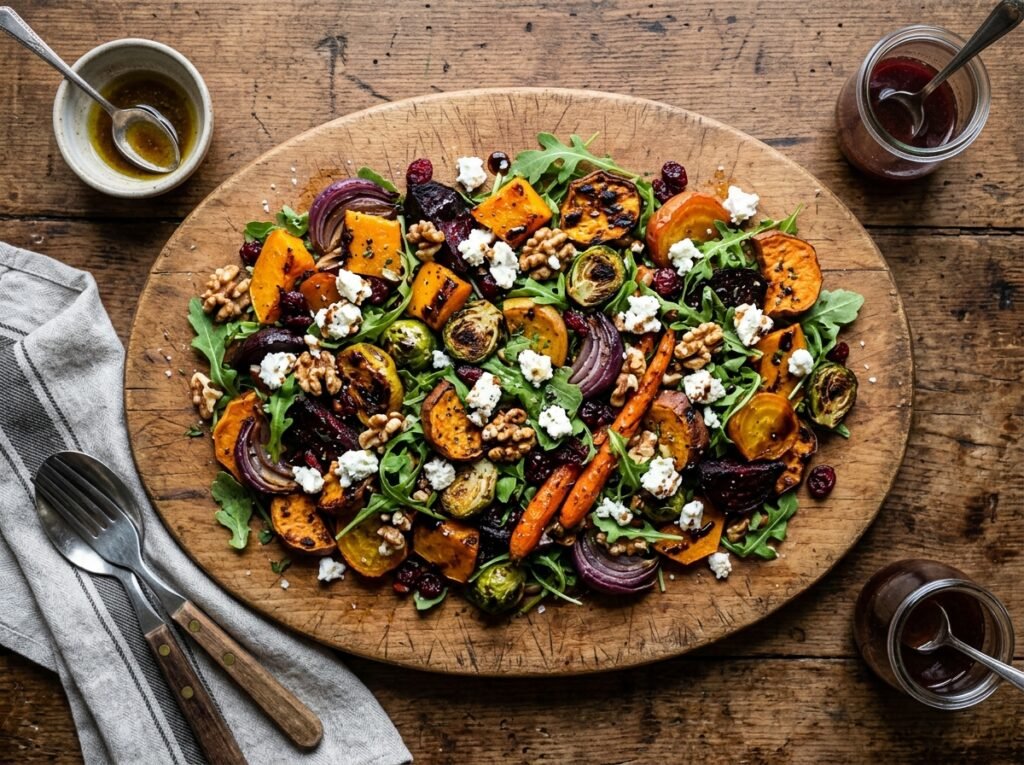
7. Roasted Vegetable Salad
Roasting transforms vegetables at a molecular level. The high, dry heat of the oven drives off moisture and concentrates natural sugars, triggering caramelization and Maillard browning simultaneously — two separate but overlapping reactions that create hundreds of new flavor compounds that have no equivalent in raw or steamed vegetables.
Ingredients
| Ingredient | US Customary | Metric |
|---|---|---|
| Vegetables | ||
| Zucchini, chunked | 1 large | ~250g |
| Red bell pepper, chunked | 2 medium | ~300g |
| Red onion, wedged | 1 large | ~200g |
| Broccoli florets | 2 cups | 180g |
| Cherry tomatoes | 1 cup | 150g |
| Base Greens | ||
| Baby arugula or mixed greens | 4 cups | 80g |
| Dressing | ||
| Olive oil (for roasting) | 3 tbsp | 45ml |
| Balsamic glaze (for dressing) | 2 tbsp | 30ml |
| Olive oil (for dressing) | 2 tbsp | 30ml |
| Honey | 1 tsp | 7g |
| Salt and pepper | To taste | To taste |
| Garnish | ||
| Crumbled goat cheese | ¼ cup | 37g |
| Fresh thyme | 1 tbsp | 3g |
Method
Step 1 — Roast the Vegetables
Preheat your oven to 425°F / 218°C. Toss all vegetables except cherry tomatoes in olive oil, salt, and pepper. Spread in a single layer on two sheet pans — never crowd them, because crowded vegetables steam rather than roast, which means no browning and no caramelization. Roast for 20 minutes, add cherry tomatoes, and roast for another 10 minutes. Let cool to room temperature before building the salad.
Step 2 — Build the Balsamic Dressing
Whisk balsamic glaze with fresh olive oil and honey until smooth. Balsamic glaze is already reduced, so it emulsifies more readily than regular balsamic vinegar. It also adds a natural sweetness that counterbalances the char on the roasted edges of the vegetables.
Step 3 — Layer and Plate
Spread greens on a large platter. Pile roasted vegetables on top while still at room temperature — not hot, because that wilts the greens. Drizzle generously with balsamic dressing and scatter goat cheese and fresh thyme across the top.
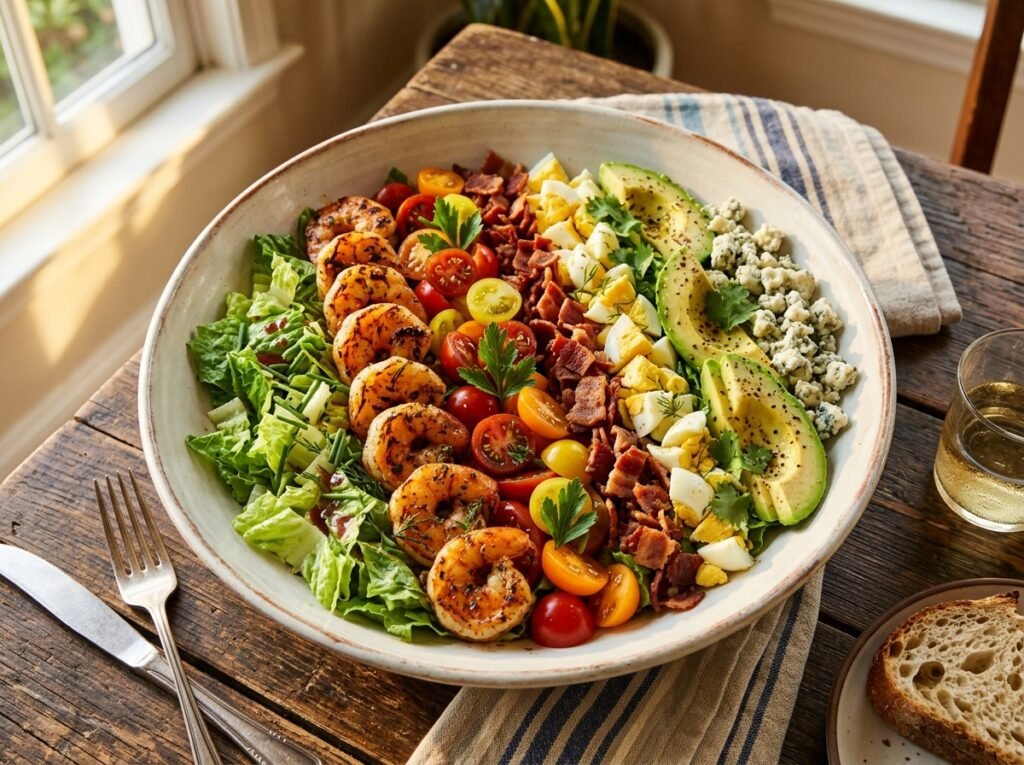
- Shrimp Cobb Salad
The Cobb is an American classic for a reason — it is engineered for satisfaction. Every component brings something different: creamy avocado, crispy bacon, jammy egg, snappy shrimp. The key to a proper Cobb is stripes, not a tossed mess. Each ingredient is laid in a row so every forkful can be a custom combination.
Ingredients
Ingredient US Customary Metric
Protein
Large shrimp, peeled and deveined 1 lb 450g
Bacon strips 6 strips ~170g
Greens
Romaine and butter lettuce mix 6 cups ~180g
Toppings
Hard-boiled eggs, halved 4 large ~200g
Ripe avocado, diced 2 medium ~300g
Cherry tomatoes, halved 1 cup 150g
Blue cheese or feta, crumbled ½ cup 75g
Corn, grilled or roasted ½ cup 82g
Dressing
Red wine vinegar 2 tbsp 30ml
Olive oil 3 tbsp 45ml
Dijon mustard 1 tsp 5g
Garlic, minced 1 clove 3g
Salt and pepper To taste To taste
Method
Step 1 — Cook Bacon and Shrimp
Render bacon in a cold skillet, bringing the temperature up slowly — starting cold allows the fat to render without the exterior burning before the interior crisps. Once crispy, remove and drain on paper towels. In the same skillet with residual bacon fat (optional, or swap for olive oil), cook shrimp over medium-high heat for 2 minutes per side until they turn pink and curl into a loose C-shape. An overcooked shrimp forms a tight O — that is when you know you have gone too far. Internal temperature should reach 145°F / 63°C.
Step 2 — Build the Dressing
Whisk red wine vinegar, Dijon, and garlic, then slowly incorporate olive oil. Season well.
Step 3 — Arrange in Stripes
Lay greens as the base layer in a large, wide bowl or platter. Arrange toppings in distinct parallel rows — eggs, shrimp, avocado, tomatoes, bacon, corn, cheese. Drizzle dressing over the top just before serving. Allow guests to toss at the table for the full effect.
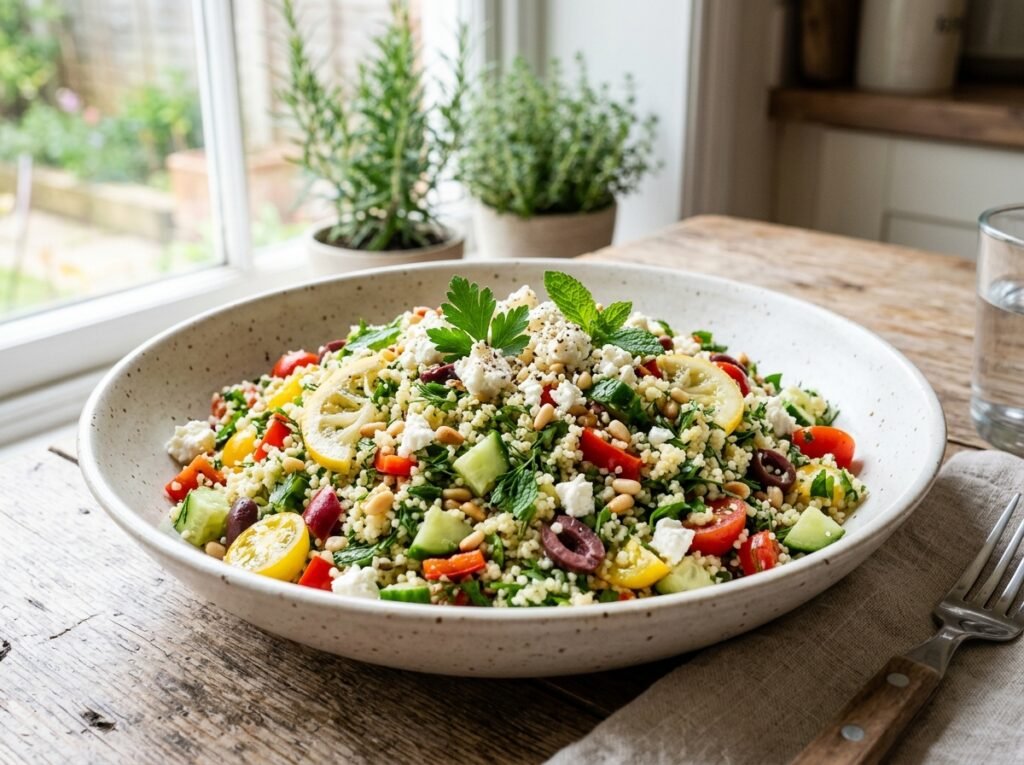
9. Lemon Herb Couscous Salad
Pearl couscous — sometimes called Israeli couscous — is not actually a grain. It is a tiny pasta made from semolina wheat, which means it cooks faster and holds a slightly chewy, toothsome texture that standard salad greens simply cannot offer. This is a spectacular make-ahead salad that holds its texture for up to four days in the refrigerator.
Ingredients
| Ingredient | US Customary | Metric |
|---|---|---|
| Base | ||
| Pearl couscous | 1½ cups (dry) | 270g |
| Vegetable broth | 2 cups | 480ml |
| Vegetables | ||
| English cucumber, diced | 1 cup | 130g |
| Cherry tomatoes, halved | 1 cup | 150g |
| Roasted red peppers, sliced | ½ cup | 75g |
| Artichoke hearts, quartered | ½ cup | 85g |
| Herbs & Cheese | ||
| Fresh parsley | ¼ cup | 15g |
| Fresh basil, torn | ¼ cup | 10g |
| Crumbled feta | ½ cup | 75g |
| Dressing | ||
| Fresh lemon juice | 3 tbsp | 45ml |
| Lemon zest | 1 tsp | 2g |
| Olive oil | 3 tbsp | 45ml |
| Dijon mustard | 1 tsp | 5g |
| Honey | 1 tsp | 7g |
| Salt and pepper | To taste | To taste |
Method
Step 1 — Toast and Cook the Couscous
In a medium saucepan over medium heat, add a drizzle of olive oil and toast the dry pearl couscous for 2–3 minutes, stirring constantly, until it turns lightly golden. This develops a nuttier flavor through surface Maillard browning. Add broth, bring to a boil, then reduce to a simmer for 10–12 minutes until tender. Drain any excess liquid and spread on a sheet pan to cool completely.
Step 2 — Prepare the Lemon Dressing
Whisk lemon juice, zest, Dijon, and honey together. Slowly emulsify olive oil in while whisking. The lemon zest adds fragrant limonene oil compounds that provide a brighter, more aromatic lemon flavor than juice alone can achieve.
Step 3 — Combine and Refrigerate
Toss cooled couscous with all vegetables, herbs, and dressing. Fold in feta last to preserve its crumble structure. This salad actively improves after 30 minutes in the refrigerator as the couscous absorbs the lemon-herb dressing flavors deeply.
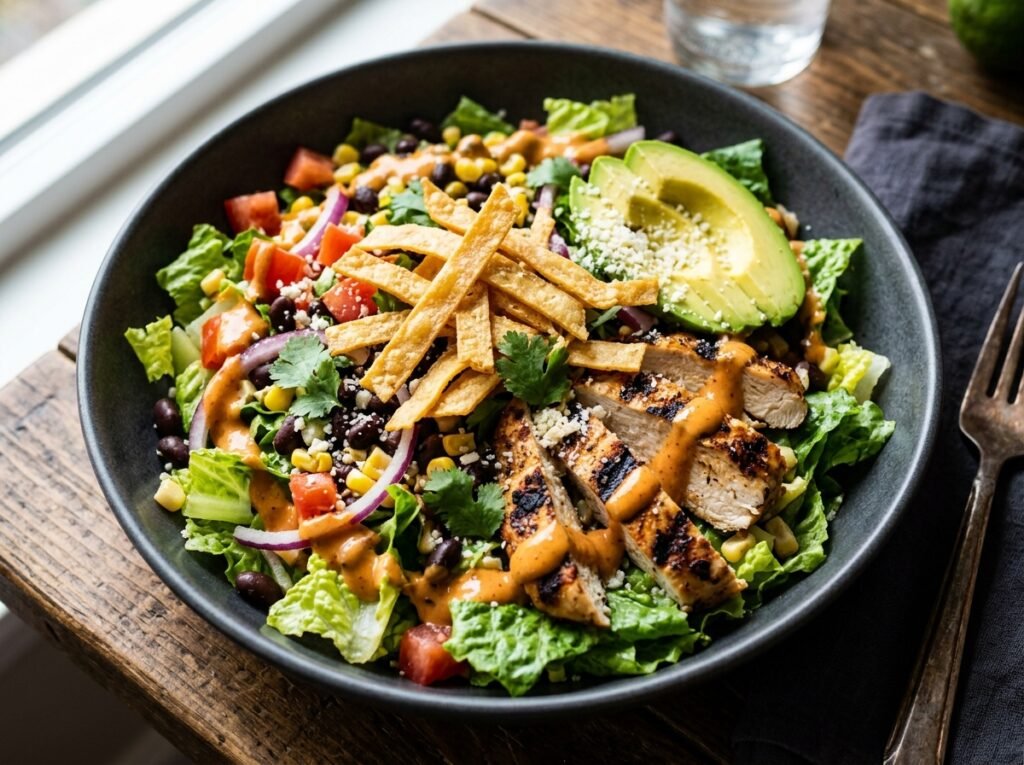
10. Southwest Chicken Salad
This is the salad that converts people who claim they do not like salads. Bold cumin-spiced chicken, crispy tortilla strips, sweet corn, black beans, creamy avocado, and a smoky chipotle-lime dressing — it covers every flavor note and every textural contrast simultaneously.
Ingredients
| Ingredient | US Customary | Metric |
|---|---|---|
| Protein | ||
| Boneless chicken thighs | 1 lb | 450g |
| Spice Rub | ||
| Cumin | 1 tsp | 3g |
| Smoked paprika | 1 tsp | 3g |
| Garlic powder | ½ tsp | 2g |
| Chili powder | ½ tsp | 1.5g |
| Salt | 1 tsp | 6g |
| Greens & Base | ||
| Romaine, chopped | 6 cups | ~180g |
| Toppings | ||
| Black beans, rinsed | 1 cup | 170g |
| Corn, roasted or canned | 1 cup | 164g |
| Cherry tomatoes, halved | 1 cup | 150g |
| Ripe avocado, diced | 2 medium | ~300g |
| Cheddar cheese, shredded | ½ cup | 57g |
| Tortilla strips | 1 cup | ~50g |
| Chipotle Lime Dressing | ||
| Greek yogurt | ¼ cup | 60g |
| Chipotle in adobo sauce | 1 pepper + 1 tsp sauce | ~20g |
| Fresh lime juice | 3 tbsp | 45ml |
| Garlic, minced | 1 clove | 3g |
| Honey | 1 tsp | 7g |
| Olive oil | 2 tbsp | 30ml |
| Salt | ½ tsp | 3g |
Method
Step 1 — Apply Spice Rub and Grill Chicken
Combine all spice rub ingredients and coat chicken thighs thoroughly. Let the rub sit on the meat for at least 15 minutes — the salt begins drawing surface moisture out slightly, then as it resolves back into the meat via osmosis, it carries dissolved spice compounds deeper into the muscle tissue. Grill or sear over medium-high heat for 5–6 minutes per side until internal temperature reaches 165°F / 74°C. Rest for 5 minutes, then slice against the grain.
Step 2 — Blend the Chipotle Lime Dressing
Add all dressing ingredients to a blender or food processor and blend until smooth and creamy. The Greek yogurt acts as both an emulsifier and a creamy base, replacing the need for mayonnaise while adding protein. Chipotle in adobo is available at virtually every major US grocery store — look for the small La Costena or Embasa brand cans in the ethnic foods aisle at Walmart, Kroger, or Target.
Step 3 — Build for Maximum Crunch
Lay romaine as the base. Add black beans, corn, tomatoes, avocado, and shredded cheddar. Arrange sliced chicken over the top. Add tortilla strips at the very last moment before serving — they lose their crispness within minutes of contact with wet dressing. Drizzle chipotle lime dressing generously across everything.
Common Salad Mistakes Table
| The Mistake | What Actually Happens (The Science) | The Fix |
|---|---|---|
| Dressing greens too early | Osmosis draws water out of leaf cells, destroying turgor pressure and wilting leaves permanently | Dress immediately before serving; store dressing separately for meal prep |
| Skipping the emulsification step | Oil and vinegar separate immediately, leaving dry leaves and acidic puddles at the bowl bottom | Always whisk in an emulsifier (Dijon, honey, egg yolk) and add oil slowly while whisking |
| Adding hot proteins to cold greens | Residual heat wilts greens, partially melts cheese, and breaks the textural contract of the whole dish | Rest all cooked proteins to room temperature before plating |
| Overcrowding vegetables on the sheet pan | Trapped steam prevents Maillard browning, resulting in soft, dull vegetables with no caramelization | Use two sheet pans; ensure single-layer spacing between pieces |
| Using pre-cut bagged romaine | Cut surfaces oxidize quickly; bagged greens lose turgor pressure faster due to ethylene gas exposure in the bag | Buy whole heads, tear by hand, and spin dry in a salad spinner |
| Adding avocado too early | Avocado oxidizes rapidly through enzymatic browning once the flesh is exposed to oxygen | Add avocado immediately before serving, or coat cut surfaces with lime juice to slow the process |
| Under-seasoning the greens themselves | The dressing carries all the seasoning but dilutes as it coats leaves, leaving the actual greens bland | Season greens lightly with a tiny pinch of flaky salt before tossing with dressing |
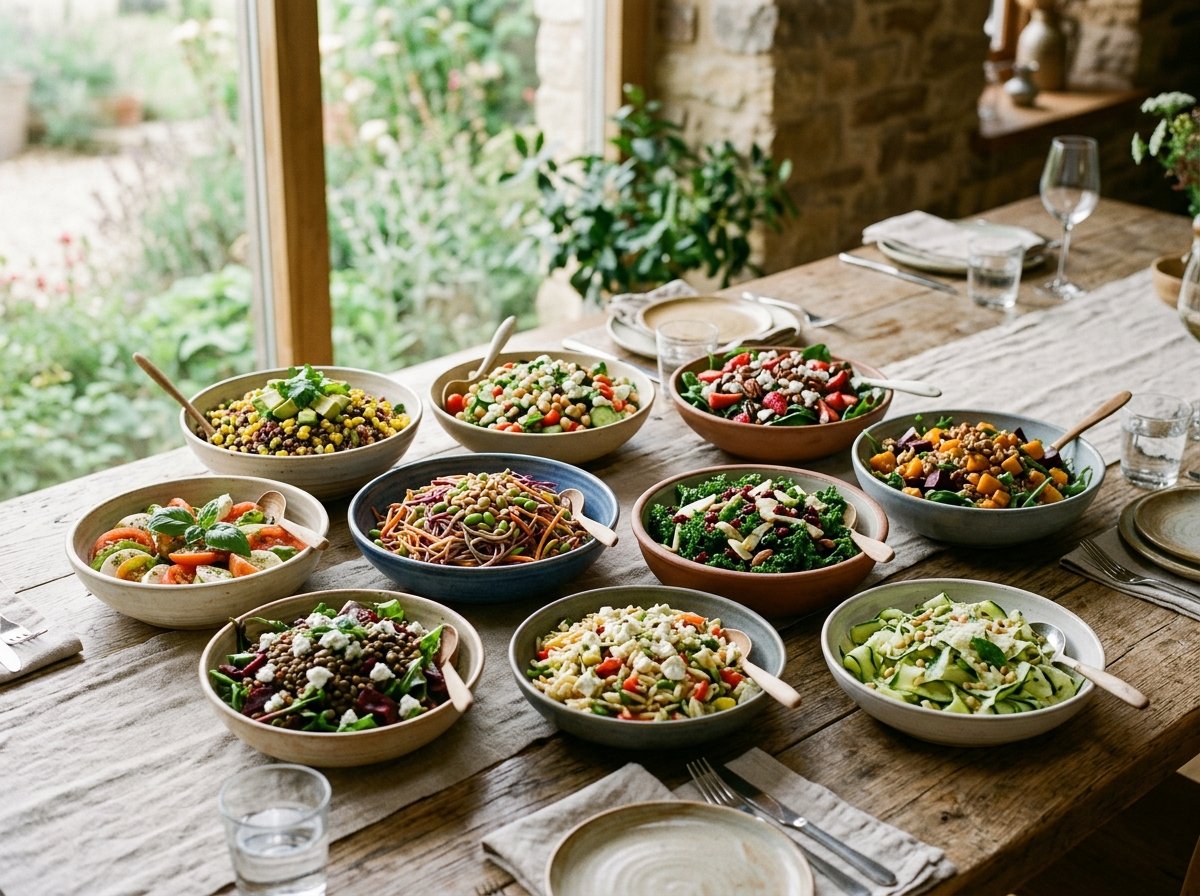

10 Easy Salad Recipes for Healthy Lunches and Dinners
Ingredients
Equipment
Method
- Start by washing all leafy greens in ice-cold water to restore maximum turgor pressure within the plant cells, ensuring an incredibly crunchy bite. Spin the greens completely dry using a salad spinner; any leftover water on the leaves will repel your oil-based dressings through hydrophobic exclusion.
- Season your chicken breasts, salmon, and shrimp with sea salt and black pepper. Heat a cast-iron skillet over medium-high heat and sear the proteins until the chicken reaches an internal USDA safety temperature of 165°F (74°C) and the seafood hits 145°F (63°C). Allow the proteins to rest for 5 minutes before slicing to let the muscle fibers reabsorb their natural juices, preventing the meat from drying out.
- Create your base vinaigrette by combining the acid component, like fresh lemon juice, with a natural emulsifier like Dijon mustard or peanut butter in a small bowl. Slowly drizzle in the extra virgin olive oil while whisking vigorously with a steel wire whisk. This mechanical shearing forces the unmixable oil and water molecules into a beautifully stable, creamy emulsion that uniformly coats your salad without separating.
- When packing these salads for healthy weekly lunches, always employ the density layering technique to prevent structural wilting. Pour the heavy emulsified dressing into the absolute bottom of your airtight glass storage container first, followed by dense, non-absorbent elements like quinoa, cucumbers, and chickpeas. Place the delicate leafy spinach or romaine lettuce at the very top, safely away from the acidic dressing until you are ready to shake and serve.
Notes
Chef John’s Insight
A salad is the most honest thing on any table. It cannot hide behind long cooking times or heavy sauces. Every element has to earn its place — the greens need to be crisp enough to give a little resistance, the dressing needs enough acid to wake you up and enough fat to keep you interested, and the proteins need to be cooked just to the point where they still have something to say for themselves. I have made thousands of salads in my career and I still believe the simplest versions — the ones with four or five real, thoughtful ingredients — tell a more complete story than ones stuffed with twenty components just for the sake of it. A great salad does not need volume. It needs intention. The lesson, always: respect the simplest dishes the most, because they have nowhere to hide.
— Chef John, The Flavor Bazaar
Nutrition Data Table (Estimated Per Serving Average)
Values represent a reasonable average across the 10 salad recipes. Individual recipes will vary based on protein choice, portion size, and dressing quantity. All values are estimates.
| Nutrient | Per Serving (Approximate) |
|---|---|
| Calories | 380–520 kcal |
| Protein | 28–36g |
| Total Fat | 18–24g |
| Saturated Fat | 4–7g |
| Total Carbohydrates | 28–40g |
| Dietary Fiber | 6–9g |
| Sodium | 480–720mg |
| Cholesterol | 85–145mg |
Food Safety & Temperature Guide
Safe food handling is non-negotiable in any kitchen. Here are the USDA and FDA standards that apply directly to these recipess.
| Protein | USDA Minimum Internal Temperature | Notes |
|---|---|---|
| Chicken (breast and thighs) | 165°F / 74°C | Always verify with instant-read thermometer; no pink at center |
| Shrimp | 145°F / 63°C | Cook until opaque and curved into a loose C-shape |
| Salmon / Fish fillets | 145°F / 63°C | Flesh should flake easily and be opaque throughout |
| Hard-boiled eggs | Fully cooked (212°F / 100°C water) | Yolk should be fully set for salad safety |
FDA Danger Zone — Critical Awareness:
All salad ingredients, particularly cooked proteins and dressed salads, must never sit in the temperature range of 40°F–140°F / 4°C–60°C for more than 2 hours. At room temperature (approximately 70°F / 21°C), harmful bacteria like Salmonella can double in population every 20 minutes. Meal-prepped salad components should be refrigerated promptly after cooking and cooling.
USDA Safe Minimum Internal Temperature Char
Storage & Reheating Table
| Component | Refrigerator | Freezer | Best Reheat / Serving Method |
|---|---|---|---|
| Dressed Green Salads | Not recommended — max 30 min | Do not freeze | Serve immediately after dressing |
| Undressed Meal-Prep Greens | 3–4 days (dry, sealed container with paper towel) | Not suitable | Remove from fridge, dress immediately before serving |
| Cooked Chicken | 3–4 days | Up to 3 months | Warm gently in skillet with splash of broth; or serve cold |
| Cooked Shrimp | 2–3 days | Up to 3 months | Best served cold; reheat gently over low heat — do not microwave |
| Cooked Salmon | 2–3 days | Up to 2 months | Serve at room temperature for salads; flake directly from fridge |
| Cooked Quinoa / Couscous | 5 days | Up to 2 months | Serve cold in salads; fluff with fork before using |
| Vinaigrette / Dressing | 1–2 weeks (sealed jar, fridge) | Not recommended | Shake vigorously before using; bring to room temp first |
| Greek Salad (dressed) | 2 days (vegetables hold well) | Do not freeze | Refresh with squeeze of lemon before second serving |
FAQ Section
How do I keep my prepped salad from getting soggy?
The single best move is to store the dressing completely separately and only dress portions at the moment of eating. For grain-based salads like quinoa or couscous, you can pre-dress them because the grains absorb flavor without wilting — but for any leafy green base, dressing and storage together is always a mistake.
Can I freeze these grain salads?
The grain portion alone — plain cooked quinoa or couscous — freezes well for up to two months in airtight freezer bags. But once you combine grains with fresh vegetables, cheese, or dressing, freezing destroys the texture of virtually every other component. Freeze the base, build fresh when ready.
What is the best way to meal prep these salads for the whole week?
The most practical approach is what I call “component prep.” Cook all your proteins Sunday, make a double batch of dressing, prep your grains, and wash and dry your greens. Store everything in separate containers. Each day, you assemble in 3 minutes instead of cooking from scratch. This approach works beautifully for all 10 recipes in this guide.
Why does my homemade dressing always separate?
You are likely either skipping the emulsifier or adding oil too fast. Add your acid and emulsifier (Dijon mustard is the most reliable) to the bowl first, then add oil in a very slow, thin stream while whisking constantly. If you add oil too fast, the droplets are too large to be held in suspension by the emulsifier molecules and the dressing breaks immediately.
Can I substitute grilled tofu or chickpeas for the animal proteins?
Absolutely, and the salads hold up beautifully. For tofu, press it for at least 30 minutes to remove excess moisture, then cube and pan-fry over high heat in a thin layer of oil until all sides are golden. Roasted chickpeas work especially well in the Mediterranean Quinoa, Greek, and Roasted Vegetable salads. Season them the same way you would season chicken.
Internal Linking Recommendations
Planning a full dinner spread? Serve these salads alongside our [Perfect Grilled Chicken Breast — Juicy Every Time] guide for a complete high-protein meal that never gets boring.
Best Honey Sriracha Chicken Rice Bowl Recipe
Best Air Fryer BBQ Chicken Flatbread Recipe