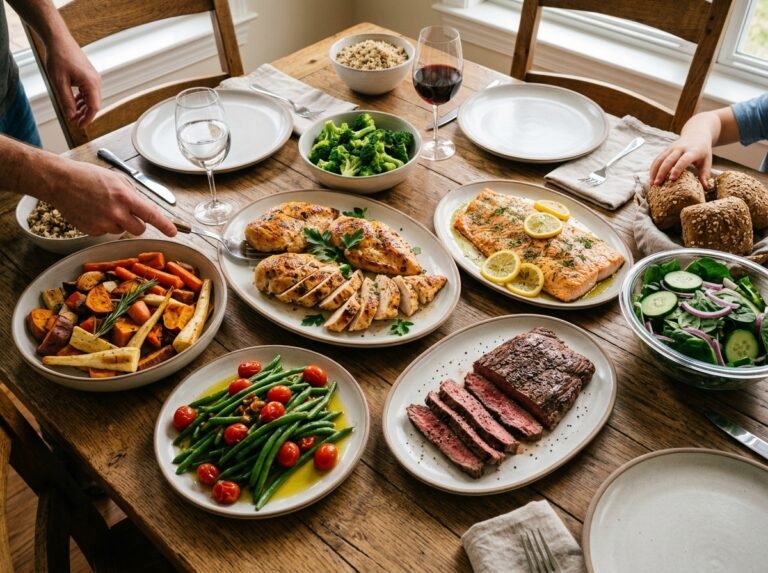
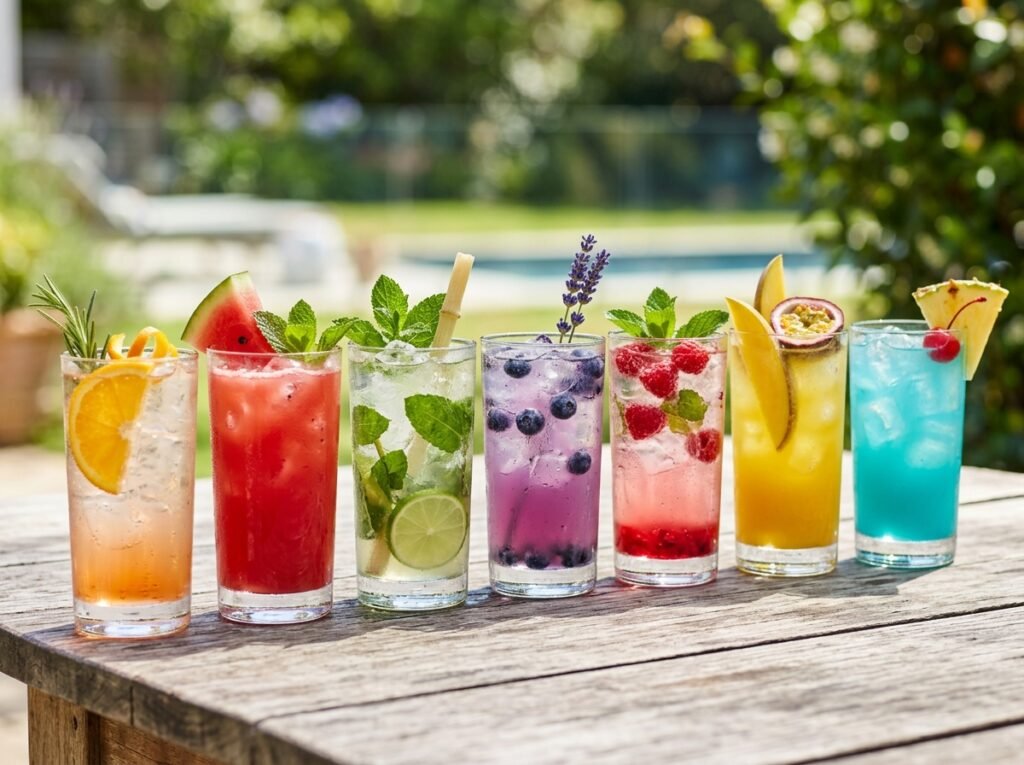
7 Refreshing Summer Drinks to Beat the Heat
By Chef John | “Easy Recipes & Smart Cooking Hacks”
The first sip hits you before the glass even reaches the table. Condensation already dripping down your fingers. That bright, cold burst that makes you close your eyes for just a second, as if that single moment could extend the relief across your entire afternoon.When the temperature spikes, finding true, cellular hydration becomes a survival mechanism. If you are searching for the ultimate refreshing summer drinks to beat the heat, you have come to the right place. I have tested dozens of liquid bases to isolate exactly what keeps you cool.
Here is what most people get wrong about summer beverages: they assume cold is enough. They dump ice into flat soda or dilute a sports drink with melted water from their freezer. They end up with something that is wet, not refreshing. Something that quenches nothing and satisfies less.
I have spent years studying the physics of temperature transfer and sugar solubility—isolating the exact ratios required to create a beverage that genuinely cools the body rather than leaving a sugary aftertaste that drags you down an hour later. The difference between a drink that hydrates and a drink that just adds to your summer sluggishness comes down to understanding acid balance, essential oil chemistry, and how ice geometry affects everything from dilution to aroma releases.
Today, I am going to share seven completely different approaches to summer refreshment. From classic Southern iced tea perfected through tannin science to a spicy pineapple number that will challenge everything you thought you knew about cooling down.
The Science Behind Genuine Refreshment
Before we start squeezing citrus or crushing ice, let us understand what your body actually needs when summer heat kicks in—and why some drinks deliver relief while others just feel like empty calories.
Your body cools itself primarily through evaporative cooling—sweat evaporating from your skin carries heat away. But this process requires adequate hydration at the cellular level. Drinks that are too sugary actually slow water absorption in your small intestine. The sugar pulls water into your gut osmotically, paradoxically making you feel more dehydrated even though you just consumed liquid.
Citric acid changes everything. Lemons, limes, and citrus trigger salivation and digestive activity almost immediately, creating that immediate sensation of refreshment before the liquid even hits your stomach. The acidity also balances sweetness, preventing the cloying aftertaste that makes you reach for another glass twenty minutes later.
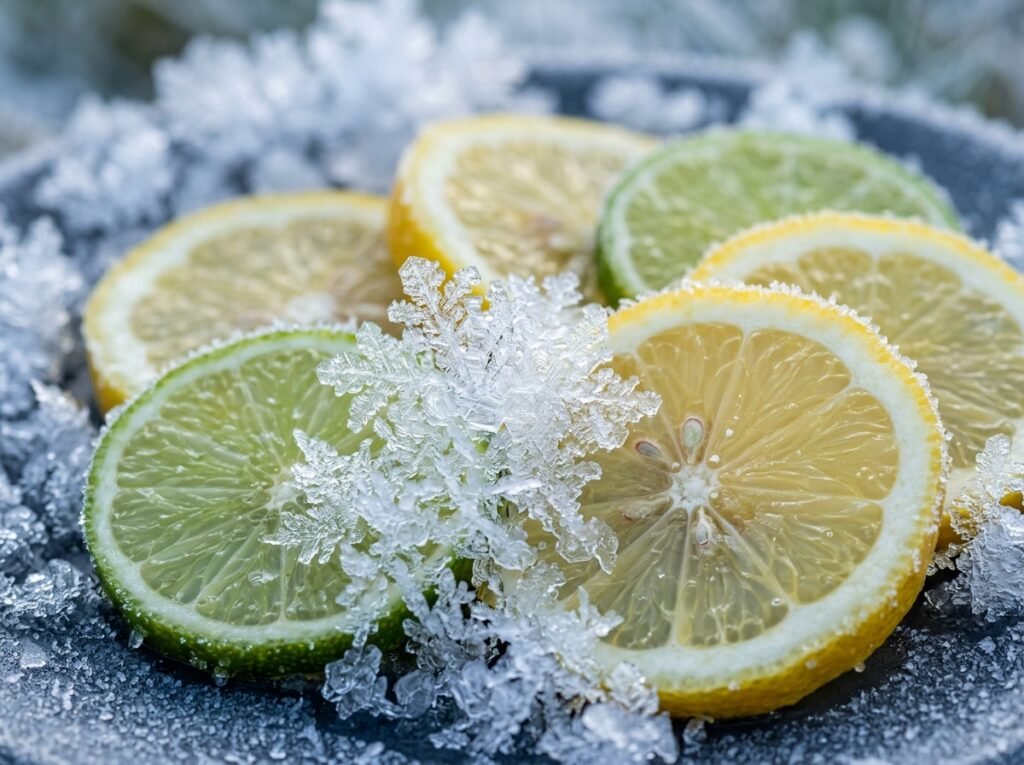
Now, let us talk about ice—and why crushed ice tastes “colder” than cubes despite being the same temperature.
Sugar (solid)+Water (liquid, heat)→Simple Syrup (dissolved)
The dissolution process absorbs heat. More surface area from crushed ice means faster dissolution, faster heat absorption, and a more immediate cooling sensation. Cubes melt slowly and dilute your drink unevenly. Crushed ice distributes cold throughout the entire glass rather than creating warm pockets.
In simple terms: the size of your ice determines whether your drink tastes refreshing for the first sip or the last.
Pro Buying & Barware Guide
Great summer drinks start with great ingredients—and spending five extra minutes at the store makes the difference between a mediocre beverage and something that makes people ask for your secret.
Fresh Produce Selection
For citrus, look for fruit that feels heavy for its size. At Whole Foods, their organic citrus section typically offers better aroma profiles than conventional options. Trader Joe’s sells excellent small-batch lime juice if you need convenience without sacrificing quality.
For herbs like mint, basil, and rosemary, always smell before buying. The aroma indicates essential oil content—which determines how much flavor your muddling actually extracts. Yellowing or wilted herbs have already lost their volatile compounds.
Kroger and Target both carry Mott’s or R.W. Knudsen organic juice concentrates that work well as base ingredients when fresh produce is not practical.
Dynamic Sweetener Options
Standard white sugar works, but agave nectar dissolves faster and carries flavor differently due to its higher fructose content. Honey (raw, local if possible) adds complexity but can overwhelm delicate flavors. Stevia works for zero-calorie options but requires careful dosing—too much creates a bitter aftertaste.
Equipment Comparison
| Equipment | Best For | Limitations | USA Brands |
|---|---|---|---|
| Cocktail Shaker (Boston style) | Citrus, cocktails, emulsified drinks | Limited capacity | OXO Good Grips |
| High-Speed Blender (Vitamix) | Frozen drinks, fruit purees, slushies | Over-processing can bruise flavors | Vitamix 5200 |
| Muddler (Wooden vs. Silicone) | Herb extraction without bitterness | Technique matters | Cocktail Kingdom |
| Citrus Press (Handheld) | Fresh juice, maximum yield | Labor intensive | Chef’n lemonpress |
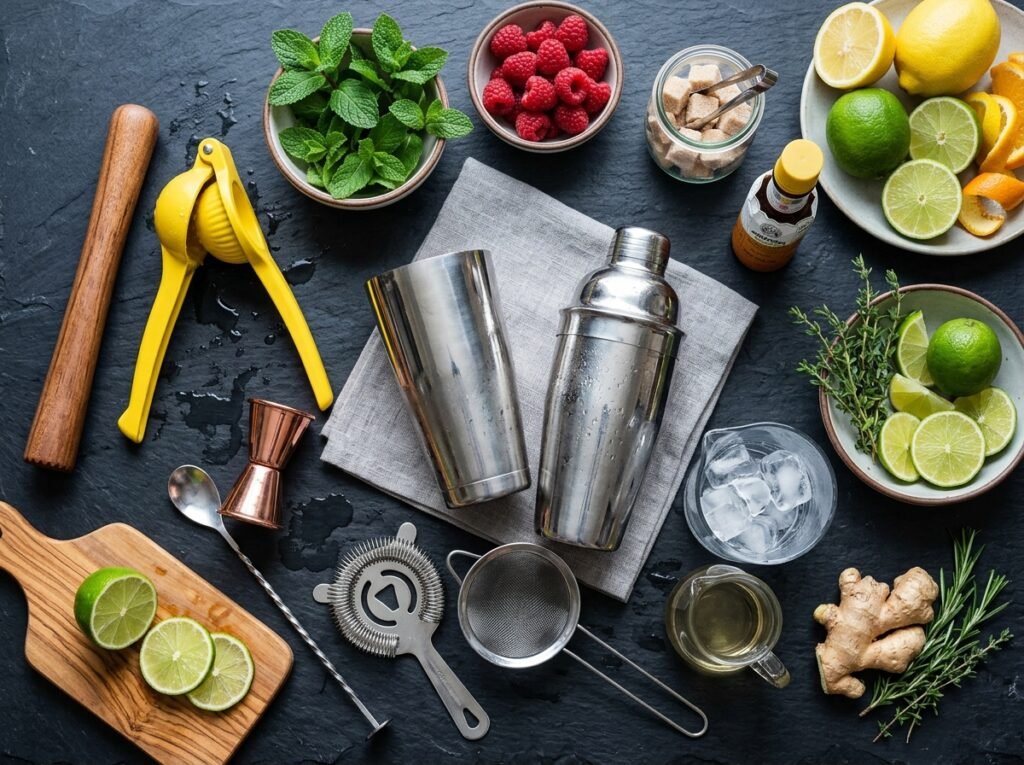
For essential oil extraction without bitterness, use a wooden muddler with gentle pressure. Twist and tear rather than grind. Silicone muddlers tend to crush plant cells and release bitter compounds.
Master Base Ingredients Matrix
| Category | Ingredient | US Amount | Metric | Quality Notes |
|---|---|---|---|---|
| Sweeteners | Granulated sugar | 1 cup | 200g | Standard simple syrup base |
| Agave nectar | ½ cup | 160ml | Faster dissolving, milder | |
| Raw honey | ⅓ cup | 115g | Complex flavor, antioxidants | |
| Acids | Fresh lemon juice | 2 cups | 480ml | Always squeeze fresh |
| Fresh lime juice | 1 cup | 240ml | Key for balance | |
| Citric acid powder | 1 tsp | 4g | Emergency backup | |
| Bases | Black tea bags | 8 bags | 8 bags | Use for strong tea |
| Herbal tea (hibiscus) | 4 bags | 4 bags | Tart, ruby red | |
| Aromatics | Fresh mint leaves | 1 cup packed | 24g | Bright green, fragrant |
| Fresh basil | ½ cup packed | 12g | Purple or sweet varieties | |
| Rosemary sprigs | 4 sprigs | 4 sprigs | Woody, strong—use sparingly |
The 7 Refreshing Summer Drinks
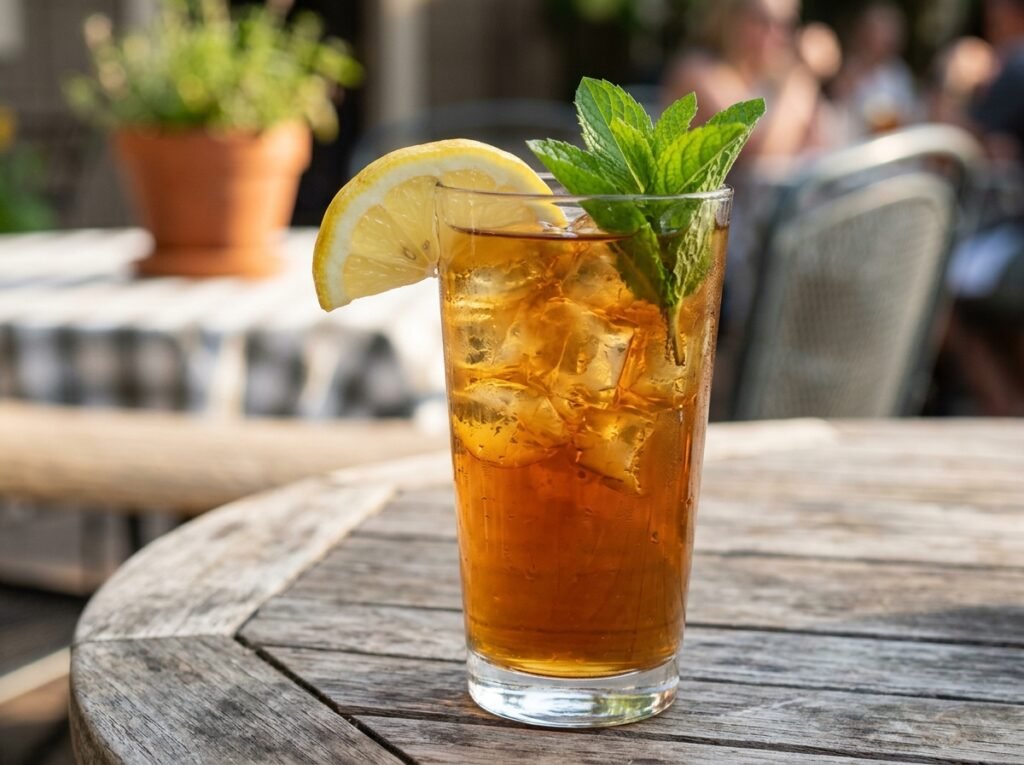
Recipe 1: Classic Southern Sweet Iced Tea (The Perfect Tannin Balance)
This is the foundation of American summer refreshment—but most versions are either bitter from over-steeping or flat from using too little tea. The science lies in tannin extraction and understanding that tannins, while providing that satisfying body, become astringent when over-extracted.
The ideal brewing ratio is 1 family-size tea bag per quart / liter of water. Bring water to a rolling boil, remove from heat, add bags, and steep for exactly 5-7 minutes. Any longer and you pull harsh tannins from the plant material. The water should look like dark amber honey when ready.
For sweet tea, add sugar while the tea is still hot so it dissolves completely. The classic ratio is ¾ cup / 150g sugar per quart, but I prefer ½ cup / 100g for a less cloying finish that lets the tea flavor shine.
Assembly framework: Brew and sweeten while hot. Cool to room temperature. Refrigerate until very cold. Serve over fresh ice. The tea continues extracting slightly as it cools—do not add ice made from tea or dilution becomes exponential.
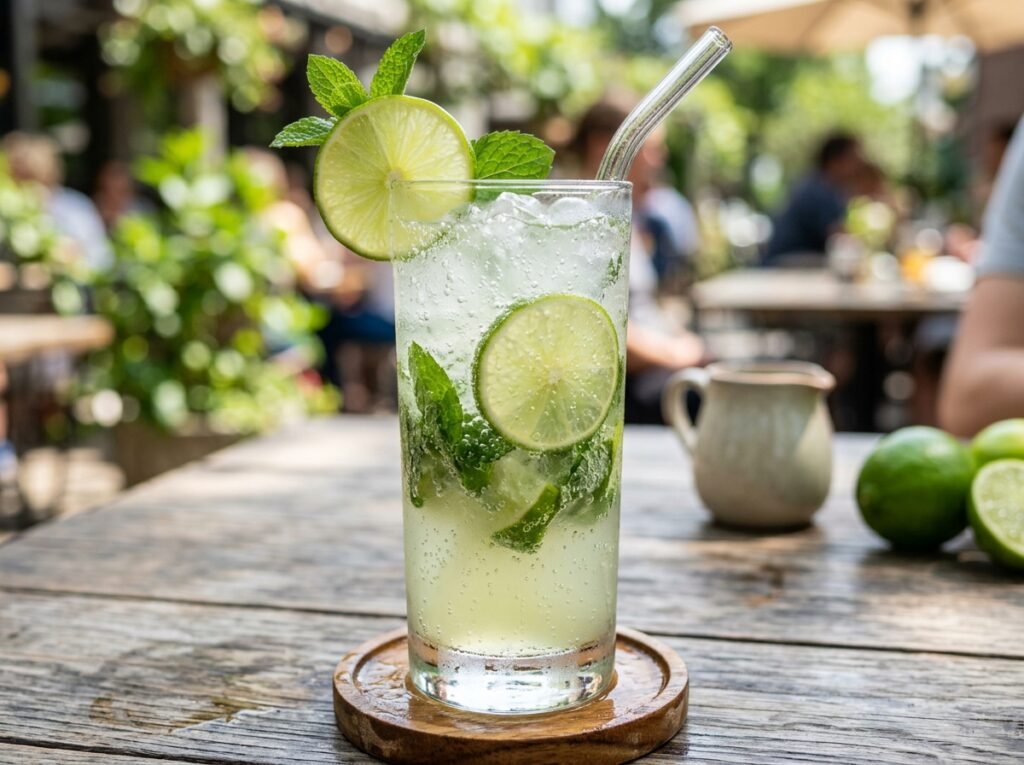
Recipe 2: Sparkling Mint Limeade (Muddling Science for Essential Oil Extraction)
This drink demonstrates exactly why technique matters when working with fresh herbs. Mint contains menthol (provides cooling sensation) and pulegone (provides aroma)—both trapped in oil glands within the leaf cells.
The goal is releasing those oils without crushing the bitter compounds found in the leaf veins. This requires gentle pressure, not grinding.
Place fresh mint leaves and lime wedges in your glass. Muddle with 3-4 gentle presses, then stop. Add sugar syrup and stir. The lime juice activates the mint oils through emulsification, creating a flavor profile that hits your nose and tongue simultaneously.
Top with sparkling water just before serving to preserve carbonation. Flat sparkling water dilutes the experience entirely.
Assembly framework: Muddle mint and lime gently. Add 2 oz / 60ml simple syrup. Stir well. Fill glass with crushed ice. Top with 6 oz / 180ml sparkling water. Garnish with mint sprig.
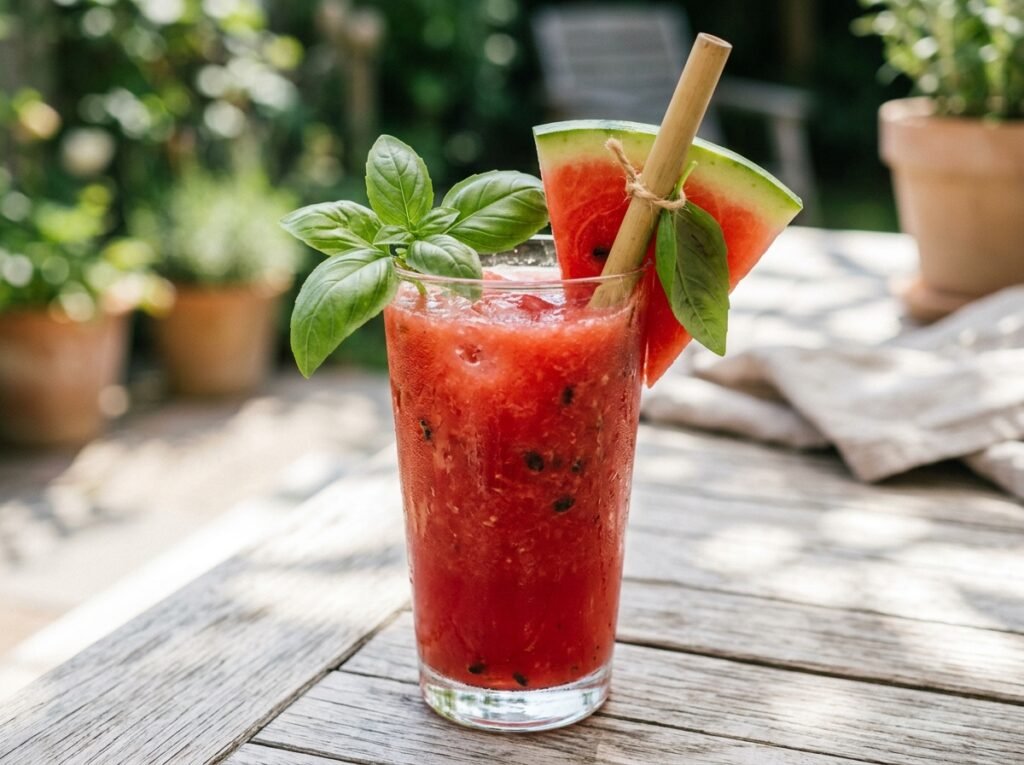
Recipe 3: Watermelon Basil Cooler (High-Lycopene Hydration)
Watermelon is 92% water by weight—the highest water content of any common fruit. Combined with electrolytes like potassium and magnesium, it delivers genuine cellular hydration rather than just fluid in your gut.
But the real star here is lycopene, the carotenoid pigment that gives watermelon its red color. Lycopene is fat-soluble, meaning your body absorbs it better when consumed with a small amount of fat. This is why I add a squeeze of coconut oil to this blend—barely detectable, but enough to boost nutrient absorption.
Fresh basil adds linalool and eugenol—aromatic compounds that create an unexpected savory depth that makes people wonder what that secret ingredient might be.
Assembly framework: Blend 2 cups / 300g fresh watermelon chunks until smooth. Add 6 fresh basil leaves (tear, don’t blend). Blend briefly. Strain if desired. Add 1 oz / 30ml simple syrup and juice of half a lime. Serve over crushed ice. Garnish with watermelon slice and basil leaf.
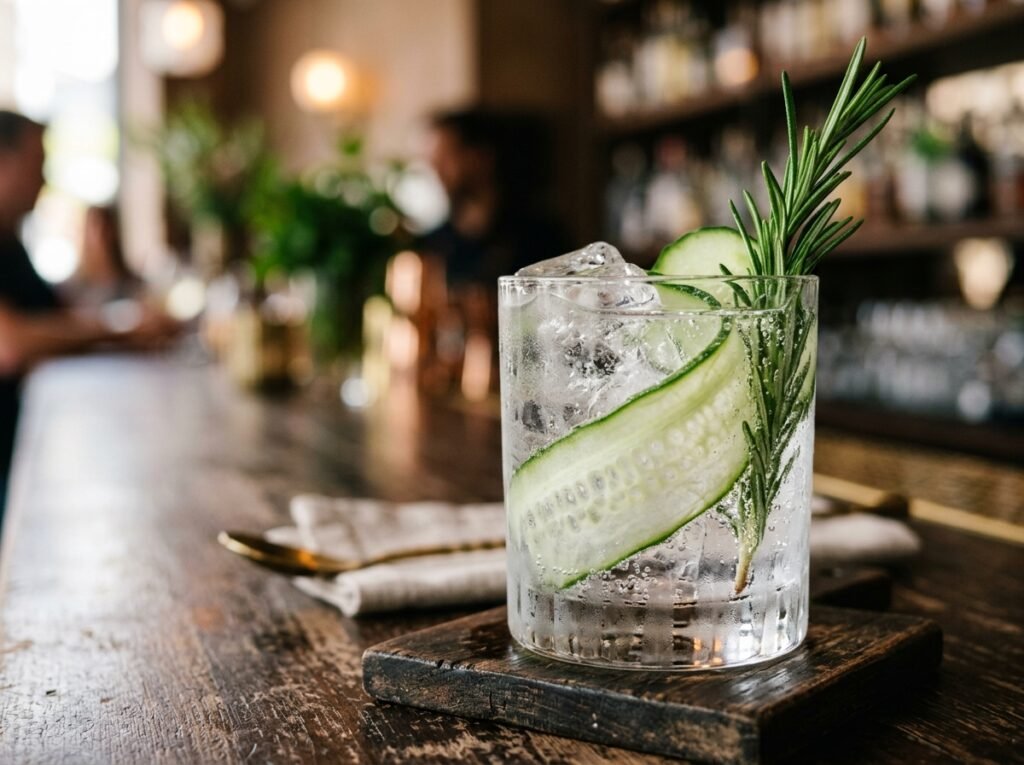
Recipe 4: Cucumber Rosemary Tonic (Herbal Infusion Tech)
Cucumber contains cucurbitacins—compounds that create a slightly bitter, cooling sensation on your palate. When combined with the piney, medicinal notes of rosemary, something magical happens: the flavors fight for dominance, creating a complex profile that seems to refresh deeper than simple sweetness ever could.
The key is cold infusion. Heating rosemary makes it bitter and medicinal. Instead, steep rosemary sprigs in cool water for 4-6 hours in the refrigerator. The slow extraction pulls aromatics without the harsh compounds.
For tonic, pair with fever-tree or Q Mixers—these premium tonics have actual quinine content and botanicals rather than just quinine flavoring.
Assembly framework: Cold-infuse 3 rosemary sprigs in 2 cups / 480ml water overnight. Strain. Add 3 oz / 90ml cucumber juice (blend and strain fresh cucumber). Add 4 oz / 120ml premium tonic. Sweeten lightly with ½ oz / 15ml simple syrup. Serve over large ice cubes with cucumber ribbon garnish.
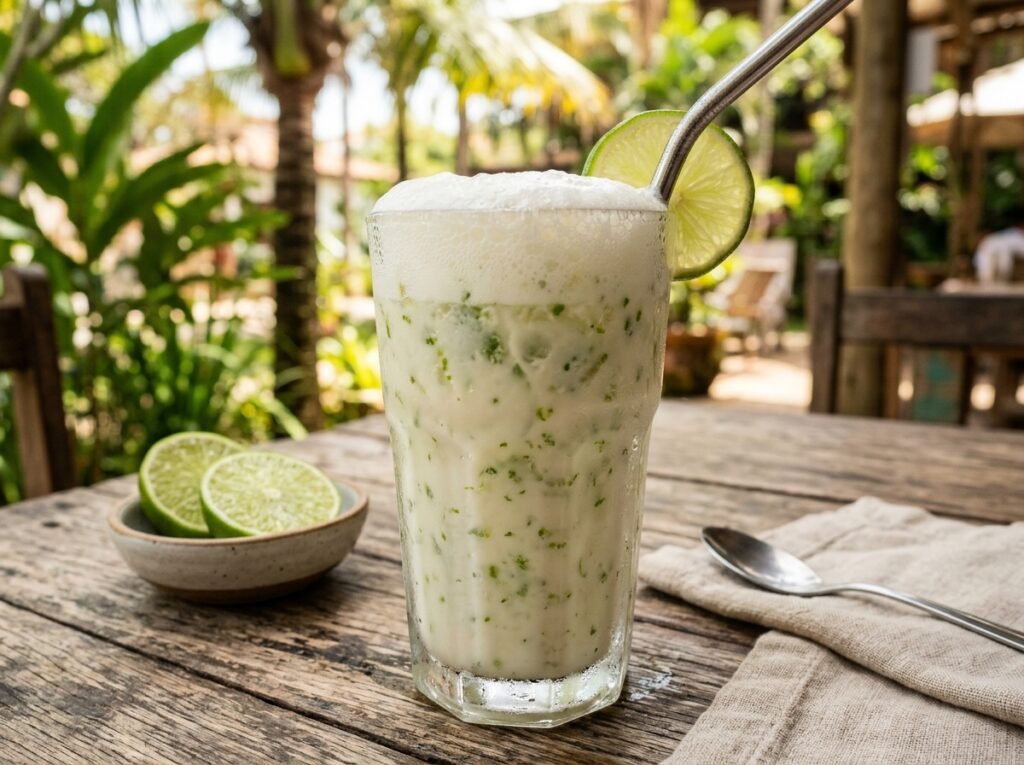
Recipe 5: Creamy Brazilian Lemonade (Whole-Lime Emulsification Technique)
This drink—known as Limão Suíço in Brazil—baffles most Americans on first encounter. It is called lemonade but contains whole limes blended into the liquid, skin and all. The result is cloudier, creamier, and more complex than anything made with just juice.
The technique exploits citrus essential oils in the peel. Blending breaks cell walls and creates an emulsion between the lime oils, juice, and water. The condensed milk stabilizes this emulsion while adding body and balancing acidity with natural sweetness.
Without the milk, this would be bitter and separated. The protein in condensed milk acts as an emulsifier, keeping everything suspended and creating that characteristic pale yellow color.
Assembly framework: Blend 2 whole limes (scrubbed, quartered) with 2 cups / 480ml water for 30 seconds. Strain through fine mesh. Add ½ cup / 120ml sweetened condensed milk. Blend 10 more seconds. Serve over ice. The drink should be slightly thick and cloudily white-yellow.
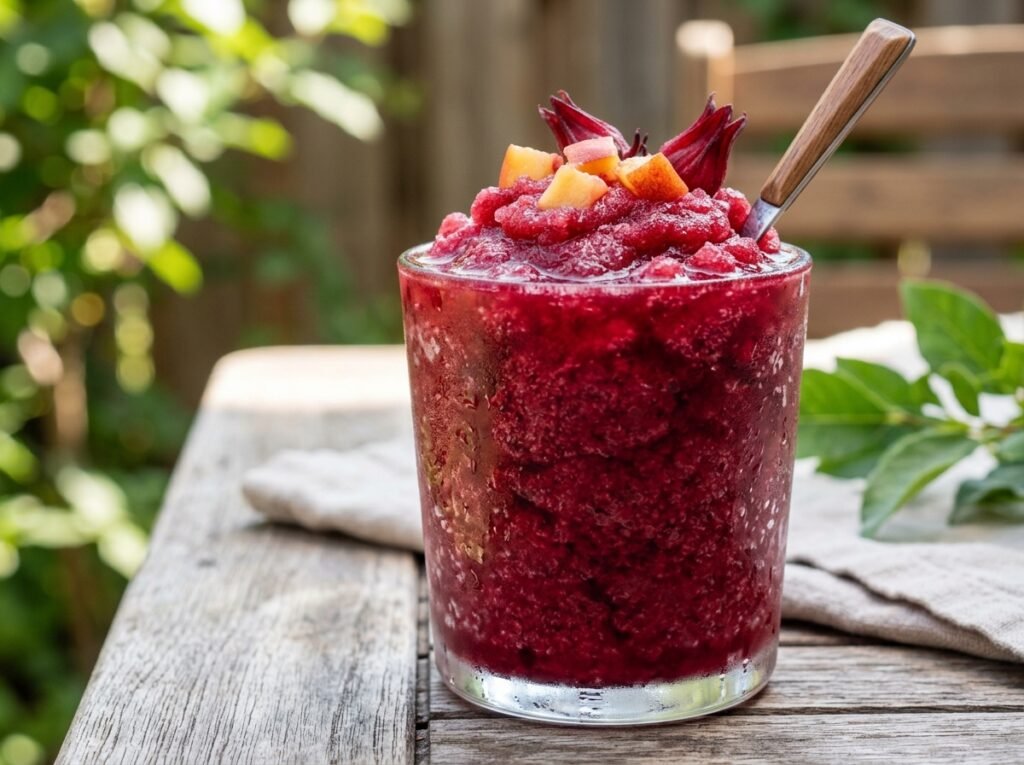
Recipe 6: Frozen Peach Hibiscus Herbal Slush (Anthocyanin Extraction & Ice Crystallization)
Hibiscus tea creates one of the most visually stunning drinks in the summer repertoire—that deep, saturated ruby red comes from anthocyanins, powerful antioxidants that also happen to be pH-sensitive. Add acid (lemon juice) and the color intensifies. Add base (baking soda) and it shifts toward purple-blue.
This slush requires understanding ice crystallization. When you blend ice with liquid, blade speed and duration determine crystal size. Blend too long and you get liquid again. The goal is small, uniform ice crystals that feel slushy and refreshing without being a milkshake.
Fresh peaches contribute beta-carotene and natural sweetness that balances hibiscus’s tartness beautifully.
Assembly framework: Brew strong hibiscus tea (3 bags per cup / 240ml). Sweeten with 2 oz / 60ml honey while hot. Refrigerate until cold. Blend with 1 cup / 150g frozen peach slices and 1 cup / 130g crushed ice until slushy. Add more ice if too thin, more tea if too thick. Serve immediately before ice melts.
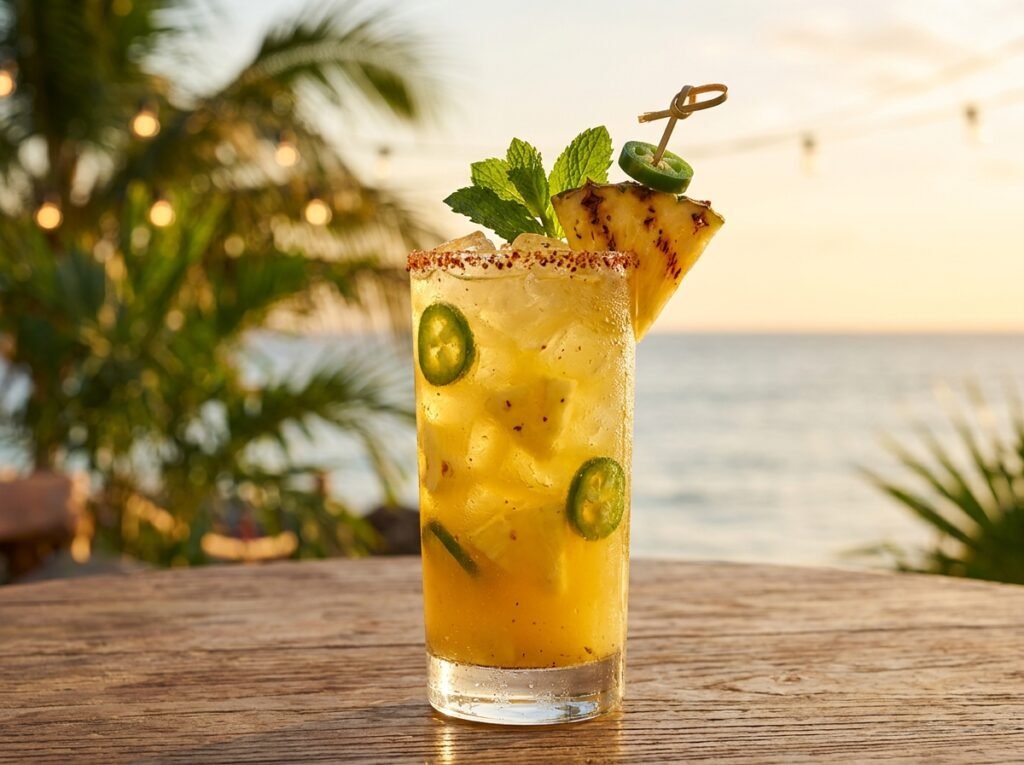
Recipe 7: Spicy Pineapple Jalapeño Mocktail (Capsaicin vs. Cold Contrast)
This drink exploits one of the most counterintuitive phenomena in flavor science: cold amplifies heat perception. Capsaicin—the compound that makes peppers hot—binds to heat receptors in your mouth. Cold temporarily numbs those receptors, making the heat feel more intense while simultaneously creating a sensation your brain interprets as exciting rather than painful.
The key is jalapeño infusion technique. Muddle jalapeño slices gently to release capsaicin oils from the membrane (where heat concentrates). Do not blend—blending distributes bitter compounds evenly throughout the drink.
Fresh pineapple brings bromelain, an enzyme that actually tenderizes your mouth’s taste receptors temporarily, making each subsequent sip feel brighter and more vibrant.
Assembly framework: Muddle 4 jalapeño slices (seeds removed for less heat) with 1 oz / 30ml simple syrup. Add 4 oz / 120ml fresh pineapple juice. Shake with ice. Double strain to remove pulp. Top with 2 oz / 60ml ginger beer for sparkle. Garnish with jalapeño round and pineapple leaf.
Common Beverage Mistakes Table
| The Mistake | What Actually Happens | The Fix |
|---|---|---|
| Adding ice made from the same beverage | Dilution becomes exponential as ice melts, creating a gradient of weak-to-strong flavor | Always use fresh ice made from filtered water. Make concentrate slightly stronger to account for dilution |
| Over-muddling herbs | Crushing leaf veins releases bitter compounds (tannins, chlorophyll) that ruin delicate aromatics | Use gentle pressure only. Twist and tear rather than grind. Stop when you smell essential oils |
| Using bottled lime juice instead of fresh | Bottled juice is pasteurized and oxidized, lacking volatile aroma compounds that make drinks taste alive | Always juice fresh limes and lemons. Roll fruit on counter before juicing for maximum yield |
| Making simple syrup too hot | Boiling syrup caramelizes some sugar, creating bitter notes that muddy clean flavors | Dissolve sugar in warm (not boiling) water. 1:1 ratio by weight dissolves completely at 160°F / 71°C |
| Letting tea steep too long | Extended extraction pulls tannins from tea leaves, creating bitter, astringent finish | Steep black tea 5-7 minutes maximum. Remove bags immediately. Refrigerate within 2 hours |
| Serving carbonated drinks flat | Carbonation provides both taste and cooling sensation through CO₂ bubbles | Open sparkling ingredients just before serving. Use a soda siphon for home carbonation. Never shake bottles before opening |
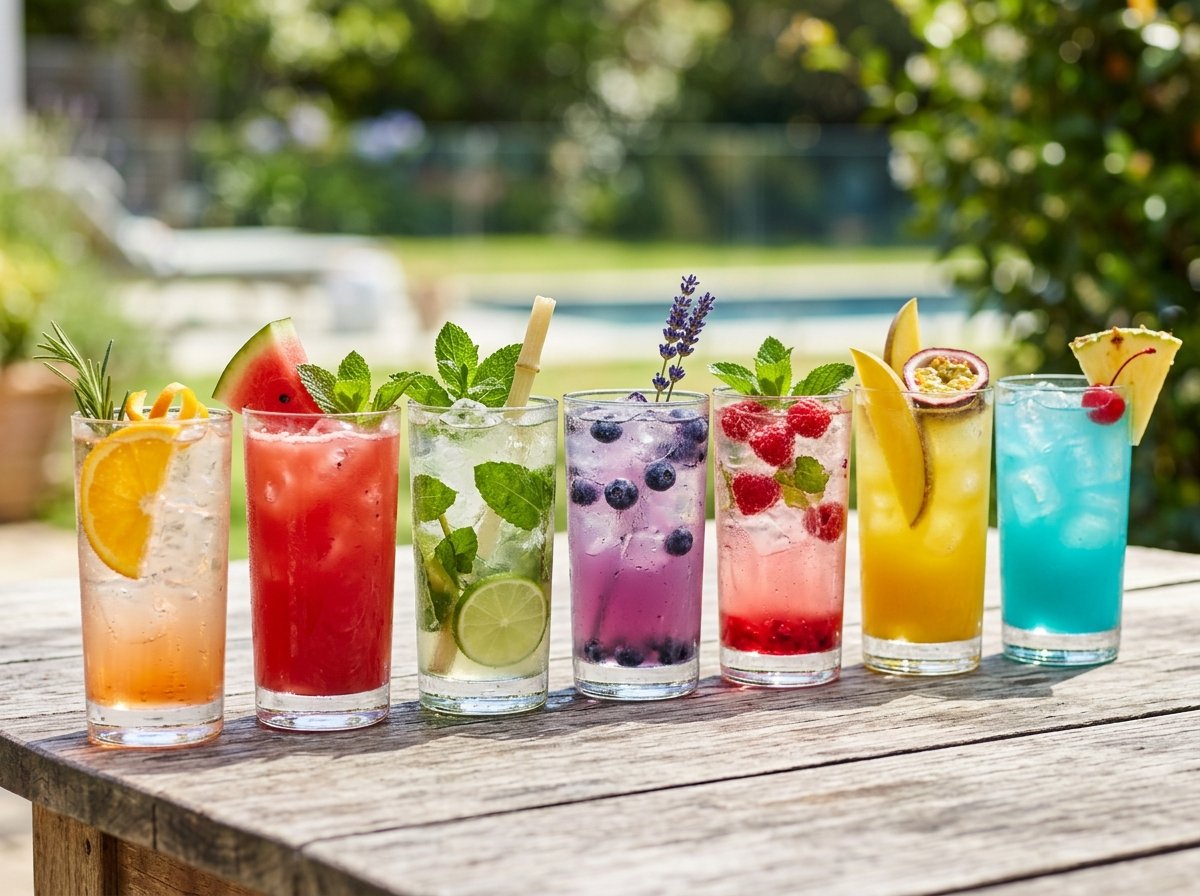

7 Refreshing Summer Drinks to Beat the Heat
Ingredients
Equipment
Method
- Combine equal parts granulated sugar and filtered water in a small saucepan over medium heat.
- Stir gently for 3 minutes until the sugar crystals completely dissolve at a molecular level. Do not let it boil vigorously.
- Remove from heat and let it cool completely before using in any iced beverage to prevent temperature shock.
- For the Southern Sweet Tea, steep tea bags in boiling water with a pinch of baking soda for 5 minutes, remove bags, stir in syrup, and chill.
- For the Sparkling Limeade, gently muddle fresh mint leaves with simple syrup at the bottom of a shaker to release essential oils without bruising the leaves. Add lime juice, shake with ice, and top with sparkling water.
- For the Watermelon Basil Cooler, blend fresh watermelon cubes, lime juice, and basil leaves on high speed for 45 seconds until completely liquefied, then pass through a fine mesh strainer over crushed ice.
- For the Cucumber Rosemary Tonic, smack the rosemary sprigs against your palm to activate the aromatic compounds, submerge them in cucumber juice for 10 minutes, then strain and top with cold tonic water.
- For the Brazilian Lemonade, pulse the quartered whole limes in a blender with cold water for exactly 15 seconds to extract juice without releasing bitter pith oils. Strain immediately, return liquid to the blender, add condensed milk and sugar, and blend until frothy.
- For the Frozen Peach Hibiscus Slush, combine frozen peaches, chilled hibiscus tea, honey, and ice cubes in a high-speed blender, processing until a smooth, crystalline sorbet-like texture forms.
- For the Spicy Pineapple Mocktail, muddle jalapeño slices gently with lime juice in a shaker, pour in the pineapple juice, shake hard with ice for 15 seconds to emulsify, strain into glasses, and finish with a splash of club soda.
Notes
Chef John’s Insight:
There is a moment, usually late July, when the afternoon heat feels less like weather and more like a test of endurance. That is when a glass of something cold and perfectly balanced matters most—not as a luxury, but as a small act of self-respect. My grandmother used to say you could tell the quality of someone’s kitchen by how their drinks tasted. She meant something bigger than recipes. She meant attention. She meant care. These seven drinks are not just combinations of ingredients; they are invitations to pause, to taste something beautiful, and to remember that cooling down can be an art form worth mastering.
— Chef John
Nutrition & Hydration Data
Estimated Nutrition Per Serving (8 oz / 236 ml, excluding alcohol)
| Drink | Calories | Sugar (g) | Key Hydration Benefit |
|---|---|---|---|
| Sweet Tea | 80 | 20 | Moderate—caffeine adds mild diuretic effect |
| Mint Limeade | 65 | 16 | Good—citric acid aids absorption |
| Watermelon Basil Cooler | 55 | 12 | Excellent—92% water, electrolytes |
| Cucumber Rosemary Tonic | 35 | 8 | Good—cucumber adds potassium |
| Brazilian Lemonade | 150 | 28 | Moderate—dairy slows absorption |
| Peach Hibiscus Slush | 70 | 18 | Good—anthocyanins support recovery |
| Spicy Pineapple | 95 | 22 | Good—bromelain aids digestion |
Hydration Warnings
High-fructose drinks cause rebound thirst. Sugar concentrations above 10% actually slow gastric emptying and can make you feel more dehydrated 30 minutes after drinking. Balance sweet drinks with water. Choose drinks where natural fruit sugars are diluted rather than concentrated.
Caffeine provides temporary alertness but contributes to dehydration. If you are spending extended time in extreme heat, limit caffeinated beverages to 2-3 servings daily maximum.
Storage, Batching & FAQ
Syrup Storage Guidelines
| Syrup Type | Refrigerator | Freezer | Notes |
|---|---|---|---|
| Simple syrup (1:1) | 2 weeks | 3 months (adds 1 week shelf life once thawed) | May crystallize; reheating dissolves |
| Rich syrup (2:1) | 1 month | 6 months | Higher sugar content preserves longer |
| Honey-based | 3 months | 12 months | Honey does not freeze solid |
| Fruit purees | 3-5 days | 6 months | Can add citric acid to extend shelf life |
Batching Tips
Make concentrates instead of final drinks for parties. Keep base syrups, fresh juices, and garnishes separate until serving. Ice melts in batches—prepare more than you think you need.
Frequently Asked Questions
Why does my homemade lemonade taste bitter sometimes?
Bitter lemonade usually means you used too much rind or the fruit was past prime. Lemon pith (the white part under the peel) contains bitter compounds called limonin. Always juice fresh and use only the yellow peel for garnish, never the bitter white layer.
Can I substitute artificial sweeteners in these drinks?
You can, but the cooling sensation and mouthfeel will differ significantly. Sugar provides body and helps carry flavors across your palate. Stevia and sucralose are intensely sweet and can leave a metallic aftertaste if overused. Start with half the amount of regular sugar and adjust to taste.
How do I keep my drinks cold without watering them down?
Use large ice cubes or ice spheres—they melt slower than standard cubes because of their lower surface-area-to-volume ratio. For party drinks, freeze some in advance using juice or tea instead of water for flavorful dilution.
What makes some drinks feel more refreshing than others?
Carbonation, citric acid, and salt content all enhance perceived refreshment. The carbonation provides a tactile sensation that signals “cold” to your brain. Citric acid triggers salivation, which creates immediate freshness. A pinch of salt (¼ teaspoon / 1g per quart) amplifies all flavors and reduces perception of sweetness.
Related Articles & Pairing Ideas
Looking to build the perfect summer gathering or explore more warm-weather recipes? Here are some favorites from The Flavor Bazaar:
Cottage Cheese Protein Pancakes
Best Blueberry Cheesecake Overnight Oats Recipe
Best Air Fryer Garlic Bread Pizza Rolls Recipe