7 Healthy Dinner Ideas Busy Families Can Make in 20 Minutes
By Chef John | Easy Recipes & Smart Cooking Hacks
The Clock Is Ticking — And Dinner Still Needs to Happen
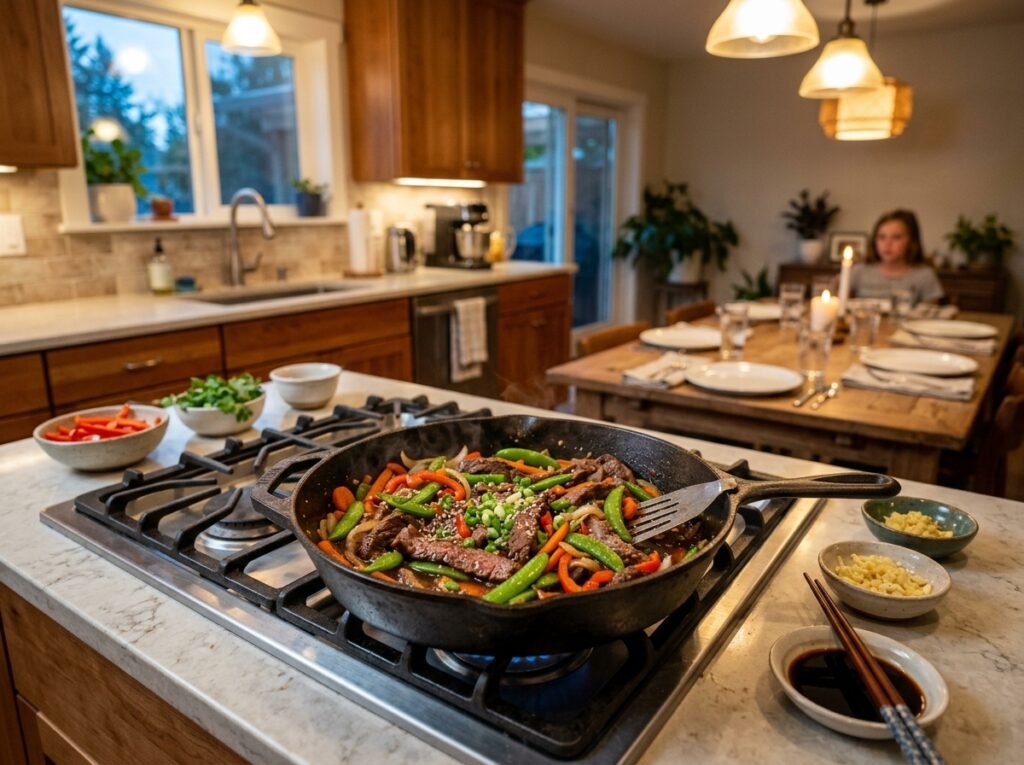
It is 6:02 PM. The kids are circling the kitchen like hungry sharks. Your partner just texted “leaving now” from the office. And you are standing in front of the refrigerator with a pound of ground beef, half a bag of snap peas, and about 20 minutes before this situation becomes a full household emergency.
This is not a failure of effort. This is Tuesday.
Healthy dinner ideas for busy families should not require a culinary degree, a meal kit subscription, or a free afternoon. They should work in the real world — with real kids, real exhaustion, and a real 20-minute window between chaos and calm.
I have spent weeks in my kitchen lab with a stopwatch, testing thermal conduction across different pan surfaces to shave off every unnecessary minute from preparation to plating. What I discovered was consistent and repeatable: the right techniques, the right ingredients, and the right sequence make 20 minutes feel like plenty of time.
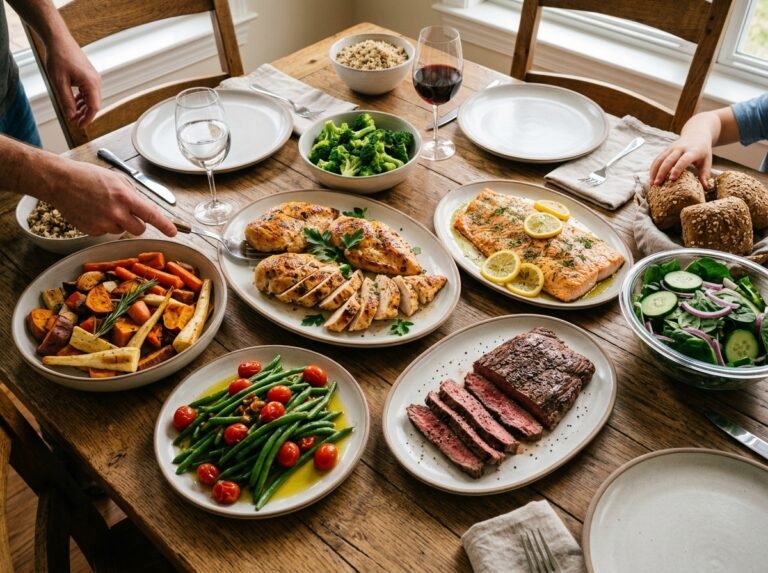
These seven dinners are the result of that testing. They are fast, nourishing, and family-approved — even by the pickiest eaters at the table.
🔬 The Science of the 20-Minute Flash Cook
Speed in the kitchen is not about rushing carelessly. It is about understanding the physics that govern how heat moves through food — and then using that knowledge deliberately.
The most powerful principle at work in all seven of these meals is surface-area-to-volume ratio. When you slice proteins into thin strips, small cubes, or flat cutlets, you reduce the distance heat must travel to reach the center of the food. The result is a dramatically shorter cook time without any compromise to safety or texture.
Maximized Surface Area→Rapid Thermal Conduction→Safe Internal Temp, Faster
In simple terms: thinner pieces cook faster because heat has less ground to cover. That single principle explains why every meal on this list uses intentionally small or thin cuts — not for style, but for speed.
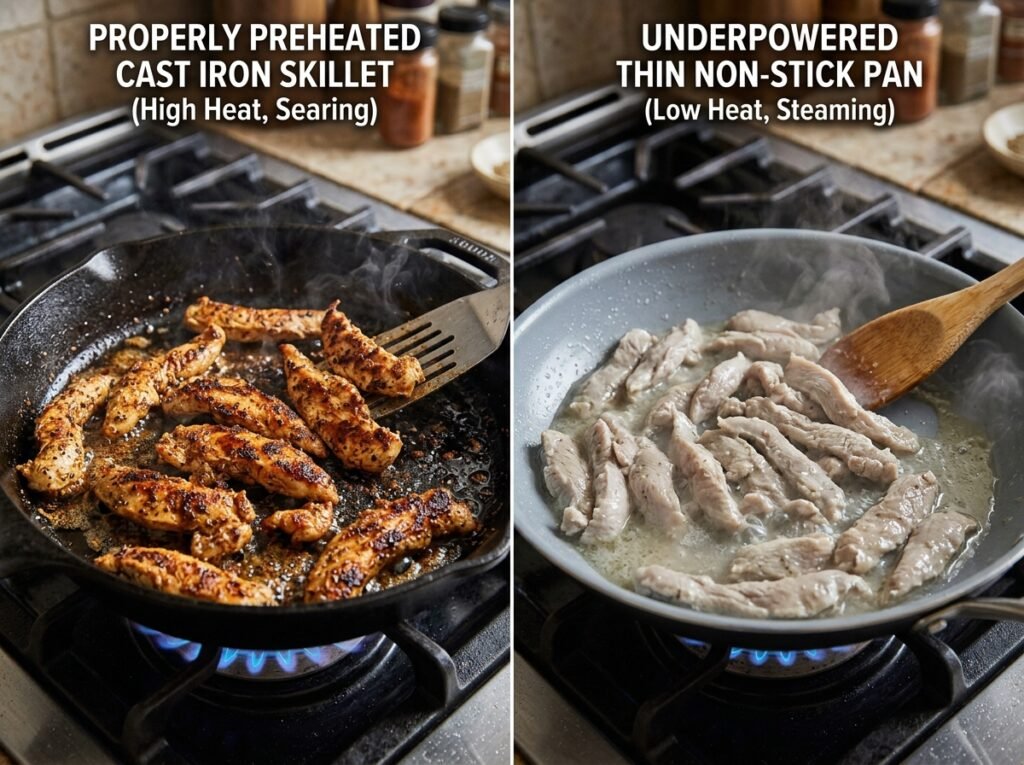
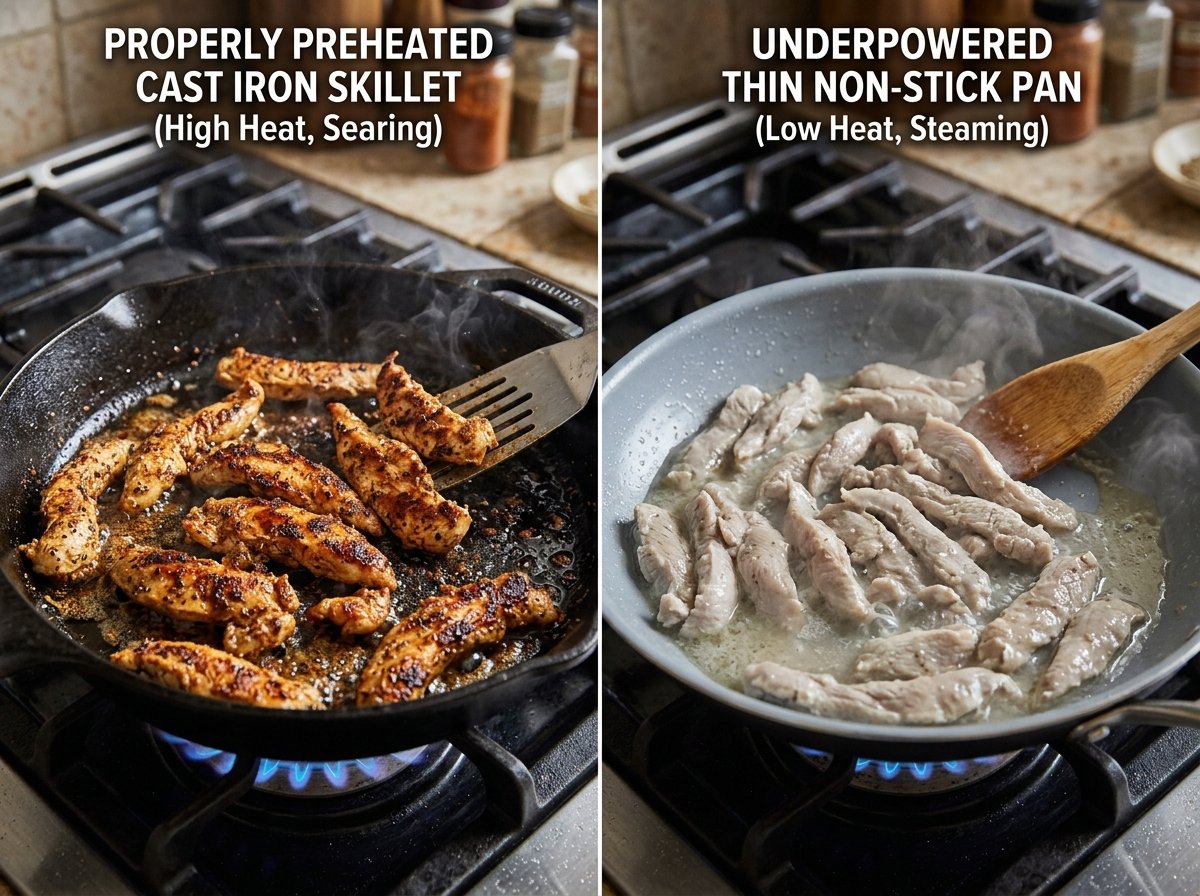
Thermal conductivity also matters in pan selection. Cast iron holds and radiates heat more evenly than thin non-stick pans, which means proteins hit the pan at consistent high temperature across the entire surface. This triggers the Maillard reaction — the chemical browning process that occurs when amino acids and sugars on the protein surface reach approximately 300°F–350°F (149°C–177°C). That reaction generates hundreds of flavor compounds in seconds, giving skillet meals a deep, almost roasted flavor without any oven time.
In simple terms: a properly preheated heavy pan turns a 15-minute skillet meal into something that tastes like it cooked for an hour. The pan does the flavor work — you just have to trust the heat.
Finally, flash-cooking with residual heat is a technique professionals use constantly. Pulling proteins off the heat just before they are fully done and letting carryover cooking finish the job inside a covered pan keeps meat juicy and prevents the overcooking that turns chicken rubbery and shrimp chalky.
The 20-Minute USA Grocery Shortcut Guide
The gap between a 45-minute dinner and a 20-minute dinner is almost never skill. It is almost always prep time — and these products eliminate that entirely.
Rotisserie chicken from Walmart, Costco, or Kroger remains the undisputed champion of dinner shortcuts. Already cooked, already seasoned, and already rested, it shreds in under two minutes with two forks and works in tacos, bowls, soups, and skillets with absolutely zero additional cooking required.
Success Boil-in-Bag Brown Rice and Trader Joe’s microwaveable rice pouches deliver fully cooked, properly textured rice in 90 seconds to 10 minutes. These are not a compromise — they are a rational use of technology.
Birds Eye Steamfresh frozen vegetable bags (available at Walmart, Target, and Kroger) microwave inside their own bag in four to five minutes with no draining, no chopping, and no extra dishes. Green Giant Riced Cauliflower works the same way and adds nutritional density without changing flavor profiles significantly for picky eaters.
Pre-washed Taylor Farms bagged slaw and salad kits from Trader Joe’s, Target, and Kroger cut vegetable prep from eight minutes to zero. Frozen fire-roasted corn from Trader Joe’s adds a smoky, charred flavor to bowls and tacos without turning on the broiler.
Kerrygold butter and California Olive Ranch extra virgin olive oil (Whole Foods, Kroger, Target) both have strong flavor that carries a simple pan sauce made in 90 seconds at the end of cooking. Do not underestimate finishing fats as a speed tool — they bring meals together instantly.
🥘 The 7 Healthy Dinner Ideas
Dinner 1 — 15-Minute Beef and Snap Pea Skillet
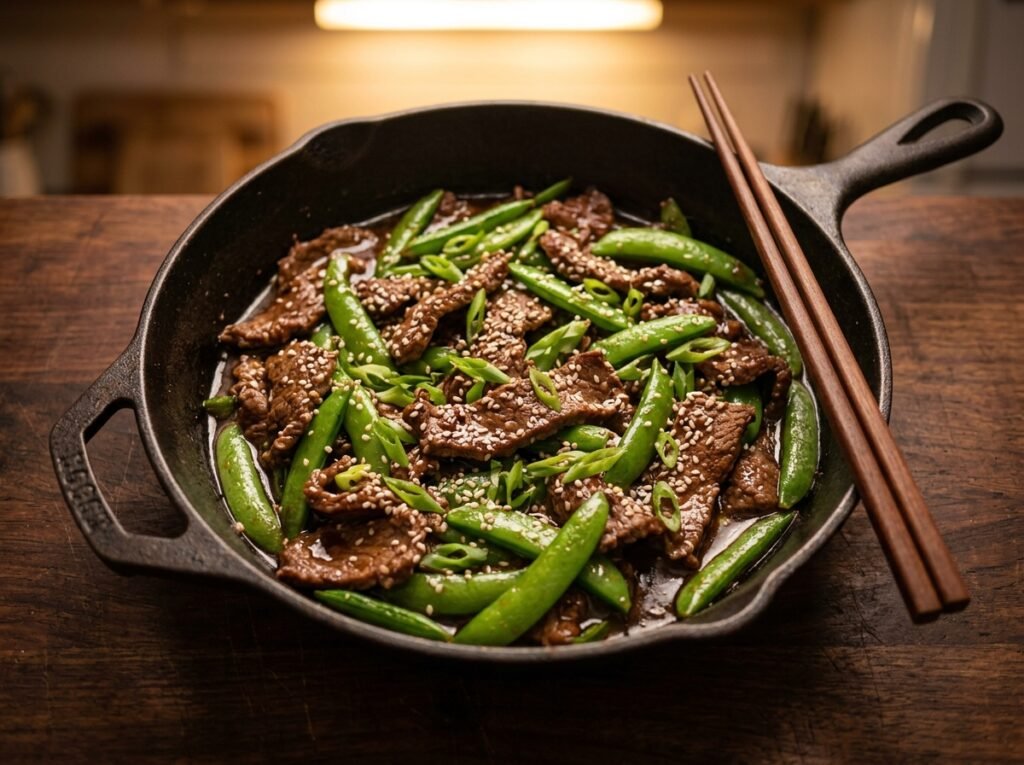
This is the dinner that convinced me speed cooking and real flavor are not mutually exclusive. Thinly sliced flank steak — about ½ inch (1.25cm) thick — hits a preheated cast iron skillet and develops deep Maillard browning in under three minutes per side. The snap peas go in for the final two minutes, staying crisp-tender rather than collapsing into mush.
A quick finishing sauce of low-sodium soy, fresh ginger, garlic, a teaspoon of sesame oil, and a splash of water with cornstarch thickens in 60 seconds and coats everything in glossy, savory flavor. Serve over microwaved jasmine rice and dinner is on the table in 15 minutes from a cold start.
Dinner 2 — Flash Air Fryer Shrimp Fajitas
Shrimp is the fastest-cooking protein available in any American grocery store. Large frozen shrimp (31–40 count per pound / 450g) thaw under cold running water in exactly four minutes. Toss with fajita seasoning, a drizzle of olive oil, and sliced bell peppers, then air fry at 400°F (204°C) for six to seven minutes.
The circulating air in the fryer creates even, rapid browning without any standing over a hot stove. Warm flour or corn tortillas in the microwave for 30 seconds, add your shrimp and peppers, top with a spoonful of fresh pico de gallo and a squeeze of lime. Total active time: under 15 minutes.
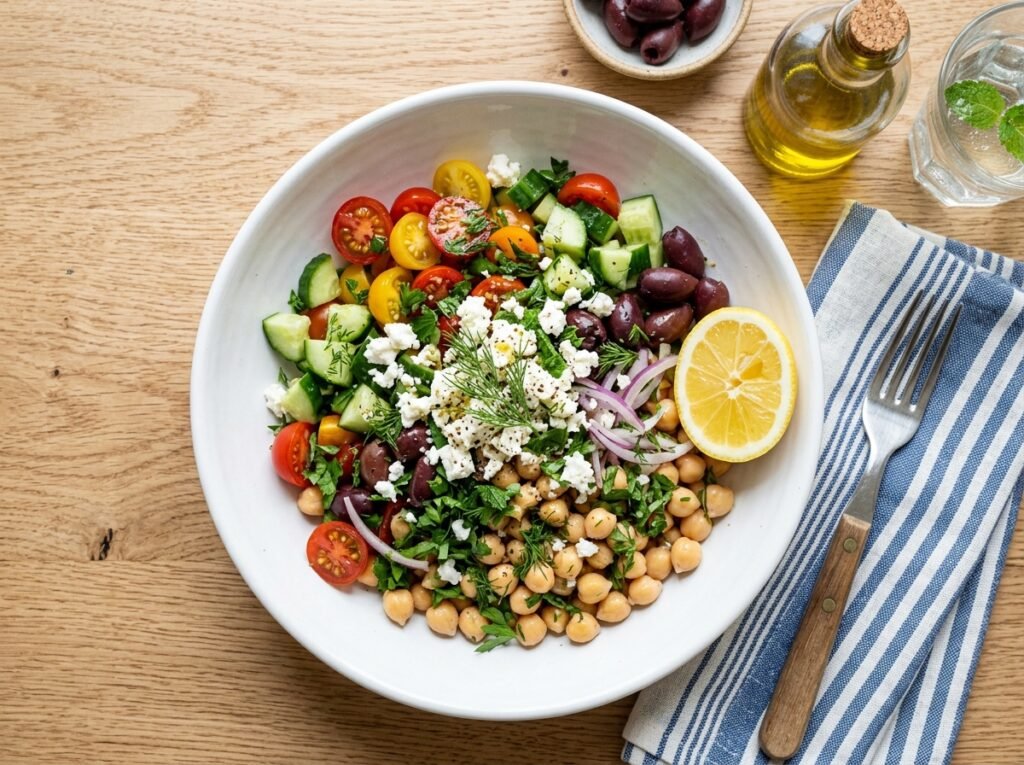
Dinner 3 — Quick Mediterranean Chickpea Bowls
This is the no-cook protein dinner. A can of drained, rinsed chickpeas delivers 15g of plant protein per cup (240ml) with zero cooking required. Combine with halved cherry tomatoes, sliced cucumber, a handful of Kalamata olives, crumbled feta, and a drizzle of olive oil with dried oregano and lemon juice.
Serve over a Trader Joe’s microwaveable grain pouch — their harvest blend of farro, barley, and lentils is particularly well suited here — and you have a complete, nutritionally dense bowl dinner in under 10 minutes. It works for picky eaters when you serve components separately rather than mixed.
Dinner 4 — 10-Minute Rotisserie Chicken Tacos
There is no faster protein delivery system than a Walmart or Kroger rotisserie chicken at dinner time. Shred 2 cups (280g) of breast and thigh meat while the tortillas warm in a dry skillet for 30 seconds per side — the dry heat creates tiny charred spots that add authentic flavor.
Layer the chicken with pre-shredded Taylor Farms slaw tossed in a quick lime-cumin vinaigrette, sliced avocado, and a drizzle of hot sauce. The thigh meat is important here — its higher fat content means it stays moist and flavorful even after being reheated from the rotisserie, unlike breast meat which can tighten and dry on reheat.
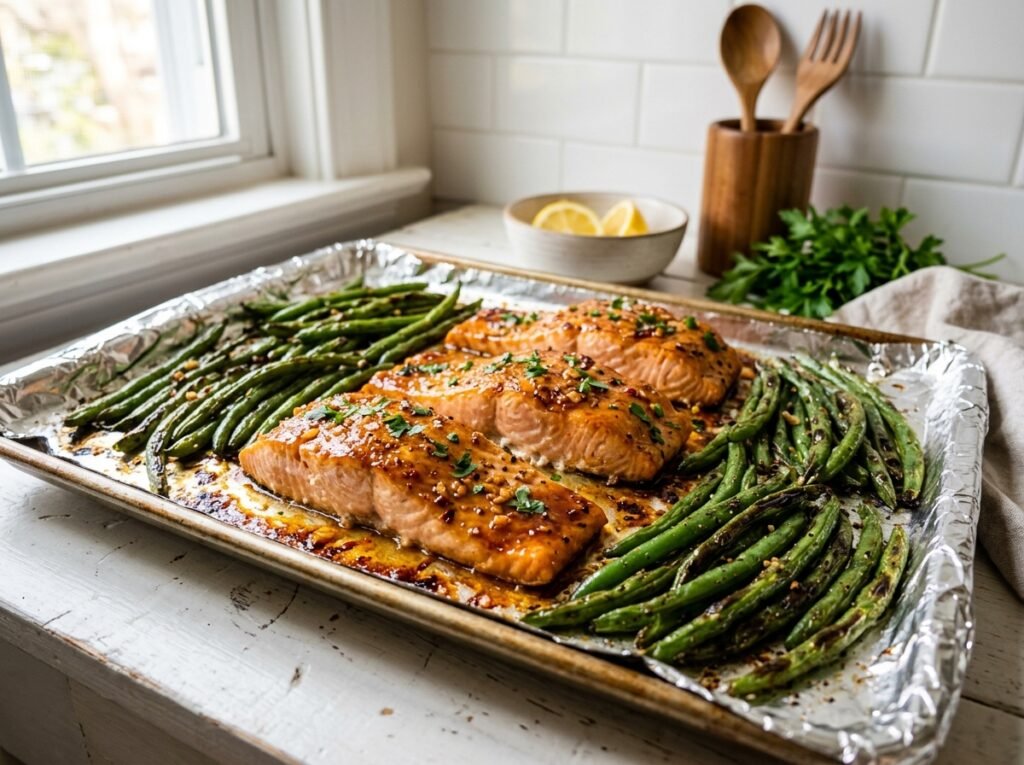
Dinner 5 — One-Pan Honey Garlic Salmon with Green Beans
Salmon fillets at ¾ inch (2cm) thickness cook through in exactly eight minutes in a 400°F (204°C) oven — no flipping required. While the oven preheats, mix 2 tablespoons (30ml) of honey, 3 cloves of minced garlic, 1 tablespoon (15ml) of soy sauce, and a squeeze of lemon. Pour over salmon fillets on a foil-lined sheet pan, surround with trimmed green beans, and roast.
The honey caramelizes on the surface of the salmon creating a sticky, lacquered glaze while the green beans blister at the edges. One pan. One sauce. Eight minutes in the oven. This is sheet pan cooking working at its absolute bests.
Dinner 6 — 20-Minute Turkey and Zucchini Skillet
Ground turkey (93% lean) browns faster than ground beef because its lower fat content means less moisture interference during the Maillard reaction. Start 1 lb (450g) of turkey in a hot skillet, breaking it up as it cooks, and you have a fully browned protein base in five to six minutes.
Add diced zucchini, a can of diced fire-roasted tomatoes, Italian seasoning, garlic powder, and a pinch of red pepper flakes. The tomatoes release liquid that deglazes the pan and creates a light, bright sauce in the final four minutes. Serve with crusty whole-grain bread or over orzo for a complete meal that the whole family will actually ask for again.
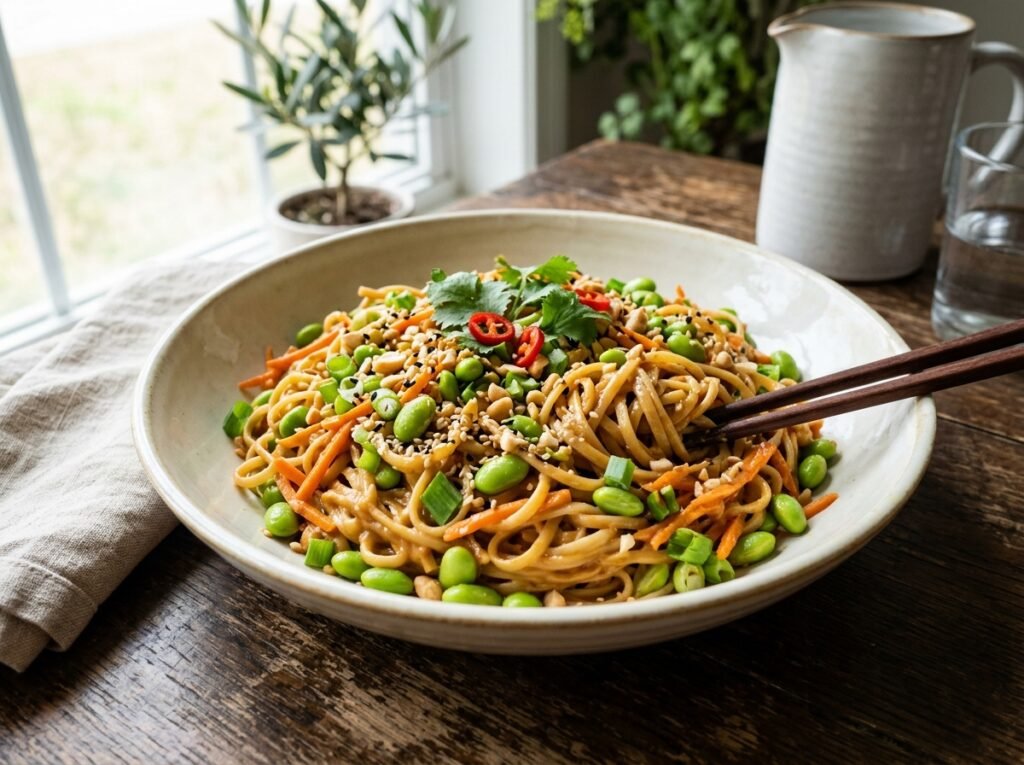
Dinner 7 — 15-Minute Peanut Noodle Bowls with Edamame
This one works because everything is either no-cook or near-instant. Cook 8 oz (225g) of soba noodles — they take five minutes exactly, no more — and while they drain, whisk together peanut butter, soy sauce, rice vinegar, sriracha, garlic, and a splash of warm water into a smooth, pourable sauce.
Toss the noodles with the sauce, a cup (150g) of thawed frozen edamame, shredded carrots, and sliced green onions. The edamame adds 9g of complete plant protein per half cup (75g) and requires nothing more than a one-minute microwave from frozen. Cold or warm, this bowl satisfies every member of the family — including the ones who claim they do not like healthy food.
Common Quick-Cooking Mistakes Table
| The Mistake | What Actually Happens | The Fix |
|---|---|---|
| Overcrowding the skillet | Steam pressure builds between pieces — proteins boil instead of sear, losing the Maillard reaction entirely | Cook in two batches or use a 12-inch (30cm) skillet minimum for 1 lb (450g) of protein |
| Skipping the pan preheat | Cold pan causes proteins to stick, cook unevenly, and turn pale instead of golden | Preheat skillet 2–3 minutes on medium-high before adding oil or protein |
| Cutting proteins too thick | Heat cannot reach the center before the exterior overcooks — resulting in dry outside, raw inside | Slice chicken and beef to ½ inch (1.25cm) or thinner for skillet meals |
| Cooking shrimp past pink and curled | Shrimp proteins coagulate rapidly — even 60 seconds too long creates a rubbery, chalky texture | Remove shrimp from heat the moment they curl into a C-shape and turn fully opaque |
| Adding vegetables too early | Delicate vegetables like snap peas, zucchini, and spinach overcook and become mushy before the protein is done | Add quick-cooking vegetables in the last 2–3 minutes of total cook time only |
| Not drying protein before cooking | Surface moisture creates steam on contact with the pan — preventing browning and extending cook time significantly | Pat proteins dry with paper towels before seasoning and cooking |
Master Ingredients Conversion Table
| Ingredient | US Customary | Metric |
|---|---|---|
| Lean Ground Turkey or Beef | 1 lb | 450g |
| Flank Steak (sliced thin) | 1 lb | 450g |
| Large Shrimp (peeled, deveined) | 1 lb | 450g |
| Salmon Fillet | 6 oz per portion | 170g per portion |
| Shredded Rotisserie Chicken | 2 cups | 280g |
| Canned Chickpeas (drained) | 1½ cups | 250g |
| Frozen Edamame (thawed) | 1 cup | 150g |
| Soba Noodles (dry) | 8 oz | 225g |
| Cherry Tomatoes | 1 cup | 150g |
| Snap Peas | 2 cups | 200g |
| Greek Yogurt (plain, full-fat) | 1 cup | 240g |
| Olive Oil | 1 tablespoon | 15ml |
| Low-Sodium Soy Sauce | 2 tablespoons | 30ml |
| Honey | 2 tablespoons | 42g |

7 Healthy Dinner Ideas Busy Families Can Make in 20 Minutes
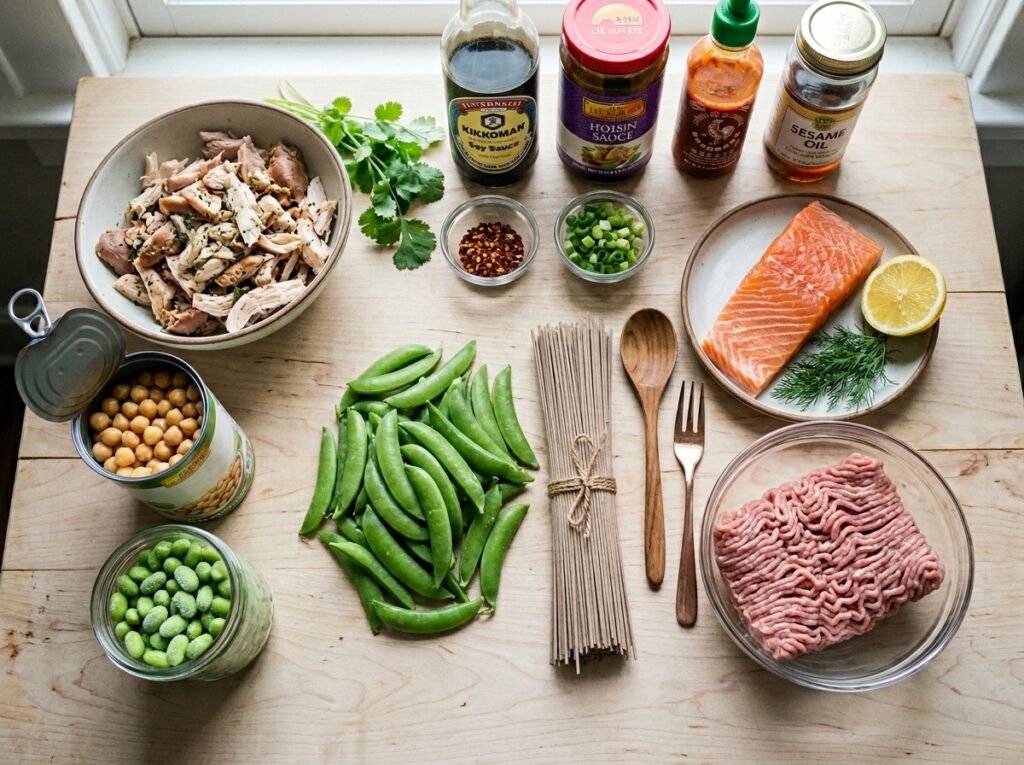
Ingredients
Equipment
Method
- Preheat your heavy-bottomed cast iron skillet or non-stick pan over medium-high heat for a full 3 minutes. Pour in 2 tablespoons (30ml) of high smoke-point avocado oil, allowing it to shimmer across the surface to form a slick lipid barrier that prevents delicate proteins from sticking.
- Add your 1 lb (450g) of thinly sliced protein or ground beef to the hot pan in a single flat layer. Let it sear untouched for 90 seconds to trigger maximum structural browning and surface caramelization before breaking the meat apart to flash-cook the remaining raw pink centers.
- Toss in your pre-washed shortcut vegetables and halved cherry tomatoes directly into the seasoned fats. Stir continuously for 2 minutes; the high heat transfer will soften the vegetable cellular structures to a perfect crisp-tender state while capturing the pan debris into a clean, flavorful coating.
- Remove the skillet completely from the direct heat source. Squeeze fresh lemon juice over the top to deglaze the final pan juices and stir in 1 tablespoon (14g) of cold butter to create a rich, glossy glaze that seals internal moisture right before plating over your warm 90-second grains.
Notes
Chef John’s Insight
The best family dinner is never the most elaborate one. I have watched parents spend three hours on a meal that their kids pushed around the plate — and I have watched a 15-minute chicken taco night turn into one of the most connected evenings a family had all week. The table is not judging you on technique. It is judging you on presence. When you stop agonizing over complexity and start trusting simplicity, something shifts. The food gets better. The atmosphere gets warmer. And the family that was scattered and stressed at 6 PM finds itself together, laughing, at 6:25. That is the real recipe. Every shortcut you take in the kitchen is time you invest at the table.
Cook less. Connect more. The 20-minute dinner is not a compromise — it is a choice.
— Chef John, Food Hacks Hub
Nutritional Averages and Targets Table
Estimated per serving across the 7 meals. Individual recipes will vary based on brands, portion sizes, and modifications.
| Nutrient | Low End | High End | Ideal Target |
|---|---|---|---|
| Calories | 310 | 510 | 370–440 |
| Protein | 24g | 42g | 30g+ |
| Total Fat | 7g | 20g | 9–15g |
| Saturated Fat | 1.5g | 6g | Under 7g |
| Carbohydrates | 18g | 48g | 25–40g |
| Sodium | 340mg | 790mg | Under 650mg |
| Cholesterol | 55mg | 180mg | Under 185mg |
All values are estimates based on USDA nutritional data. Actual nutrition varies by brand, preparation method, and ingredient substitutions.
Food Safety and Temperature Guide
Fast cooking carries one non-negotiable responsibility: you must still hit safe internal temperatures, every single time.
Per USDA guidelines, all forms of poultry — including chicken strips, shredded rotisserie chicken used in reheated applications, and ground turkey — must reach a minimum internal temperature of 165°F (74°C). Ground beef must reach 160°F (71°C). Salmon and all finfish must reach 145°F (63°C), and shrimp is considered safe when it turns fully pink and opaque throughout.
The Danger Zone — the temperature range between 40°F and 140°F (4°C and 60°C) — is where bacterial growth occurs most rapidly. Cooked proteins left in this range for more than two hours should be discarded. When preparing these meals ahead, refrigerate within one hour in shallow, covered containers.
A reliable instant-read thermometer like the ThermoPro TP19 (Walmart, Amazon, under $20) is the single most important piece of equipment for fast, safe cooking with protein.
| Protein | USDA Minimum Safe Internal Temp | Visual Cue |
|---|---|---|
| Chicken / Ground Turkey | 165°F / 74°C | No pink visible, juices run clear |
| Ground Beef | 160°F / 71°C | No pink throughout |
| Salmon / Finfish | 145°F / 63°C | Flesh flakes easily, fully opaque |
| Shrimp | 145°F / 63°C | Fully pink, curled to C-shape, opaque |
| Eggs (in skillet meals) | 160°F / 71°C | Fully set, no glossy or translucent areas |
Storage and Quick-Reheating Table
| Meal / Component | Refrigerator | Freezer | Best Reheating Method |
|---|---|---|---|
| Cooked ground turkey or beef | 3–4 days | 2–3 months | Skillet over medium with 2 tbsp (30ml) broth or water, stir frequently |
| Cooked chicken strips or shredded chicken | 3–4 days | Up to 3 months | Covered microwave at 60% power for 90 seconds, or skillet with splash of broth |
| Cooked salmon | 2 days | Up to 1 month | Air fryer at 325°F (163°C) for 4 minutes — never microwave salmon |
| Cooked shrimp | 2–3 days | Not recommended | Skillet, 1 minute each side on medium — stop immediately when warm through |
| Chickpea or grain bowls | 4–5 days | Not recommended | Microwave covered, 90 seconds, stir halfway through |
| Peanut noodle bowls | 2–3 days | Not recommended | Add 1 tbsp (15ml) warm water, toss and microwave 60 seconds |
| Sheet pan salmon and vegetables | 2 days | Not recommended | Oven at 300°F (149°C) for 8–10 minutes, loosely foil-covered |
FAQ — What Busy Parents Actually Ask
Can I actually get all 7 of these meals on the table in exactly 20 minutes?
Most of them, yes — but the timing assumes you are working with pre-prepped or shortcut ingredients. If you are dicing fresh garlic, thawing shrimp from scratch, or cooking rice from dry, add five to eight minutes. The grocery shortcut guide above is designed to eliminate those gaps before you even start cooking.
My kids refuse everything that is not plain pasta or chicken nuggets. Any of these work for picky eaters?
The rotisserie chicken tacos and the peanut noodle bowl are the two highest-success meals with picky eaters in my testing — primarily because both allow component separation. Kids who will not eat a mixed skillet will often happily eat each ingredient on its own when served deconstructed on the same plate.
Can I freeze any of these meals for later in the week?
The beef and snap pea skillet, ground turkey skillet, and shredded chicken taco filling all freeze well for up to three months when stored in airtight containers. Avoid freezing any meal with cooked shrimp, leafy greens, or noodles — the texture degradation on reheating makes them unpleasant to eat.
How do I keep the salmon from smelling up the whole house?
Cook salmon with the kitchen exhaust fan running at high speed and a window cracked if possible. The sheet pan method with a foil lining significantly reduces residual odor compared to open skillet searing. A small bowl of white vinegar left on the counter overnight absorbs any remaining odor completely.
Is it possible to make these meals even cheaper without losing nutrition?
Absolutely. Swap salmon for canned wild-caught salmon (Trader Joe’s or Whole Foods store brand, around $2.50 per can). Replace shrimp with frozen tilapia portions from Walmart — the thermal and flavor science applies identically. Canned chickpeas, canned white beans, and frozen edamame are among the most cost-effective protein sources available in any American grocery store.
More From Food Hacks Hub
If this article gave you ideas, these four pieces are worth bookmarking next:
7 Amazing Crispy Air Fryer Chicken Wings Recipe
Easy Mexican Street Corn Salad Recipe
Easy Crispy Honey Garlic Chicken Bites Recipe