10 Easy Homemade Soup Recipes for Cozy Nights
By Chef John | Easy Recipes & Smart Cooking Hacks
When the Cold Hits, Your Kitchen Should Answer
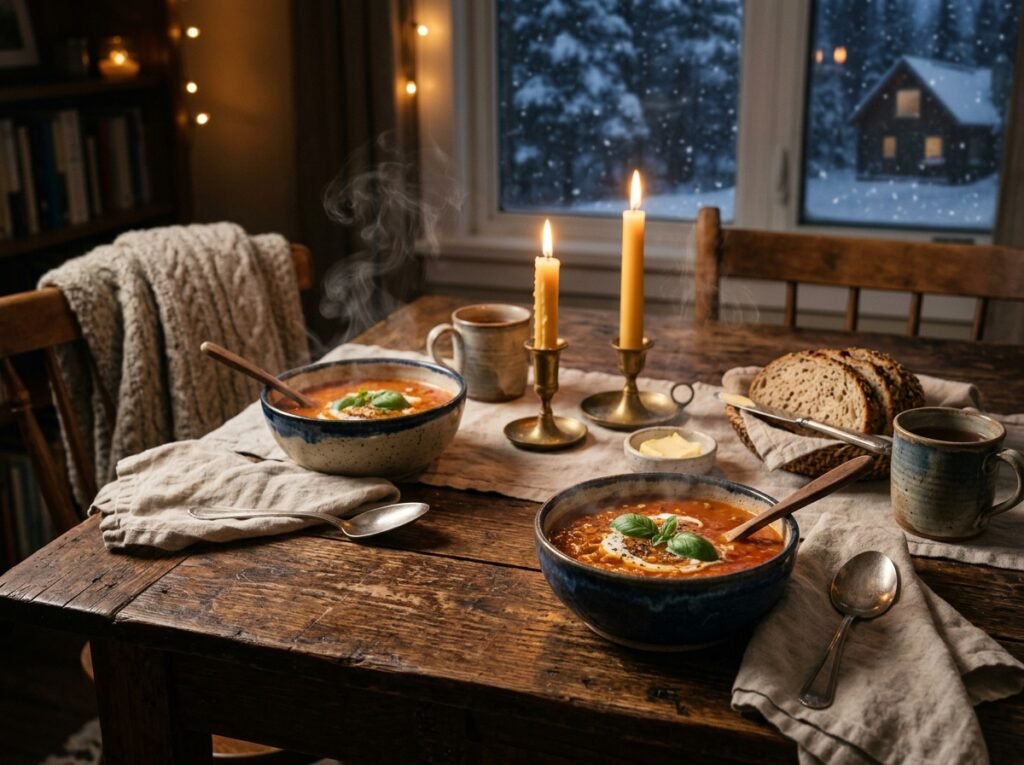
There is a specific kind of quiet that happens when a pot of soup starts to simmer. The steam rises. The windows fog just slightly at the edges. The whole house shifts into a lower, warmer gear.The smell of simmering onions, garlic, and fresh herbs hits you before you even open the kitchen door. When looking for the best easy homemade soup recipes to get you through chilly nights, nothing is more disappointing than ending up with a watery, bland broth that falls flat.
I have tested and refined these exact soup bases across dozens of batches in my own kitchen, adjusting acidities, starch structures, and browning times to isolate exactly how to lock in rich, restaurant-quality depth every single time.
But here is the problem most home cooks run into — and I hear it constantly. You follow the recipe, you put in the time, and what comes out tastes thin. Watery. Like something is missing but you cannot quite name it. The color is right, the smell is close, but the depth just is not there.
That gap between good soup and genuinely great soup is not talent. It is technique.
I have tested and refined these exact soup bases across dozens of batches in my own kitchen, adjusting acidities, starch structures, and browning times to isolate exactly how to lock in rich, restaurant-quality depth every single time. What I found surprised me — and it will change the way you approach every easy homemade soup recipe you make from here forward.
The Science Behind Why Some Soups Have Soul
Great soup is not an accident. There is genuine chemistry happening at every stage, and once you understand it, you stop guessing and start cooking with real control.
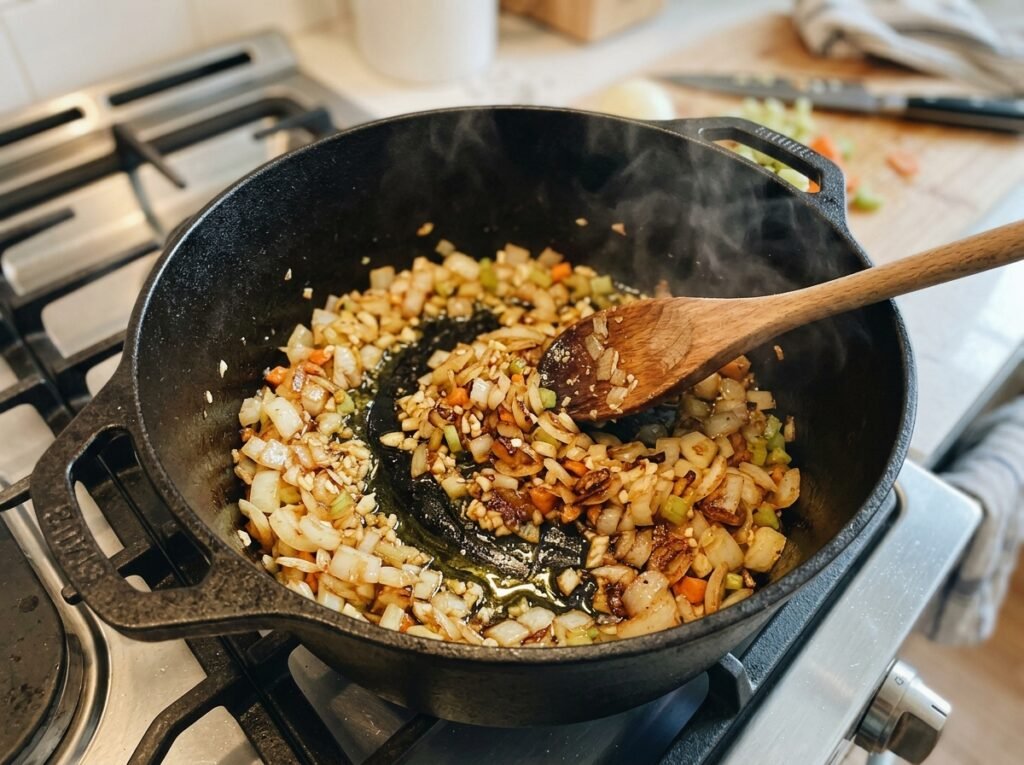
It starts with browning your aromatics — onion, celery, carrots, garlic. When these vegetables hit a hot pan with fat, the Maillard reaction kicks in. This is a cascade of chemical reactions between amino acids and reducing sugars that generates hundreds of new flavor compounds. That golden color on your onions is not just cosmetic — it is flavor, built molecule by molecule.
Then there is gelatin extraction. When you simmer bones or use a quality bone broth, collagen — the structural protein in connective tissue — slowly breaks down into gelatin. This is what gives a broth that silky, lip-coating quality. You feel it more than you taste it, but its absence is instantly obvious.
Collagen+Moist Heat→Gelatin-Rich Broth
Finally, emulsification happens when fat and water-based liquids are coaxed into a smooth suspension — usually through steady heat, a starch bridge, or a small amount of dairy added off direct heat.
In simple terms: brown your vegetables properly, use a real stock with body, and never rush the fat incorporation at the end. Those three moves turn flat soup into something you will remember.
Pro Buying Guide — Build Your Soup Kitchen Right
Before we get into the recipes, your equipment and pantry foundations matter more than most people realize.
The Pot. A heavy Dutch oven is non-negotiable for achieving proper Maillard browning. The Lodge 6-Quart Enameled Cast Iron Dutch Oven (around $60–$70 at Walmart and Target) gives you professional-grade heat retention at a fraction of the price of a Le Creuset. If budget allows, the Le Creuset Signature 5.5-Quart is the lifetime investment — available at Williams Sonoma and Sur La Table.
For hands-off cooking, the Instant Pot Duo 7-in-1 dramatically cuts bone broth rendering time from 12 hours to under 2 hours under pressure. The Crock-Pot 6-Quart Slow Cooker (widely available at Kroger, Walmart, and Target) is ideal for all-day bean soups and chili-adjacent recipes where low-and-slow is the entire point.
The Fat. Start your aromatics in Kerrygold Pure Irish Butter — the higher butterfat content (82% vs. standard 80%) means better browning and a noticeably richer finish. Available at Whole Foods, Trader Joe’s, and most Kroger locations.
The Stock. When you are not making your own, reach for Swanson Organic Chicken Broth or Pacific Foods Organic Bone Broth — both carry real body and sodium levels you can actually work with. Find them at Whole Foods, Target, and Walmart. For thickening agents, Bob’s Red Mill Arrowroot Starch is cleaner than cornstarch for cream-based soups and holds better through freezing.
The 10 Easy Homemade Soup Recipes
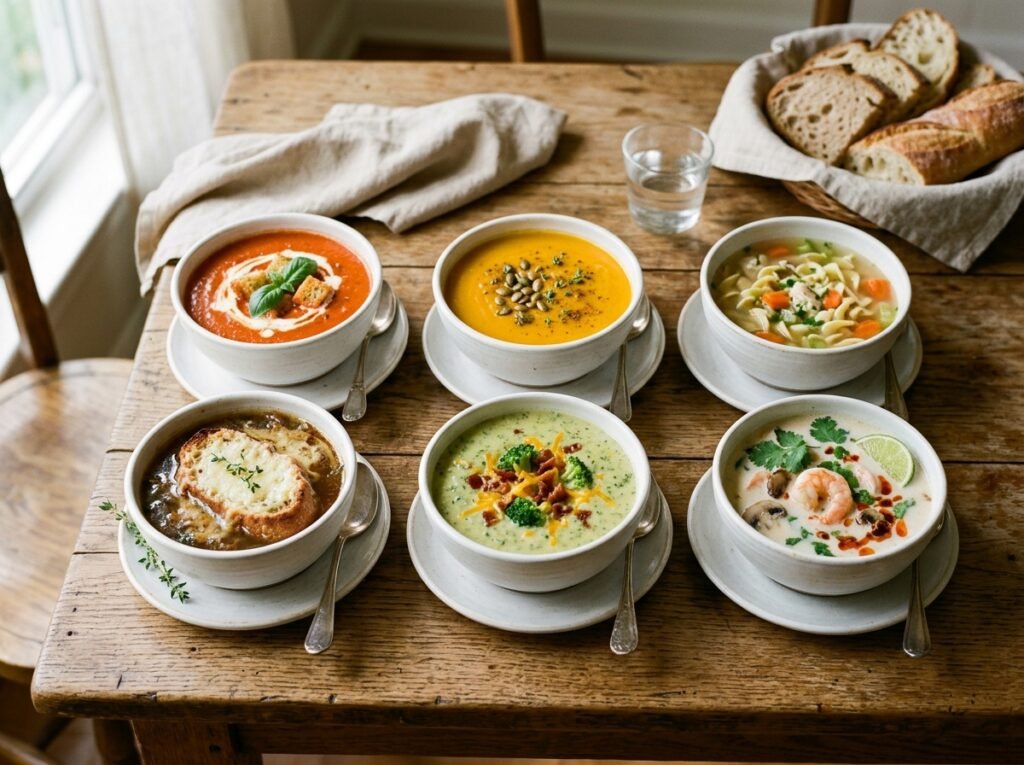
1. Classic Chicken Noodle Soup
Start with 1 lb / 450g of bone-in chicken thighs simmered in 8 cups / 1.9L of low-sodium broth with a whole bay leaf and a few peppercorns. The bone-in cut matters — the marrow and collagen extracted during even a 40-minute simmer builds a foundation that boneless breasts simply cannot replicate. Pull the chicken, shred it coarsely, and add your egg noodles directly to the simmering broth in the last 8 minutes so they absorb flavor rather than cooking in plain water. Finish with fresh dill and a tight squeeze of lemon — the acid brightens every note in the bowl.
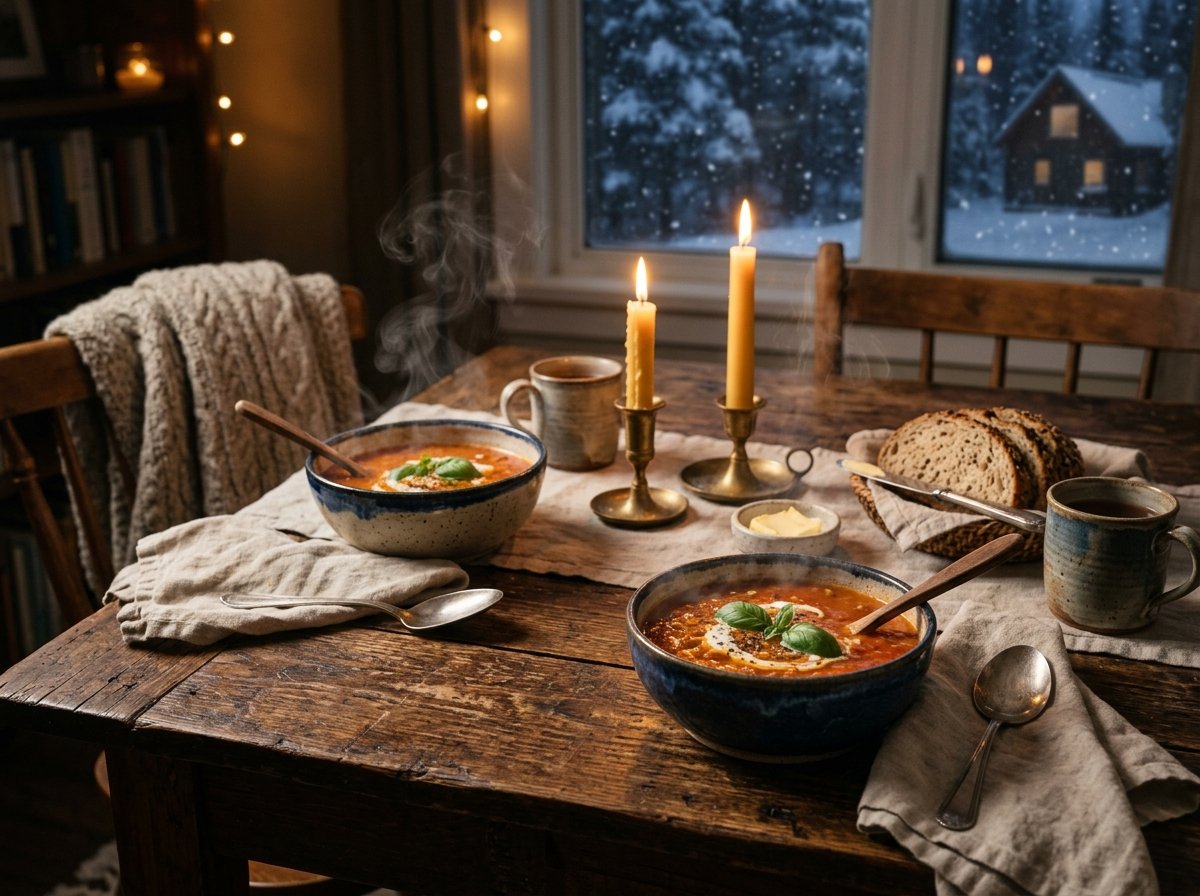
2. Creamy Tomato Basil Soup
Use 2 lbs / 900g of San Marzano-style whole canned tomatoes and add a quarter teaspoon of baking soda before blending. This small move neutralizes excess acidity, breaking down the tomato cell walls slightly so the natural sugars come forward. After blending until silky smooth, stir in 1/2 cup / 120ml of heavy cream off the heat — removing the pot from the burner prevents the cream from breaking under direct heat. A small handful of fresh basil torn at the very end preserves its volatile aromatic oils, which cook off completely if added during simmering.
3. Loaded Baked Potato Soup
Roast 2 lbs / 900g of russet potatoes whole at 400°F / 204°C until the skin is deeply crisped, then scoop the flesh. Roasting drives off excess moisture and concentrates the starch, which gives this soup its naturally thick body without needing a heavy roux. Blend half the potato flesh into the broth for creaminess, then fold the rest in rough chunks for texture. Finish with shredded sharp cheddar added off the heat in small batches — adding it all at once or over high heat causes the proteins to tighten and the soup to turn grainy.
4. Broccoli Cheddar Soup
The key scientific trick here is building your base with a butter-flour roux first — 3 tablespoons / 45g of butter and 3 tablespoons / 24g of all-purpose flour — cooked for 2 full minutes before the liquid goes in. This cooks out the raw flour taste while building a starch network that stabilizes the cheese later. Add 1 lb / 450g of broccoli florets, finely chopped, and simmer until just tender. Then — critically — lower the heat to its absolute minimum before stirring in 2 cups / 225g of shredded sharp cheddar in small handfuls. High heat is the enemy of cheese emulsification.
5. Tuscan White Bean and Kale Soup
Start by rendering 3 oz / 85g of diced pancetta in your Dutch oven until the fat is fully released and the pieces are golden. Do not drain this fat — it is your flavor base. Add your mirepoix, then 4 garlic cloves, then 2 cans of drained cannellini beans. Mash roughly one-third of the beans directly in the pot before adding 6 cups / 1.4L of broth. This creates a natural thickening effect using the beans’ own starch without any added flour. Stir in the kale in the last 5 minutes — it needs heat to wilt and soften without losing its color.
6. French Onion Soup
This one demands patience, and I mean it. Caramelize 3 lbs / 1.35kg of thinly sliced yellow onions in 2 tablespoons / 30g of Kerrygold butter over medium-low heat for a full 45 to 55 minutes — not 20, no matter what a hurried recipe tells you. The extended low heat drives off water first, then allows the sugars to undergo deep caramelization, producing that complex, almost sweet-savory depth that defines this soup. Deglaze with 1/2 cup / 120ml of dry sherry or white wine and let it reduce completely before adding your beef broth.
7. Red Lentil and Coconut Curry Soup
Red lentils are remarkable because they dissolve almost completely during cooking, naturally thickening the soup without blending. Use 1.5 cups / 300g of rinsed red lentils in 5 cups / 1.2L of broth with one can / 400ml of full-fat coconut milk added at the halfway point — not from the start, as sustained high heat causes coconut milk’s fat to separate and turn grainy. Bloom your spices (cumin, turmeric, smoked paprika) in oil for 60 full seconds before adding any liquid — this activates the fat-soluble flavor compounds in the spices, releasing exponentially more aroma than simply adding them directly to broth.
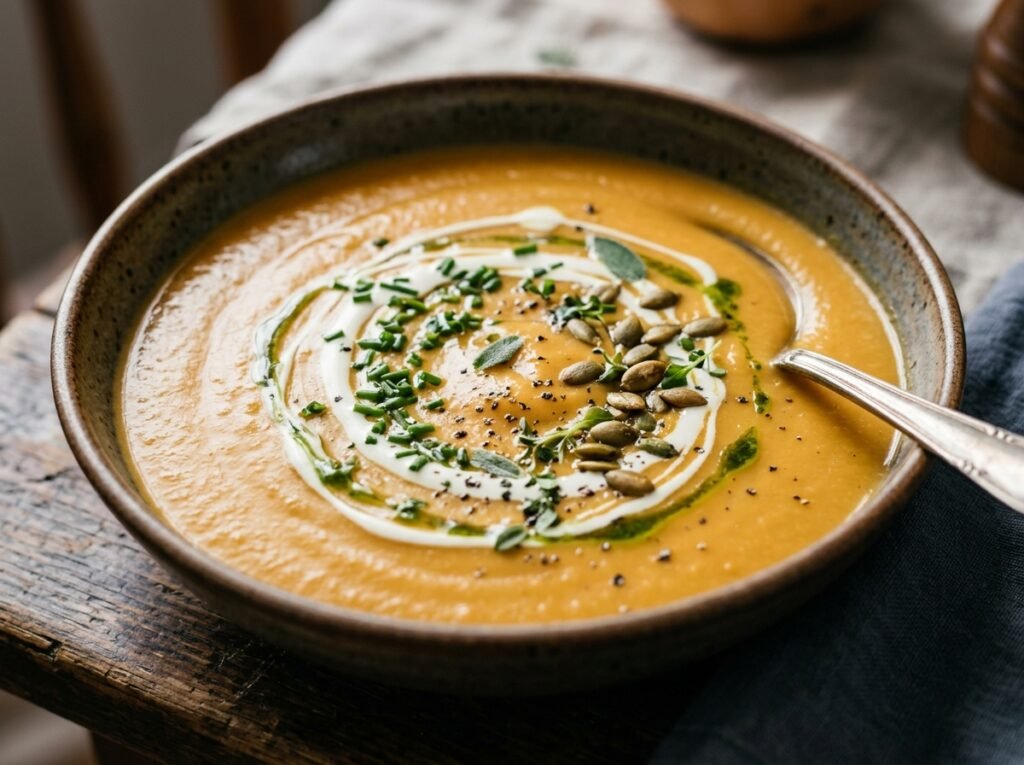
8. Butternut Squash Bisque
Roast a halved 3 lb / 1.35kg butternut squash cut-side down at 425°F / 218°C until deeply caramelized on its flat face — about 40 to 45 minutes. The dry-roast method concentrates sugars and produces far more Maillard browning than steaming or boiling ever could. Scoop the flesh and blend it with 3 cups / 720ml of warm broth, adding a pinch of freshly grated nutmeg. The nutmeg contains myristicin, a volatile compound that enhances the squash’s natural sweetness without adding discernible flavor of its own when used sparingly.
9. Manhattan Clam Chowder
This tomato-based version builds on a sofrito — onion, celery, and red bell pepper sautéed low and slow in olive oil for 12 minutes before any liquid is introduced. Use 2 cans of chopped clams and add their reserved juice to the broth — that clam juice carries intense briny mineral notes that deepen the whole base. The critical rule: clams go in during the final 3 minutes only. Prolonged cooking causes the clam proteins to contract hard and tighten into rubber. Add them late, keep the heat gentle, and the texture stays tender.
10. Creamy Wild Mushroom Soup
Use a mix — cremini, shiitake, and dried porcini for this one. Rehydrate 1 oz / 28g of dried porcini in 1 cup / 240ml of warm water for 20 minutes, then use that soaking liquid (strained through a fine mesh to catch grit) as part of your broth. It is packed with glutamates — the naturally occurring compounds responsible for umami — and adds a savory depth that fresh mushrooms alone cannot reach. Sauté 1 lb / 450g of fresh mushrooms in batches in a very hot pan, never crowding them, so they brown rather than steams.
Consolidated Master Ingredients Table
| Component | US Customary | Metric |
|---|---|---|
| Quality broth (chicken, beef, or vegetable) | 6–8 cups | 1.4–1.9L |
| Aromatics (onion, celery, carrot) | 1 cup each | 150g each |
| Garlic cloves | 3–4 cloves | 3–4 cloves |
| Kerrygold butter | 2–3 tablespoons | 30–45g |
| All-purpose flour (for roux-based soups) | 3 tablespoons | 24g |
| Heavy cream (cream soups) | ½ cup | 120ml |
| Canned whole tomatoes | 2 cups | 480ml |
| Dried lentils or beans | 1½ cups | 300g |
| Bone-in chicken thighs | 1 lb | 450g |
| Fresh leafy greens (kale, spinach) | 2 cups packed | 60g |
| Kosher salt | 1–2 teaspoons | 5–10g |
| Black pepper | ½ teaspoon | 1.5g |
| Bay leaves | 2 leaves | 2 leaves |
| Olive oil or neutral oil | 2 tablespoons | 30ml |
Common Soup Mistakes — And How to Fix Them
| The Mistake | What Actually Happens | The Fix |
|---|---|---|
| Boiling cream or dairy directly | Proteins denature and fat separates, creating a grainy, broken texture | Add cream off direct heat or maintain a bare simmer below 185°F / 85°C |
| Skipping the browning step on aromatics | No Maillard compounds form — broth stays pale, flat, and one-dimensional | Sauté onions and aromatics for 8–12 minutes until golden before adding any liquid |
| Adding cheese over high heat | Cheese proteins seize, fat leaches out, and the soup turns stringy or greasy | Remove pot from heat entirely, then add shredded cheese in small handfuls |
| Crowding mushrooms in the pan | Moisture releases faster than it evaporates — mushrooms steam instead of brown | Cook in batches in a very hot, dry pan with minimal fat |
| Seasoning only at the end | Salt does not penetrate vegetables or beans fully — everything tastes surface-seasoned | Season in layers at each stage: aromatics, broth addition, and final adjustment |
| Adding delicate herbs too early | Volatile aromatic oils (responsible for bright herbal flavor) cook off completely | Add fresh parsley, dill, or basil in the last 2 minutes or as a finishing garnish |

10 Easy Homemade Soup Recipes for Cozy Nights
Ingredients
Equipment
Method
- Place your heavy Dutch oven over medium heat and melt the grass-fed butter. Add the diced onion, carrots, and celery to the hot fat. Sauté the vegetables for 6 to 8 minutes, stirring frequently with a wooden spoon, until the onions turn translucent and a light golden crust begins to form on the bottom of the pot. This crucial browning stage triggers the Maillard reaction, unlocking deep, savory sugars from the vegetables that will serve as the foundation of your soup’s rich flavor profile.
- Turn the heat down slightly to medium-low and add the minced garlic along with the dried Italian seasoning to the center of the pot. Stir continuously for exactly 60 seconds. The high heat of the fat will rapidly bloom the oil-soluble flavor compounds trapped inside the garlic and dried herbs, spreading a rich, mouth-watering aroma throughout your kitchen without letting the delicate garlic pieces scorch or turn bitter.
- Pour in your organic stock, using your wooden spoon to vigorously scrape up all the beautifully browned, caramelized bits stuck to the bottom of the pot. Add the fine sea salt, black pepper, and whole bay leaves. Bring the entire mixture to a rolling boil over high heat, then immediately reduce the flame to low. Cover the pot with a tight-fitting lid and let it simmer gently for 20 to 25 minutes until the vegetables are completely fork-tender, allowing the natural gelatins in the stock to meld thoroughly with the aromatics.
- If you are making a smooth cream soup variation, use your immersion blender directly in the pot at this point until your desired texture is reached. For chunky soups, leave as is. Reduce the heat to low so the broth is no longer bubbling, then slowly pour in the heavy whipping cream while stirring constantly. Letting the dairy come up to temperature gently prevents the milk proteins from shocking and separating, ensuring a perfectly smooth, velvet-like finish. Simmer uncovered for 5 final minutes, adjust your salt to taste, remove the bay leaves, and ladle hot into deep bowls.
Notes
Chef John’s Insight
There is something almost medicinal about a pot of soup simmering on a cold evening — and I do not mean that loosely. Every culture on earth has its version: the pho of Vietnam, the minestrone of northern Italy, the pozole of Mexico. Soup is what humans make when they want to turn humble ingredients into something that genuinely comforts. I have made hundreds of batches over the years, in cramped apartments and spacious test kitchens, and the truth I keep arriving at is the same every time. Soup rewards presence. It rewards the cook who stays close, who adjusts, who tastes, who listens to the simmer. No machine replaces that attention. The best bowl you will ever make is the one you made slowly, on purpose, for someone you love. Remember this: great soup is not about the recipe — it is about the patience you bring to the pot.
— Chef John, Food Hacks Hub
Nutritional Averages Per Serving
Based on a standard 1.5 cup / 360ml serving of a broth or vegetable-based homemade comfort soup. Values are kitchen estimates and will vary by specific recipe and ingredient brands.
| Nutrient | Estimated Per Serving |
|---|---|
| Calories | 180–280 kcal |
| Protein | 10–18g |
| Total Fat | 7–14g |
| Saturated Fat | 2–6g |
| Total Carbohydrates | 18–32g |
| Sodium | 480–720mg |
| Cholesterol | 20–55mg |
Food Safety & Temperature Guide
Soup safety is not optional, and it is easy to get wrong with large pots.
The USDA requires hot soups to be held at or above 140°F / 60°C at all times during service. Below that threshold, you enter the Danger Zone — between 40°F / 4°C and 140°F / 60°C — where bacteria like Salmonella and Listeria can double in population every 20 minutes under ideal conditions.
The biggest risk is cooling. A full 6-quart pot of soup left to cool on the counter can take 4 to 6 hours to reach safe refrigerator temperature — and every minute in that Danger Zone is a minute of potential bacterial growth.
The correct cooling method: Divide your soup into shallow containers of 2 inches / 5cm depth or less immediately after cooking. Alternatively, place the pot in an ice bath in your sink, stirring frequently. USDA guidelines recommend cooling soup from 140°F / 60°C to 70°F / 21°C within 2 hours, and from 70°F / 21°C to 40°F / 4°C within an additional 4 hours.
| Stage | Target Temperature |
|---|---|
| Hot holding (service) | Above 140°F / 60°C |
| Danger Zone | 40°F–140°F / 4°C–60°C |
| Safe refrigerator storage | Below 40°F / 4°C |
| Reheat to serve (minimum) | 165°F / 74°C |
Storage, Freezing & Reheating Matrix
| Soup Type | Refrigerator | Freezer | Best Reheat Method |
|---|---|---|---|
| Broth-based (chicken noodle, minestrone) | 4–5 days | Up to 3 months | Stovetop over medium-low, covered |
| Cream-based (tomato bisque, potato) | 3–4 days | Not recommended — will separate | Stovetop with fresh splash of cream added while stirring |
| Bean and lentil soups | 5–6 days | Up to 4 months | Stovetop with added broth to restore consistency |
| Cheese-based (broccoli cheddar) | 3 days | Not recommended — grainy upon thaw | Double boiler method, low heat, stir constantly |
| Vegetable purée soups | 4–5 days | Up to 3 months | Blender-warm method — blend briefly after heating to restore velvety texture |
| Soups with pasta or noodles | 2–3 days (noodles absorb broth) | Freeze base only, add noodles fresh | Stovetop with fresh broth added to compensate for absorption |
Cozy Nights FAQ
Why does my homemade soup always taste bland, even when I follow the recipe?
Almost always, this comes down to two things: under-browning your aromatics and under-seasoning in layers. If you add salt only at the end, it sits on the surface rather than penetrating the vegetables and proteins throughout. Season at every stage — and brown those onions properly.
Can I fix a soup that is too salty?
Yes, to a degree. Add a peeled raw potato cut into large chunks and simmer for 15 minutes — potatoes absorb a measurable amount of dissolved sodium. You can also dilute with unsalted broth or water and compensate by adding an acid like lemon juice or a splash of white wine vinegar, which tricks the palate into perceiving less saltiness.
Why did my cream soup break and turn grainy?
You added the cream over too-high heat. The fat and water components separated because the emulsion destabilized. To partially rescue it, remove from heat, let it cool slightly, and whisk in a small amount of cold heavy cream vigorously. It will not be perfectly restored, but it will come back significantly.
Which of these soups freeze the best?
Bean-based soups, lentil soups, broth-based chicken or vegetable soups, and purée soups (without dairy) all freeze beautifully for up to 3 months. Cheese-based and heavy cream-based soups are best eaten fresh — the fat structure breaks during freezing and does not fully restore upon reheating.
How do I add more depth to a soup that uses store-bought broth?
Add a Parmesan rind to the simmering pot — it slowly dissolves glutamates and adds savory depth. A small splash of soy sauce or fish sauce (about 1 teaspoon / 5ml) also dramatically amplifies umami without tasting like either ingredient. And always finish with acid — a half-lemon squeezed in at the end wakes everything up.
Keep Exploring on The Flavor Bazaar
Cottage Cheese Protein Pancakes
Best Blueberry Cheesecake Overnight Oats Recipe
Best Air Fryer Garlic Bread Pizza Rolls Recipe
10 Easy Breakfast Ideas to Start Your Morning Right