7 Minutes to the Ultimate Smash Burger Crust Secret
The Precise Moment Everything Changes
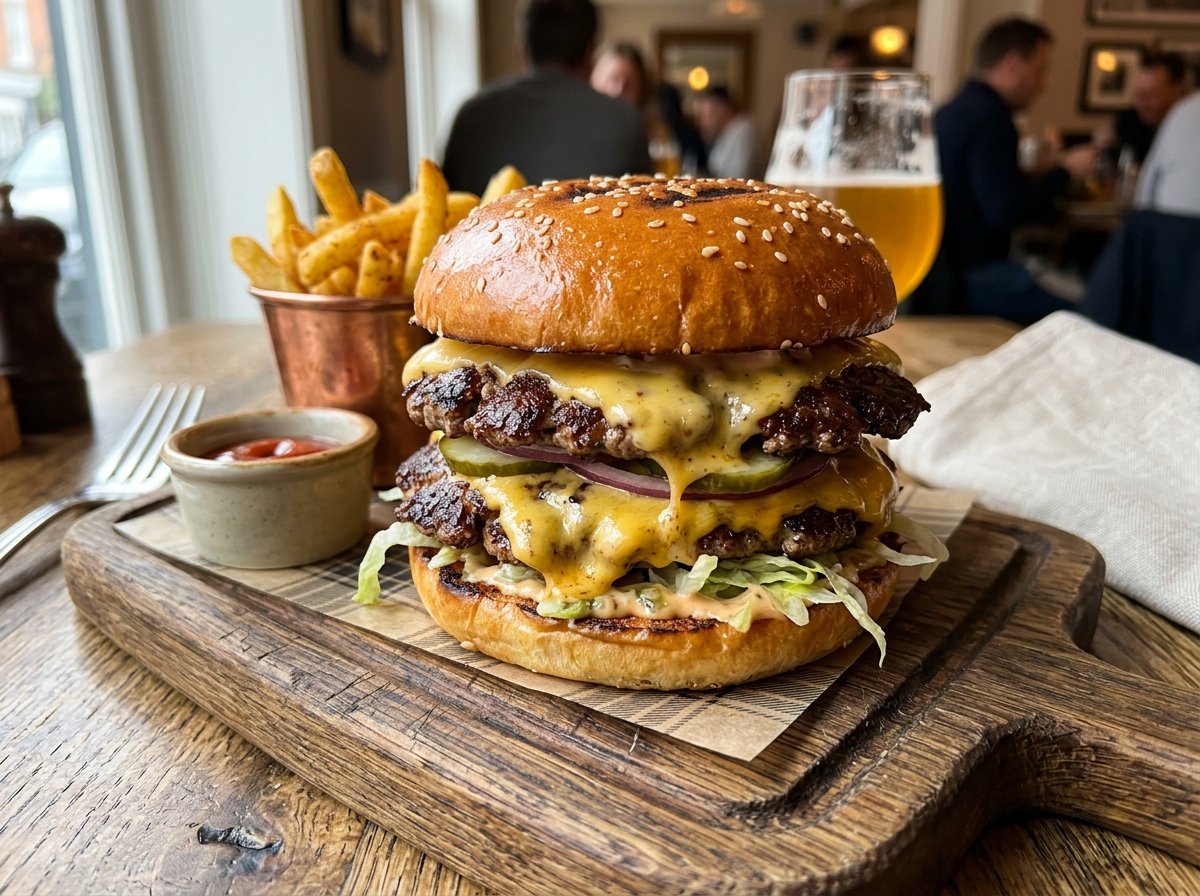
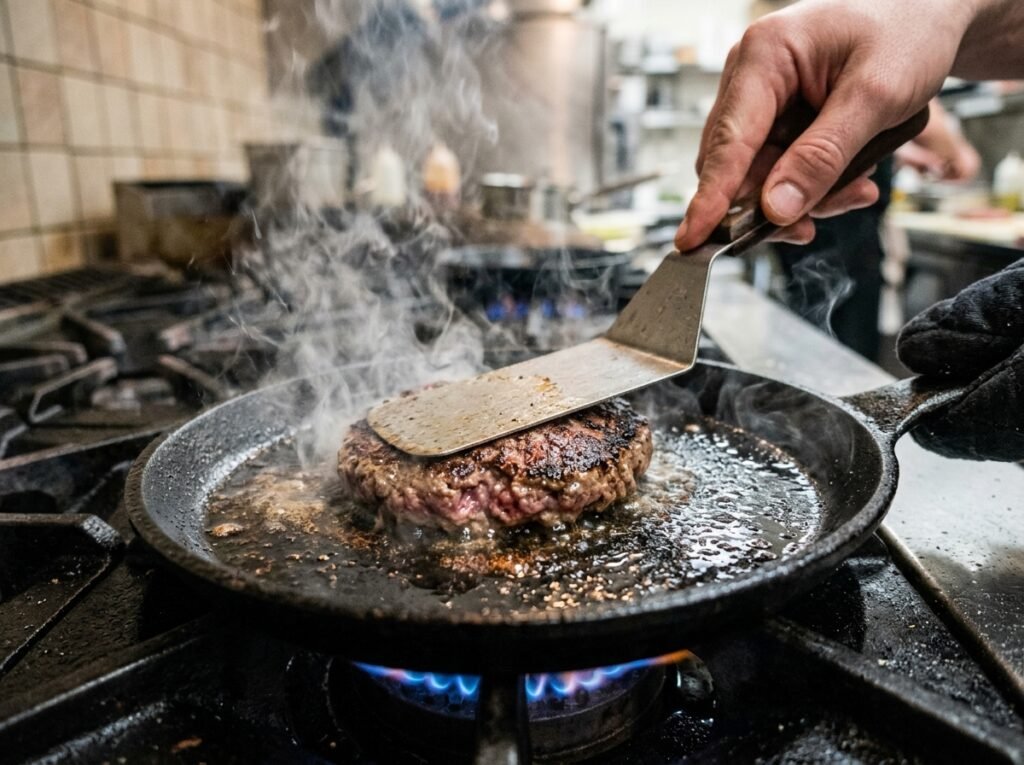
There is a precise moment when raw ground beef meets screaming-hot cast iron at exactly 450°F that changes everything. You hear it first—a violent, crackling sizzle that sounds almost angry. Then you see it: the edges of the meat patty begin to brown within 15 seconds, and a thin Smash Burger crust starts forming faster than you can believe.
That moment is not just cooking; it is a masterclass in food science. What you are witnessing is the Maillard reaction, a chemical process where amino acids and reducing sugars transform under high heat to create hundreds of different flavor compounds. This is the entire secret behind the ultimate smash burger.
I have made over 50 smash burgers testing this exact technique—adjusting heat levels, meat temperatures, fat ratios, and smashing pressure one variable at a time. What I found changed how I think about burgers completely. The difference between a decent burger and one with a shatteringly crisp, caramelized crust comes down to understanding three things:
- Surface Temperature: Keeping your cast iron at a steady high heat to trigger the Maillard reaction.
- Smashing Pressure: Creating maximum surface contact between the beef and the pan.
- The Cold-Fat Ratio: Ensuring your beef stays cold until the second it hits the pan to prevent the fat from melting too early.
This is not a recipe you can wing. But once you nail these seven minutes, you will never want a thick pub burger agains.
The Science Behind the Crust (And Why Most Burgers Fail)
The secret to that deep mahogany crust is a chemical reaction called the Maillard reaction—a complex series of interactions between amino acids in the beef and reducing sugars that only happens at temperatures above 285°F. When you smash a burger hard enough onto a ripping-hot surface, you create maximum contact, which means maximum browning in minimum time.
Here is the reaction in its simplest form:
Amino Acids+Reducing Sugars→Melanoidins (Crust)
In simple terms: the proteins and sugars in ground beef break down under intense heat and reform into hundreds of new flavor compounds. These melanoidins give you that nutty, savory, almost umami-rich crust that makes smash burgers addictive.
But here is where most home cooks fail: they use lean beef. The ultimate smash burger needs fat—specifically a cold-fat ratio of 80/20 (80% lean, 20% fat). The fat does two jobs. First, it lubricates the surface so the meat does not stick when you smash it. Second, it renders out during cooking and fries the edges of the patty in its own beef tallow, creating that lacy, crispy perimeter.
If you use 93/7 lean beef, you will get a dry, pale patty that sticks to the spatula. If the beef is too warm, the fat smears instead of staying in distinct pockets. Cold beef from the fridge (around 38°F) is non-negotiable.
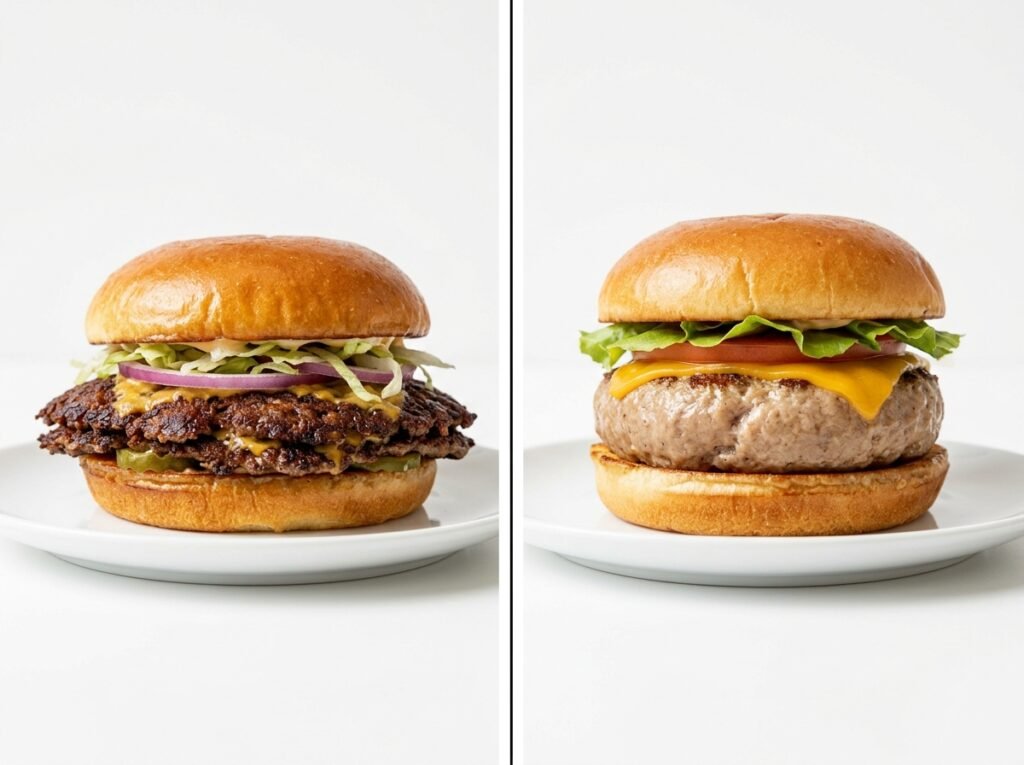
The other variable most people ignore is surface area. A smash burger is thin—about ⅛ inch after smashing. That gives you a 4:1 crust-to-interior ratio, which is the sweet spot for flavor. Thick burgers have too much unseared interior. Smash burgers are all crust, all the time.
Pro Buying Guide: What to Buy (And Where to Find It in the USA)
The ultimate smash burger starts at the grocery store, and being specific here matters. You cannot build a perfect crust with the wrong ingredients.
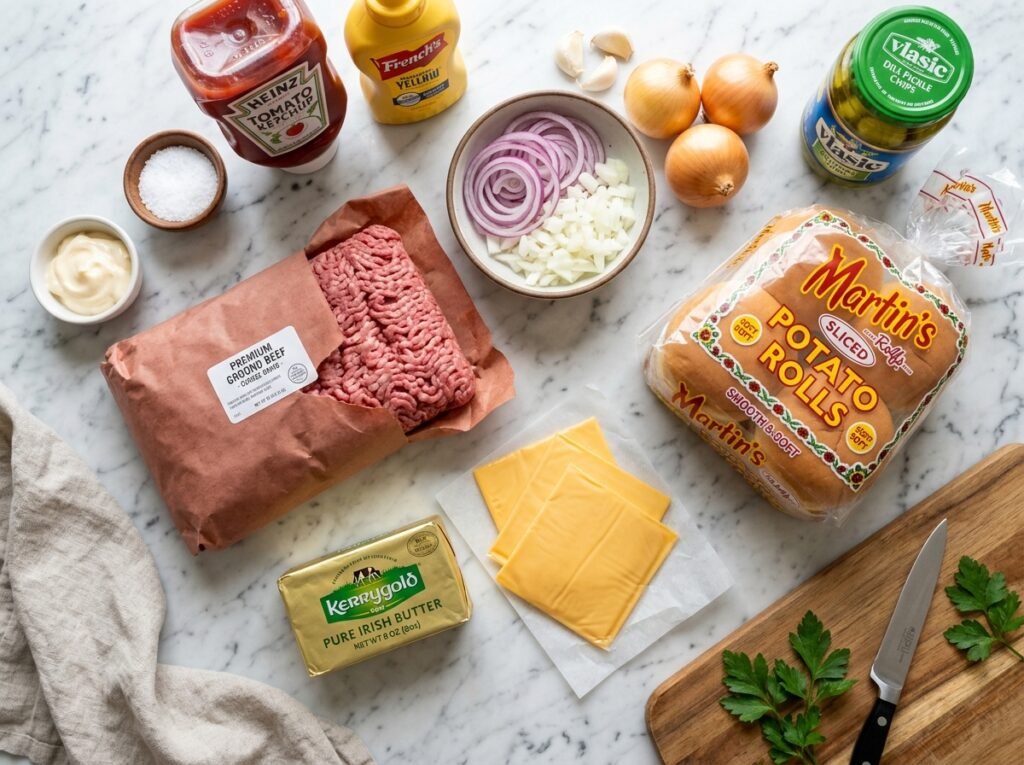
Ground Beef: Look for 80/20 ground chuck. At Walmart, the “Marketside Grass-Fed Ground Beef” runs about $6/lb and has excellent flavor. Whole Foods sells their 365 Organic Ground Beef in the same ratio for around $7/lb. Kroger’s “Private Selection Angus Ground Chuck” is another solid pick. Avoid pre-formed patties—they are often too lean and have binders that prevent proper crust formation.
Buns: Martin’s Potato Rolls are the gold standard. Soft, slightly sweet, and they compress just enough to hold the burger without falling apart. Find them at Trader Joe’s or Target. If you cannot find Martin’s, King’s Hawaiian rolls work in a pinch.
Cheese: Boar’s Head White American Cheese from the deli counter melts like a dream and has that classic diner flavor. Ask them to slice it thin. If you are at Whole Foods, grab Kerrygold Dubliner for a sharper, aged flavor.
Butter: Real butter for toasting buns. Kerrygold Unsalted Butter has a higher fat content (82%) than most American butters, which means better browning and richer flavor.
Cookware: If you do not own a Lodge Cast Iron Skillet (10- or 12-inch), get one. They run $25–$40 at Walmart or Target and retain heat better than any nonstick pan. A flat-bottom bacon press or a sturdy metal spatula is your smashing tool—do not use plastic.
Condiments: Duke’s Mayonnaise, Heinz Ketchup, and yellow mustard are the classic trio. For onions, grab a sweet yellow onion from Kroger or Trader Joe’s.
Ingredients (Makes 4 Burgers)
| Ingredient | US Customary | Metric |
|---|---|---|
| Ground chuck (80/20) | 1 lb | 450g |
| Salt (coarse kosher) | 1½ tsp | 9g |
| Black pepper (freshly ground) | ½ tsp | 2g |
| Potato hamburger buns | 4 buns | 4 buns |
| American cheese slices | 4–8 slices | 4–8 slices |
| Unsalted butter (for buns) | 2 Tbsp | 28g |
| Yellow onion (thinly sliced) | ½ medium | ~60g |
| Pickles (dill chips) | 8–12 slices | 8–12 slices |
| Yellow mustard | 2 Tbsp | 30ml |
| Mayonnaise | 2 Tbsp | 30ml |
| Ketchup | 2 Tbsp | 30ml |
Common Mistakes (And How They Ruin Your Burger)
| The Mistake | What Actually Happens | The Fix |
|---|---|---|
| Using lean beef (90/10 or 93/7) | Patty dries out, no crust forms, sticks to pan | Always use 80/20 ground chuck |
| Beef is room temperature | Fat smears, patty falls apart when smashed | Keep beef refrigerated until the moment you cook |
| Pan is not hot enough | Steaming instead of searing, gray and sad | Preheat cast iron for 5+ minutes on high heat |
| Flipping too early | Crust tears off and sticks to the pan | Wait a full 2 minutes before flipping |
| Smashing after the first 10 seconds | Does nothing—crust is already set | Smash ONCE, immediately, then leave it alone |
| Using a nonstick skillet | Cannot reach high enough temp for Maillard reaction | Cast iron or carbon steel only |
Step-by-Step Method: The 7-Minute Ultimate Smash Burger
Step 1: Prep the Beef Balls
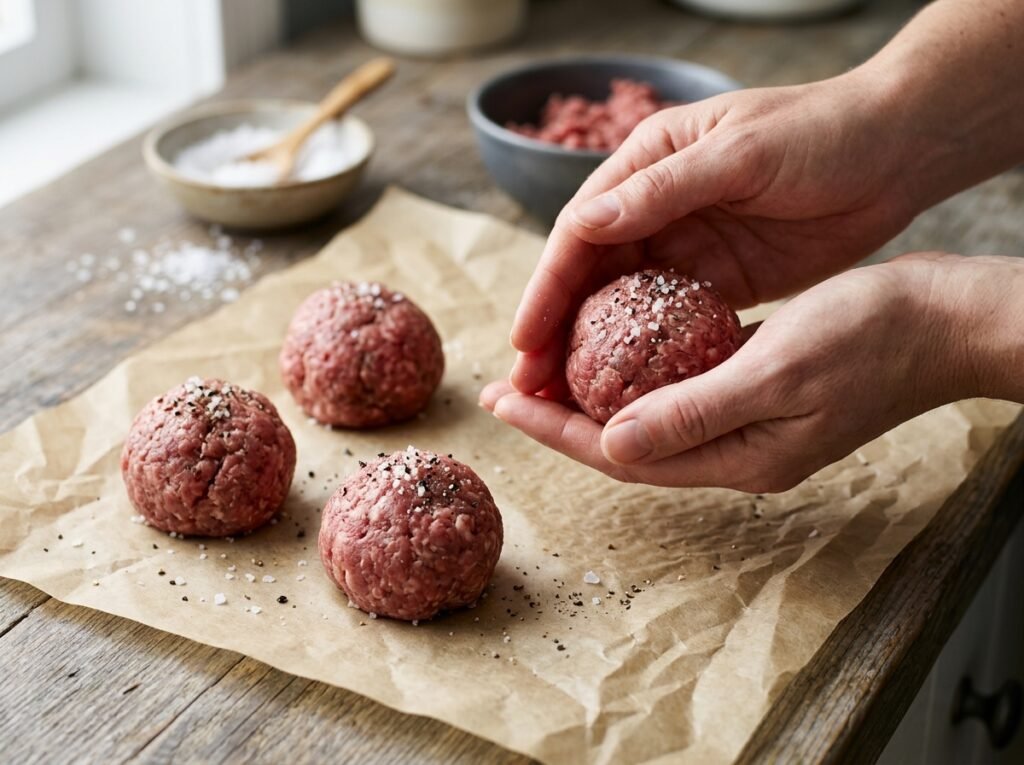
Divide your cold ground beef into four equal portions—about 4 ounces (113g) each. Roll them gently into loose balls. Do not overwork the meat or it becomes dense and tough. The balls should barely hold together.
Season the outside of each ball aggressively with kosher salt and black pepper. Do not season ahead of time—salt draws out moisture, which kills crust formation.
Step 2: Preheat Your Cast Iron to Screaming Hot
Place your cast iron skillet over high heat and let it preheat for at least 5 minutes. You want the surface temp around 450–475°F. If you have an infrared thermometer, use it. If not, flick a drop of water on the pan—it should evaporate in under a second.
Do not add oil or butter to the pan. The fat in the beef will render and do the job.
Step 3: Smash Hard, Smash Once
Place one beef ball in the center of the skillet. Immediately press down hard with a sturdy metal spatula or bacon press. You want to flatten it to about ⅛ inch thick—roughly the diameter of your bun.
This is not gentle. You are forcing maximum surface contact with the pan. Smash for 3–5 seconds, then leave it completely alone. Do not move it. Do not peek. Do not adjust.
The Maillard reaction is happening right now at the meat-metal interface. Any movement disrupts crust formation.
Step 4: Wait Exactly 2 Minutes
Set a timer. During this time, the bottom of the patty is developing a deep, caramelized crust. You will see the edges turn dark brown and crispy. Fat will pool around the perimeter and fry the lacy bits.
If you flip too early, the crust tears off and sticks to the pan. If you wait too long, the burger overcooks and dries out.
Two minutes is the magic number.
Step 5: Flip and Add Cheese
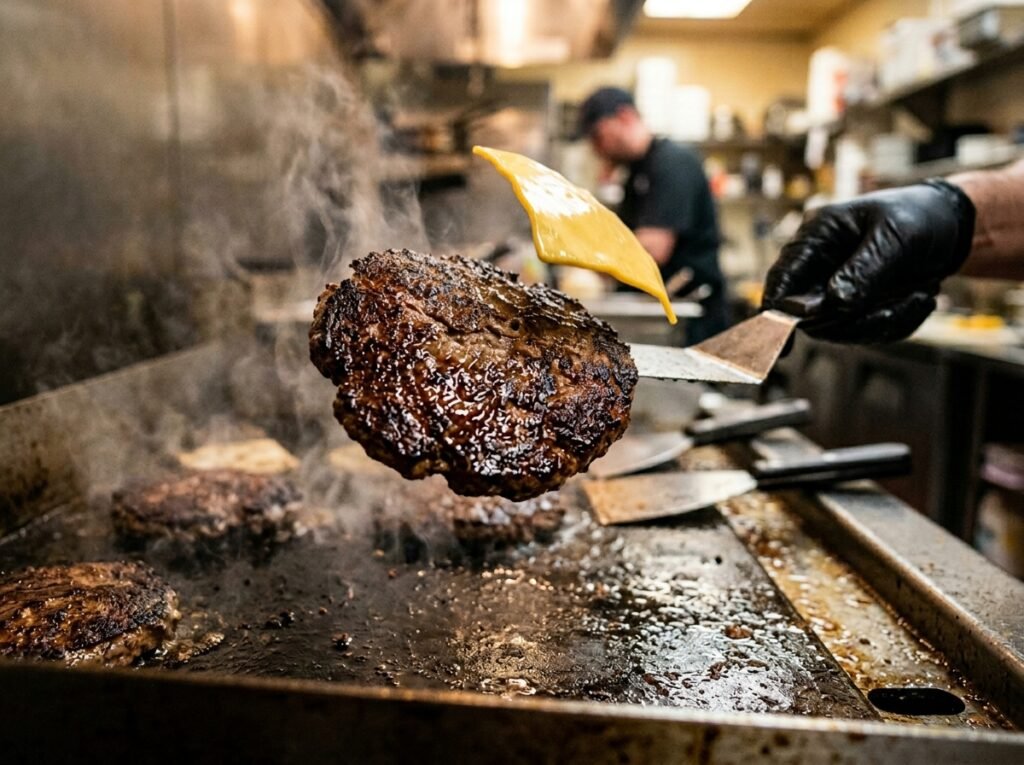
Slide your spatula under the patty with confidence. It should release cleanly if the crust is fully formed. Flip it onto the uncooked side.
Immediately lay one or two slices of American cheese on top. The residual heat from the pan and the burger will melt it perfectly in the next 60 seconds.
Cook for exactly 1 more minute. The second side does not need as much time because it is thinner and closer to the heat source.
Step 6: Toast the Buns in Butter
While the burgers rest for 30 seconds, melt butter in the same skillet (wipe it clean if there is too much fond). Place your buns cut-side down and toast until golden brown—about 45 seconds.
The butter adds richness and the toasted surface creates a moisture barrier so your bun does not get soggy.
Step 7: Assemble Fast and Serve Hot
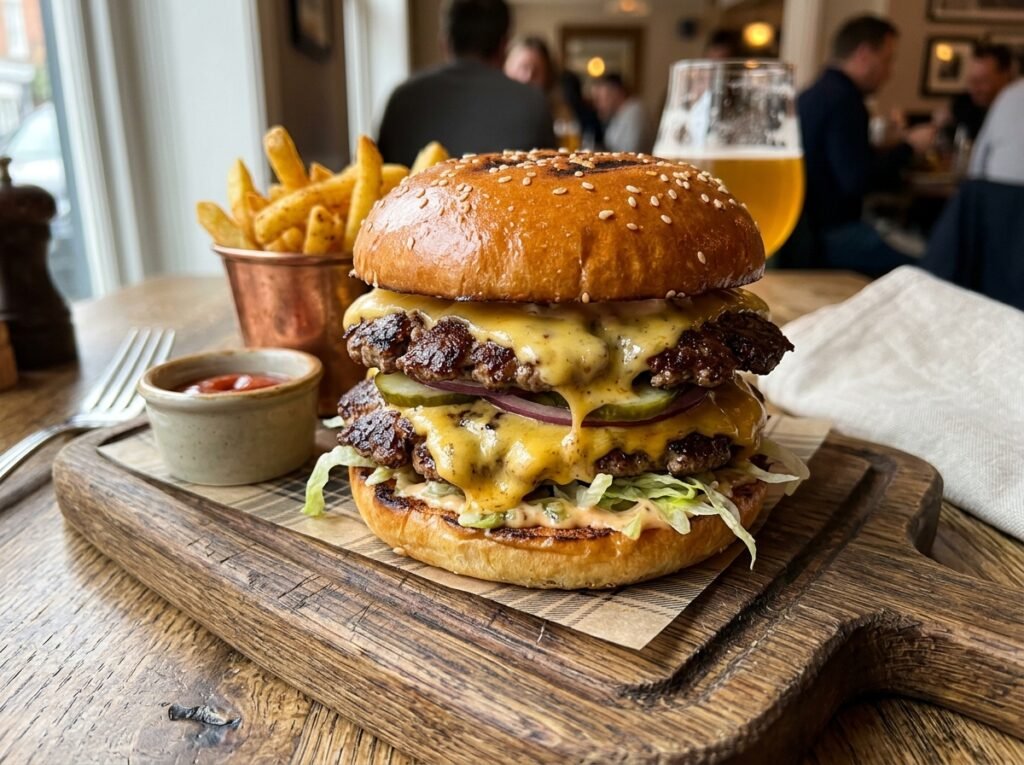
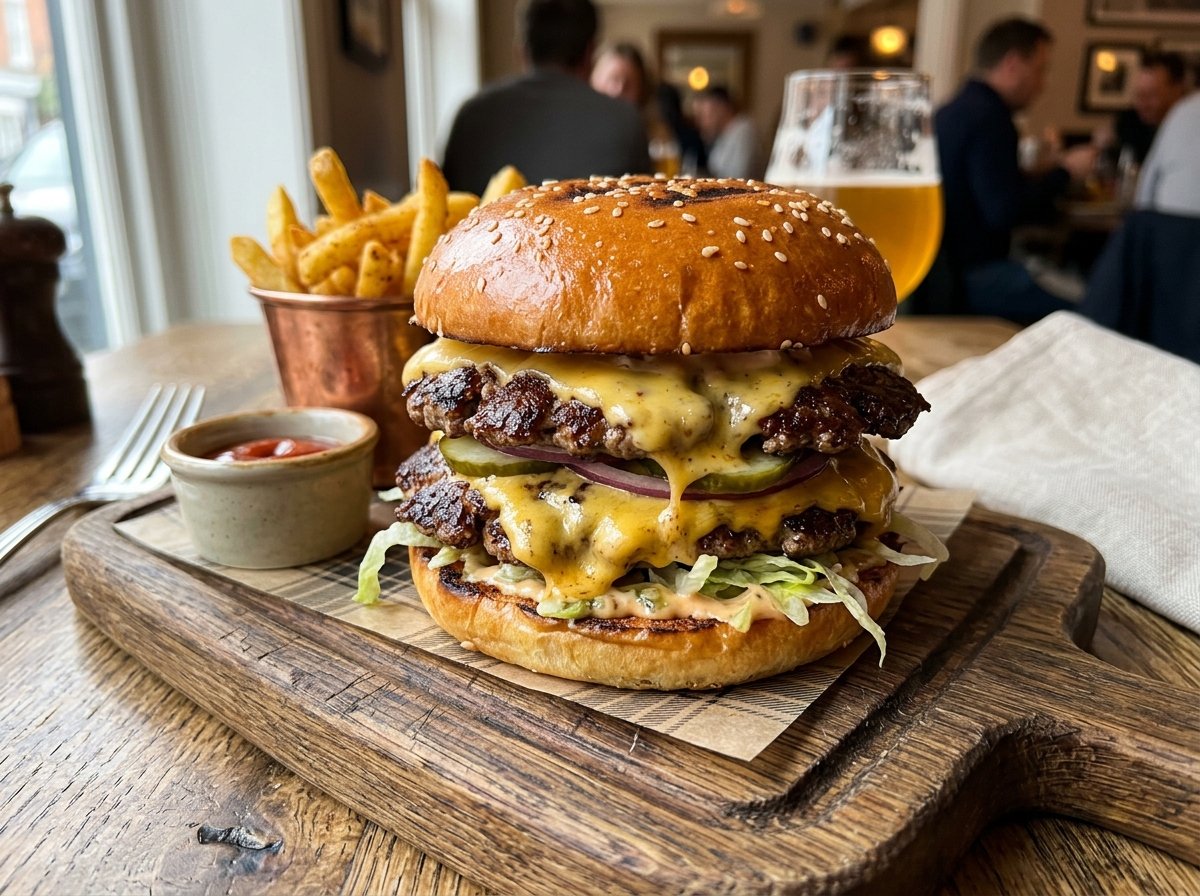
Bottom bun first. Add a thin smear of mayo, then mustard. Lay down pickles, then your double-stacked smash patties with melted cheese. Top with thinly sliced raw onions and a squirt of ketchup.
Press the top bun down gently. The burger should be messy, juice running down your hands. That is the sign of success.

7 Minutes to Perfection: The Ultimate Smash Burger Crust Secret
Ingredients
Equipment
Method
- Set a cast iron skillet to 450°F (232°C). Divide meat into four 4oz loose balls. Keep cold.
- Butter the potato rolls and toast face-down for 45 seconds until golden.
- Place meat on skillet. Use a heavy spatula to smash paper-thin immediately. Season with salt/pepper.
- Cook undisturbed for 2 minutes until a dark, jagged crust forms. Scrape and flip.
- Add cheese, cover for 30 seconds to melt, then stack patties and serve on toasted buns.
Notes
- The Temperature Rule: Never start with room-temperature beef. To get those jagged, lacy edges, the fat must stay solid until it hits the 450°F steel. Keep your portioned beef balls in the fridge until the exact second the skillet starts smoking.
- The “No-Oil” Secret: Do not add oil or butter to the pan before smashing the beef. You need a “dry” sear to allow the proteins to bond directly with the metal. This creates the strongest Maillard crust. The 20% fat in the beef will render out almost instantly to provide all the lubrication you need.
- Salt Timing: Only salt the meat after you have smashed it. If you salt the beef balls beforehand, the salt will start to dissolve the muscle proteins (myosin), resulting in a sausage-like, rubbery texture instead of a loose, tender crumb.
- The Scrape is Key: Use a high-quality metal spatula with a sharp edge. If you don’t scrape with enough force, the best part of the crust (the flavor!) will stay stuck to the pan instead of staying on your burger.
- Bun Integrity: If you find your bottom bun getting soggy, try a thin layer of mayonnaise or “burger sauce” on the bottom bun before adding the patties. The fat in the mayo acts as a waterproof barrier against the meat juices.
Chef John’s Insight
“The smash burger taught me something I have carried into every other technique I teach: sometimes the most aggressive move is the right one. Smashing that beef with full force onto screaming-hot iron feels almost violent, but it is exactly that intensity that creates the flavor. There is no gentle path to a deep crust. The Maillard reaction does not negotiate. You either create the conditions for it to happen, or you do not. And when you do—when you hear that crackling sizzle and smell those nutty, caramelized notes rising from the pan—you realize that precision and power are not opposites. They are partners. The smash burger does not forgive half-measures, and that is exactly why it rewards you so generously when you commit.”
— Chef John, The Flavor Bazaar
Nutrition Information (Per Burger)
| Nutrient | Amount |
|---|---|
| Calories | 520 kcal |
| Protein | 28g |
| Total Fat | 32g |
| Saturated Fat | 14g |
| Carbohydrates | 28g |
| Sodium | 890mg |
| Cholesterol | 95mg |
Note: Values are estimates based on standard ingredients. Actual nutrition may vary based on specific brands and portion sizes.
Food Safety & Temperature Guide
| Stage | Temperature | Notes |
|---|---|---|
| Ground beef (stored) | Below 40°F | Keep refrigerated until cooking |
| Cast iron surface (preheat) | 450–475°F | Essential for Maillard reaction |
| USDA Safe Minimum (ground beef) | 160°F | Always use a meat thermometer |
| Danger Zone | 40–140°F | Bacteria multiply rapidly—avoid this range |
| Ideal finished temp (smash burger) | 160–165°F | Thin patty cooks fast; carryover is minimal |
USDA Reminder: Ground beef must reach an internal temperature of 160°F to be considered safe. Because smash burgers are thin, they reach temp quickly. If you prefer medium burgers, grind your own beef fresh from whole cuts.
Storage & Reheating Guide
| State | Fridge | Freezer | Best Reheat Method |
|---|---|---|---|
| Cooked patties (plain) | 3–4 days | 2–3 months | Cast iron, 2 min per side, medium heat |
| Assembled burgers | Not recommended | Not recommended | Burgers do not reheat well assembled |
| Raw beef balls | 1 day | 3 months | Thaw in fridge overnight before cooking |
Pro Tip: If you must store cooked patties, wrap individually in foil and refrigerate. Reheat in a dry skillet—never the microwave.
FAQ: Your Smash Burger Questions Answered
Can I use a stainless steel or carbon steel pan instead of cast iron?
Yes. Carbon steel works beautifully and heats even faster than cast iron. Stainless steel works but requires more oil and has hot spots. Avoid nonstick—it cannot handle the heat needed for a proper crust.
How thin should I actually smash the patty?
About ⅛ inch thick after smashing. If you can still see the spatula grid pattern on the surface, you smashed hard enough. The patty should be roughly the same diameter as your bun.
Can I make smash burgers on a griddle or flat-top?
Absolutely. In fact, that is the traditional diner method. A flat-top griddle gives you even more surface contact and heats more consistently than a skillet. Preheat it the same way.
What if I do not have a bacon press or heavy spatula?
Use a smaller cast iron skillet as a press, or wrap a brick in foil. You need significant downward force—your hand alone usually is not enough.
Why do my patties stick to the pan even with 80/20 beef?
Your pan is not hot enough, or you are trying to flip before the crust has fully formed. Wait the full 2 minutes. A properly formed crust releases cleanly and naturally from the pan.
More Recipes You’ll Love from The Flavor Bazaar
If you loved this ultimate smash burger technique, you will want to check out these other deep-dive recipes:
[7 Amazing Crispy Air Fryer Chicken Wings Recipe]
[Easy Mexican Street Corn Salad Recipe]