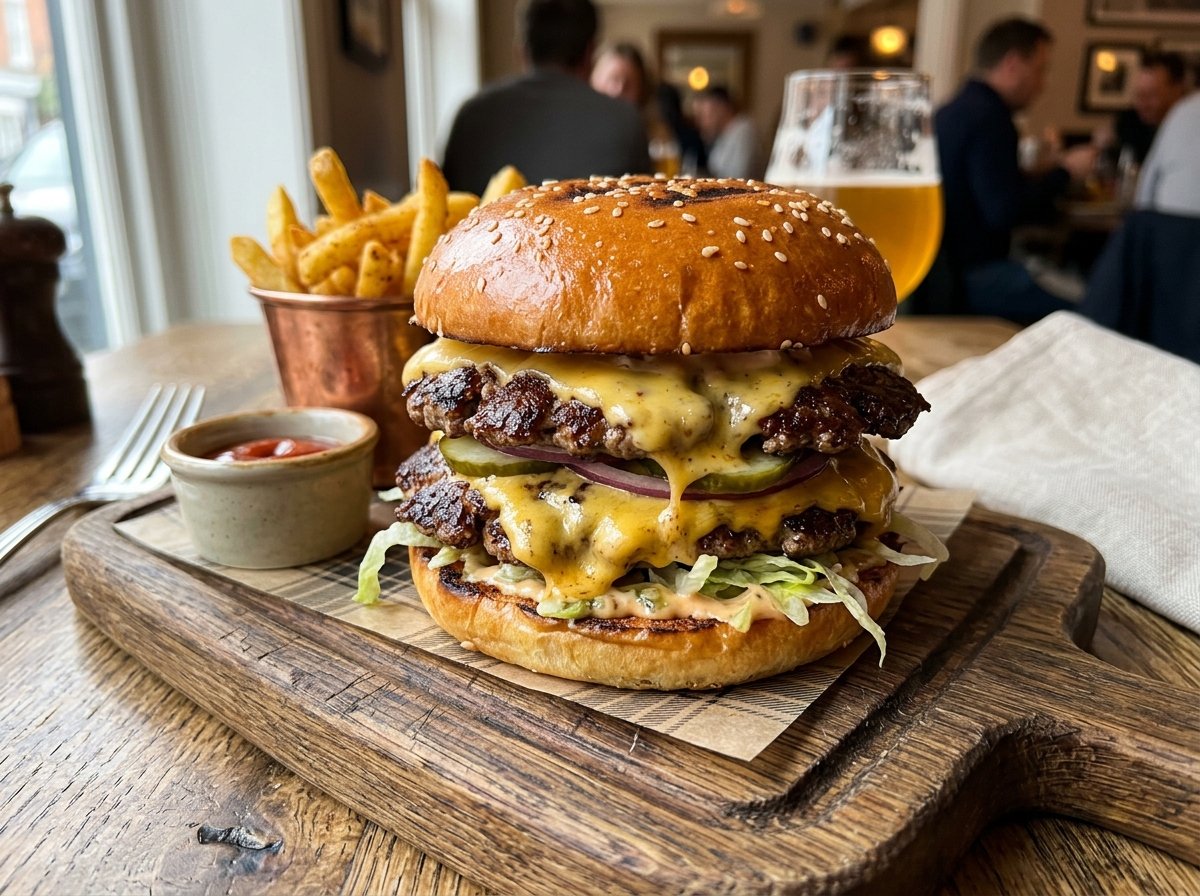

Ingredients
Equipment
Method
1 Preheat
- Set a cast iron skillet to 450°F (232°C). Divide meat into four 4oz loose balls. Keep cold.
2 Toast
- Butter the potato rolls and toast face-down for 45 seconds until golden.
3 Smash
- Place meat on skillet. Use a heavy spatula to smash paper-thin immediately. Season with salt/pepper.
4 Sear
- Cook undisturbed for 2 minutes until a dark, jagged crust forms. Scrape and flip.
5 Melt & Stack
- Add cheese, cover for 30 seconds to melt, then stack patties and serve on toasted buns.
Notes
- The Temperature Rule: Never start with room-temperature beef. To get those jagged, lacy edges, the fat must stay solid until it hits the 450°F steel. Keep your portioned beef balls in the fridge until the exact second the skillet starts smoking.
- The "No-Oil" Secret: Do not add oil or butter to the pan before smashing the beef. You need a "dry" sear to allow the proteins to bond directly with the metal. This creates the strongest Maillard crust. The 20% fat in the beef will render out almost instantly to provide all the lubrication you need.
- Salt Timing: Only salt the meat after you have smashed it. If you salt the beef balls beforehand, the salt will start to dissolve the muscle proteins (myosin), resulting in a sausage-like, rubbery texture instead of a loose, tender crumb.
- The Scrape is Key: Use a high-quality metal spatula with a sharp edge. If you don't scrape with enough force, the best part of the crust (the flavor!) will stay stuck to the pan instead of staying on your burger.
- Bun Integrity: If you find your bottom bun getting soggy, try a thin layer of mayonnaise or "burger sauce" on the bottom bun before adding the patties. The fat in the mayo acts as a waterproof barrier against the meat juices.