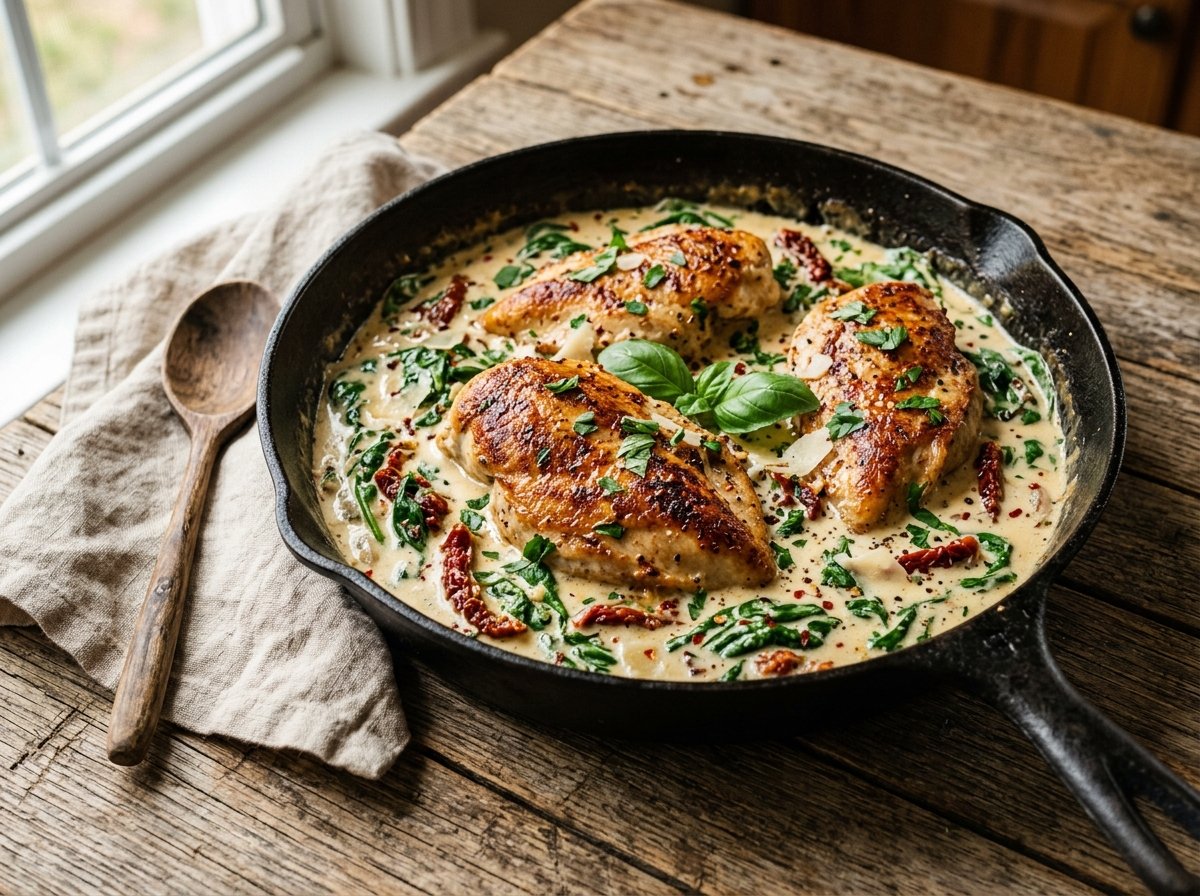
Creamy Tuscan Chicken Skillet – A Delicious Restaurant-Style Dinner in Just 20 Minutes
By Chef John | Easy Recipes & Smart Cooking Hacks
The Smell That Stops You Cold
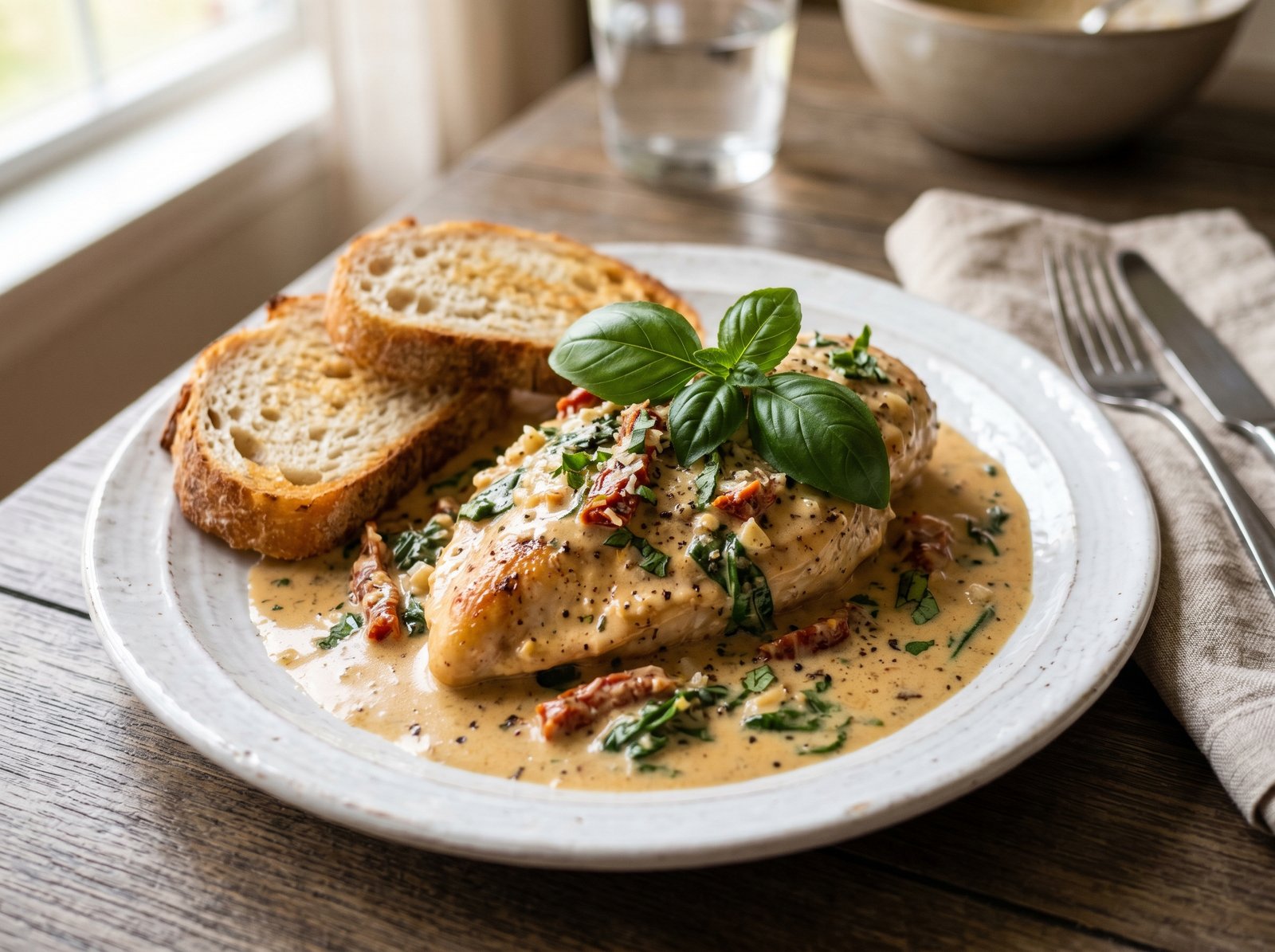
The smell hits you before you even open the lid. Garlic sizzling in butter. Sun-dried tomatoes releasing their sweet, tangy oils. Fresh spinach wilting into a pool of cream that clings to golden, pan-seared chicken breasts. This is the magic of a Tuscan chicken recipe done right—bold, aromatic, and impossibly satisfying.
But here is the weeknight problem most home cooks face: chicken breasts turn rubbery. The cream breaks into greasy puddles. The sauce tastes flat, or worse, metallic from canned tomatoes. You wanted restaurant-style chicken dinner, and you got sad protein with sad gravy.
I have tested this skillet method across dozens of batches, adjusting the pan temperature and fat ratios to isolate exactly how to get juicy chicken in under twenty minutes. The secret is not complicated—it is about sequence, heat control, and understanding why cream behaves the way it does when you introduce acid and salt.
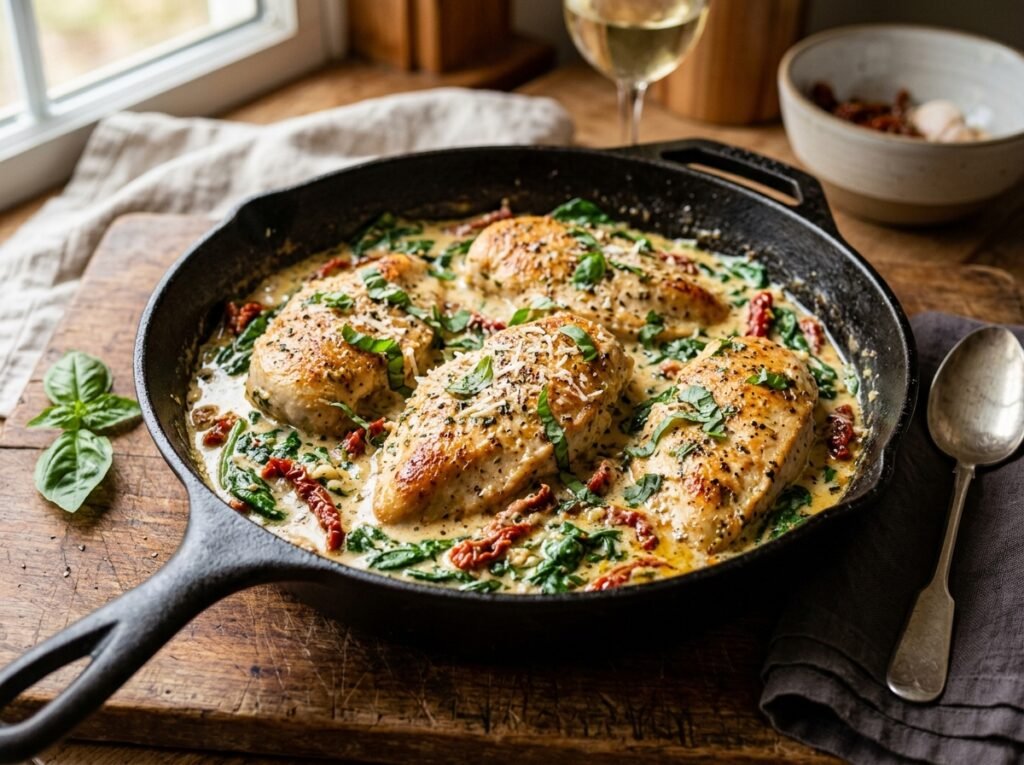
This Creamy Tuscan Chicken Skillet delivers everything: a deeply flavored creamy garlic sauce, tender chicken with a caramelized crust, and vegetables that taste like they belong in the dish—not like an afterthought. And you do it all in one pan.
The Science of Juicy Chicken and Silky Cream Sauces
Let’s talk about why most chicken breast recipes fail. Chicken breast is almost entirely lean protein. When you apply heat, those proteins denature—they uncoil, squeeze together, and push out moisture. Overcook by even two minutes, and you get dry, chalky meat. The target zone is narrow: you want an internal temperature of 165°F / 74°C, but you pull the chicken at 160°F / 71°C because carryover heat will finish the job.
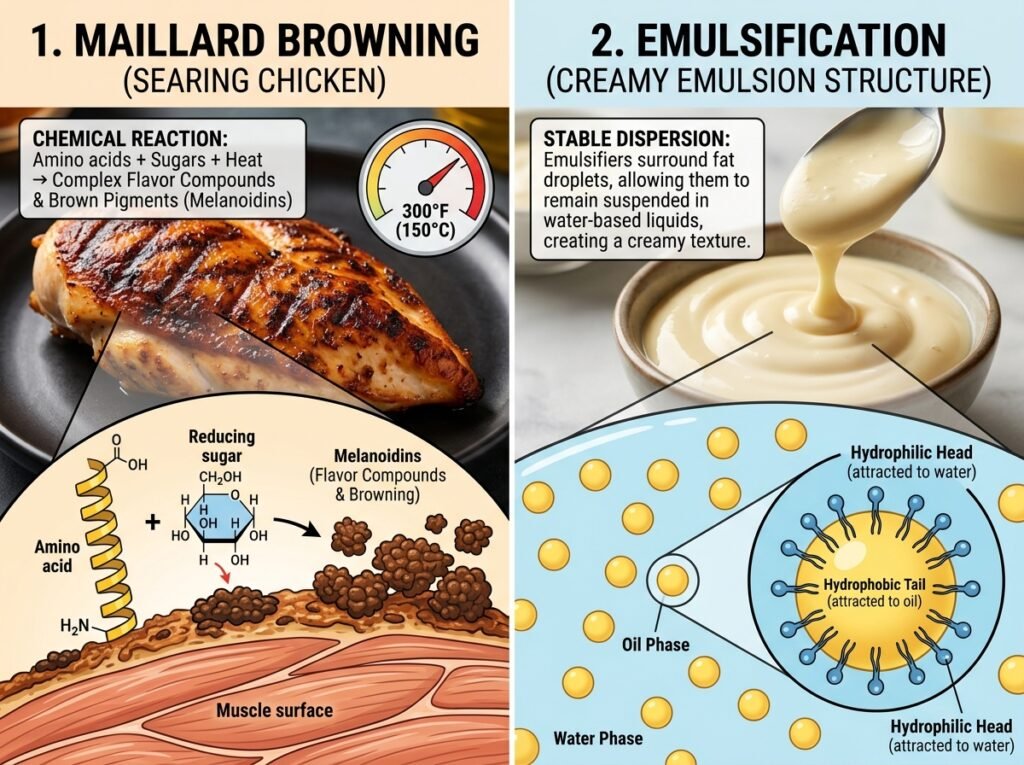
The sear matters for flavor, not moisture retention. When you press seasoned chicken against a screaming-hot skillet, you trigger the Maillard reaction—a complex cascade where amino acids and reducing sugars collide to form hundreds of new flavor compounds. That golden-brown crust is not just pretty. It is umami depth.
Amino Acids+Reducing Sugars→Maillard Flavor Compounds
Now, the sauce. Heavy cream is an emulsion of fat droplets suspended in water, stabilized by proteins. When you add parmesan and chicken broth, you are introducing salt, acid, and more fat. Done wrong, the proteins clump, the fat separates, and your sauce looks broken. Done right—with gentle heat and constant movement—the starches from the cheese and the gelatin from the broth bind everything into a glossy, cohesive sauce.
In simple terms: high heat sears the chicken and builds flavor. Low heat finishes the chicken and keeps the cream smooth. You cannot skip steps or reverse the order. The chemistry will punish you.
Pro Buying Guide: What to Buy and Where to Find It (USA)
This dish is only as good as your ingredients. Here is where to invest and where you can save.
Heavy Cream: Skip the ultra-pasteurized stuff in shelf-stable cartons. Go for Organic Valley or Kerrygold Heavy Cream from the refrigerated section at Whole Foods or Kroger. The fat content is higher (around 40%), and it emulsifies better without splitting. If you are at Trader Joe’s, grab their Organic Heavy Whipping Cream—it is excellent and cheaper than most.
Sun-Dried Tomatoes: California Sun-Dry brand (Walmart, Target) offers oil-packed tomatoes with good texture and minimal bitterness. Do not buy the dry ones in a bag unless you are rehydrating them yourself. The oil-packed version adds richness to the sauce.
Parmigiano-Reggiano: This is non-negotiable. The green can of “Parmesan” is sawdust and cellulose. Real Parmigiano-Reggiano from Italy (look for the stamp on the rind) melts cleanly and adds nutty, salty complexity. BelGioioso is a solid domestic alternative available at most Kroger and Safeway locations.
Chicken Breasts: Look for air-chilled, organic breasts from brands like Bell & Evans or Mary’s Free Range (Whole Foods, Sprouts). They retain less water than conventional chicken, so they sear better and taste meatier.
Cookware: Use a Lodge Cast Iron Skillet (10- or 12-inch) or an All-Clad Stainless Steel skillet. Cast iron holds heat beautifully for the sear. Stainless gives you better visibility and control over the sauce. Avoid cheap non-stick pans—they cannot handle the high heat you need for proper browning, and the coating will degrade fast.
Ingredients Table
| Ingredient Name | US Customary | Metric | Notes & Substitutions |
|---|---|---|---|
| Chicken & Marinade | |||
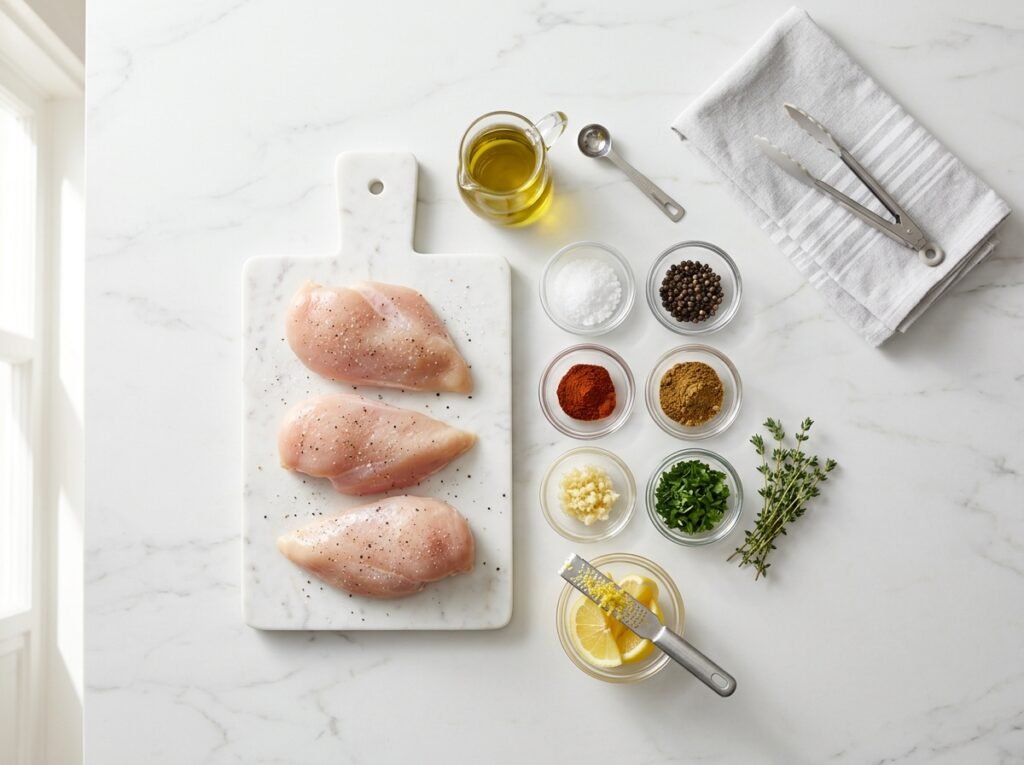
| Boneless, skinless chicken breasts | 1.5 lbs | 680g | Can use thighs for more fat |
| Olive oil | 2 tbsp | 30ml | For searing |
| Kosher salt | 1 tsp | 6g | Diamond Crystal preferred |
| Black pepper (freshly ground) | ½ tsp | 2g | Pre-ground loses potency |
| Italian seasoning | 1 tsp | 2g | Oregano, basil, thyme blend |
| The Tuscan Sauce | |||
| Unsalted butter | 2 tbsp | 28g | Kerrygold recommended |
| Garlic (minced) | 4 cloves | 12g | Fresh only, not jarred |
| Sun-dried tomatoes (oil-packed, chopped) | ½ cup | 80g | California Sun-Dry brand |
| Heavy cream | 1 cup | 240ml | 40% fat content |
| Chicken broth (low sodium) | ½ cup | 120ml | Homemade or quality boxed |
| Parmigiano-Reggiano (freshly grated) | ½ cup | 50g | Not the green can |
| Fresh baby spinach | 3 cups | 90g | Packed loosely |
| Red pepper flakes | ¼ tsp | 1g | Optional, for heat |
| Fresh basil (for garnish) | ¼ cup | 10g | Torn, not chopped |
Common Mistakes Table
| The Mistake | What Actually Happens | The Scientific Fix |
|---|---|---|
| Using cold chicken straight from the fridge | Cold protein does not sear properly; it steams and releases water into the pan, preventing browning. | Let chicken sit at room temp for 15–20 minutes before cooking. Pat bone-dry with paper towels. |
| Overcrowding the skillet | Chicken releases moisture, temperature drops, and you end up boiling instead of searing. No Maillard reaction = no flavor. | Sear in batches if needed. Leave at least 1 inch between pieces. |
| Boiling the cream sauce | High heat breaks the emulsion. Proteins clump, fat separates, and you get a greasy, curdled mess. | Keep heat at medium-low after adding cream. Stir gently but constantly. Never let it boil. |
| Adding spinach too early | Spinach releases water as it wilts. If added before the sauce thickens, it dilutes everything into a watery soup. | Add spinach in the last 2 minutes. Let it wilt into the thickened sauce, not the broth. |
| Skipping the chicken rest | Slicing immediately causes juices to flood out onto the plate. Dry chicken, watery sauce. | Rest seared chicken on a plate for 5 minutes. Juices redistribute, fibers relax. |
| Using pre-grated parmesan | Pre-shredded cheese contains cellulose (anti-caking agent) that prevents smooth melting. Results in grainy, gritty sauce. | Grate fresh Parmigiano-Reggiano from a block. It melts cleanly and emulsifies beautifully. |
Step-by-Step Method: Building Layers of Flavor
Prepare and Season the Chicken
Start by taking your chicken breasts out of the refrigerator and letting them come closer to room temperature for about fifteen minutes. This is not just convenience—it is heat transfer. Cold protein takes longer to cook through, which means you risk overcooking the exterior while waiting for the center to hit 165°F / 74°C.
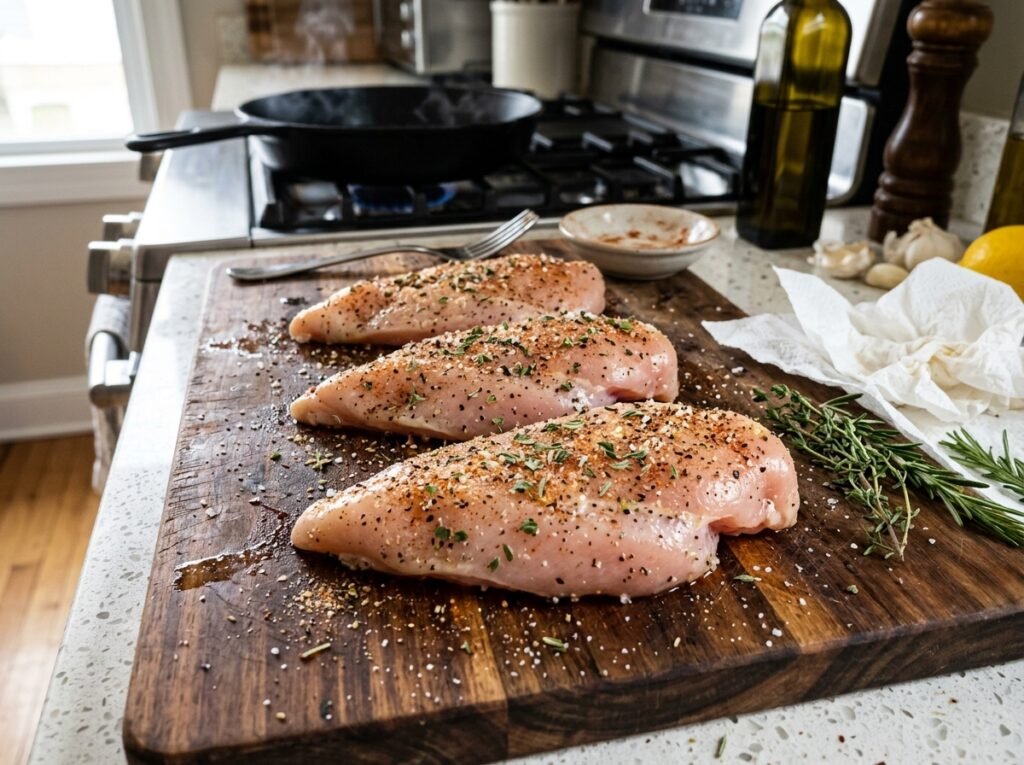
Pat each breast completely dry with paper towels. Moisture is the enemy of a good sear. Season both sides generously with kosher salt, black pepper, and Italian seasoning. Do not be timid. Chicken breast is mild, and it needs assertive seasoning to stand up to the rich, creamy garlic sauce.
If your breasts are thick and uneven, pound them to an even thickness—about three-quarters of an inch works perfectly. This ensures they cook at the same rate and do not dry out on the thin end while the thick part stays raw.
Sear the Chicken to Build Fond
Heat your skillet over medium-high heat. Add two tablespoons of olive oil and let it shimmer—not smoke. You want the oil hot enough that a drop of water sizzles on contact.
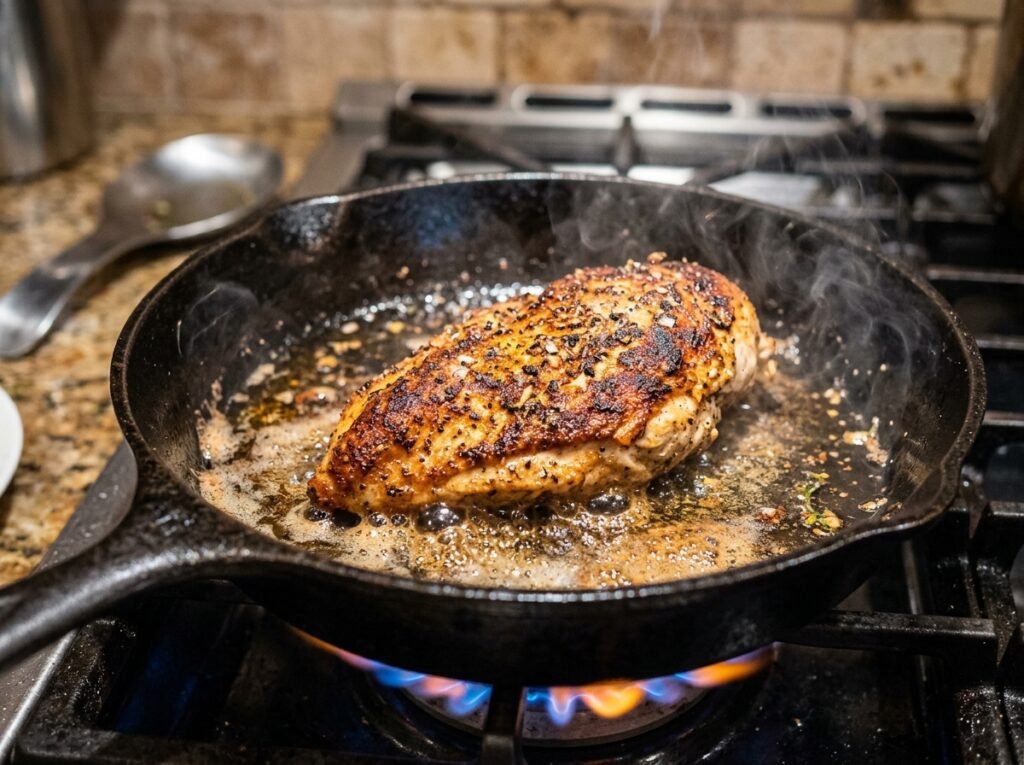
Lay the chicken breasts in the pan gently, presentation side down. Do not move them. Let them sit undisturbed for five to six minutes. This is where the Maillard reaction happens. You will see the edges turn opaque and golden. When you lift a corner and see a deep, caramelized crust, flip them.
Sear the second side for another four to five minutes. You are not cooking them all the way through yet—you are building a flavor foundation. Use an instant-read thermometer to check. Pull them when they hit 155°F / 68°C. They will coast up to safe temperature while they rest.
Transfer the chicken to a plate and tent loosely with foil. Do not wipe out the skillet. Those brown bits stuck to the bottom? That is fond—pure concentrated flavor.
Build the Aromatic Base
Lower the heat to medium and add two tablespoons of butter to the same skillet. Let it melt and foam. Butter carries flavor compounds that oil cannot, and it helps deglaze the fond.
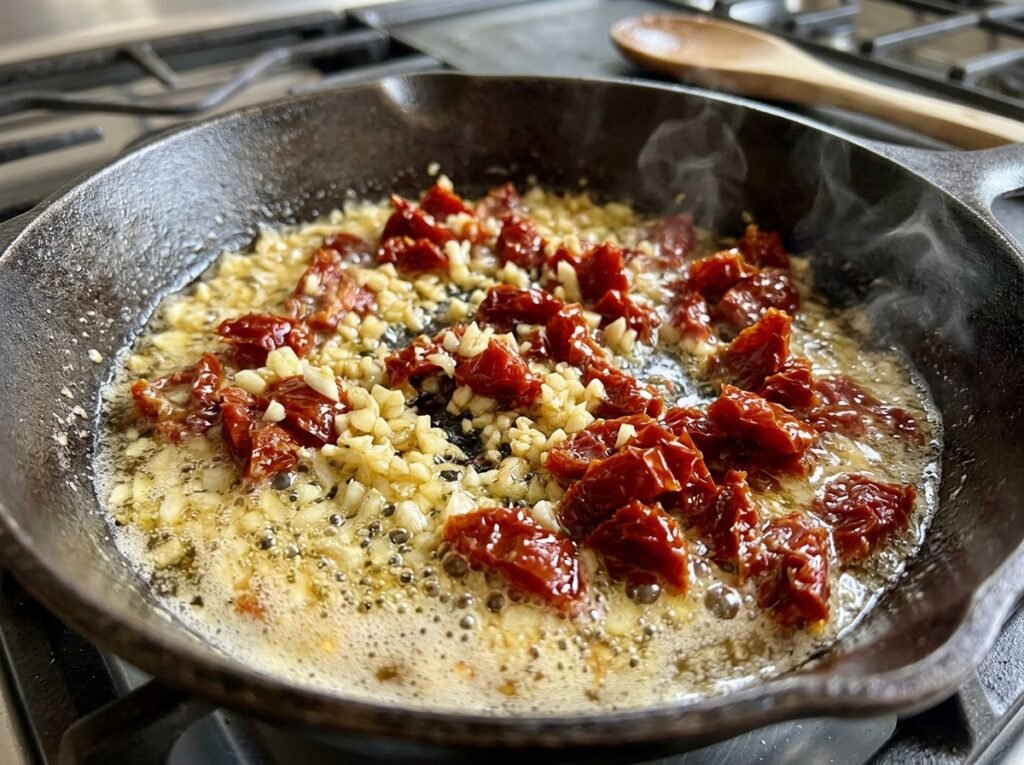
Add the minced garlic and red pepper flakes. Stir constantly for about thirty seconds—just until the garlic turns fragrant and barely golden. Garlic burns fast, and burnt garlic tastes bitter and acrid. You are looking for toasted, sweet, nutty aroma.
Toss in the chopped sun-dried tomatoes. Let them sizzle in the garlic butter for another thirty seconds. The oil from the tomatoes will bloom into the fat, releasing their concentrated umami and tangy sweetness.
Deglaze and Simmer the Sauce
Pour in the chicken broth. Use a wooden spoon to scrape up all the fond from the bottom of the pan. This is flavor you already paid for—do not leave it behind. Let the broth bubble and reduce by about half. This concentrates the flavor and removes some of the water, so your cream sauce will not be thin.
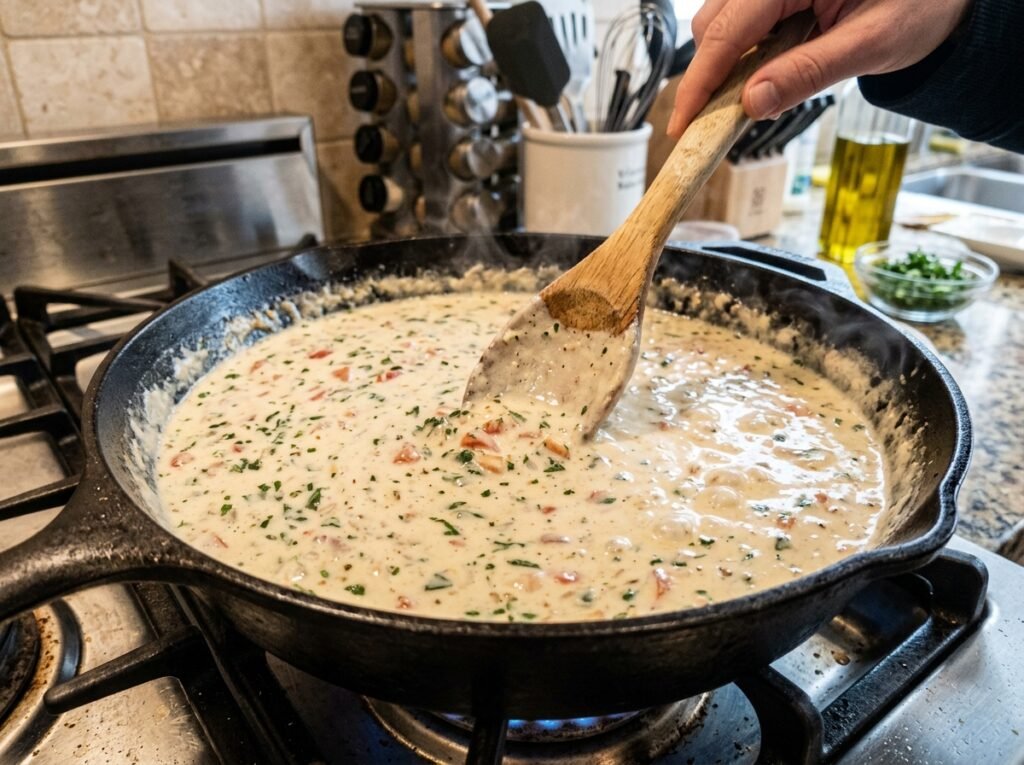
Now add the heavy cream. Stir gently and reduce the heat to medium-low. You are looking for a gentle simmer—tiny bubbles around the edges, not a rolling boil. Boiling cream will break the emulsion, and you will end up with separated, greasy liquid.
Let the sauce simmer for three to four minutes. It will start to thicken as the water evaporates and the proteins in the cream tighten slightly. Add the freshly grated Parmigiano-Reggiano in two additions, stirring after each. The cheese melts into the cream, thickening it further and adding salty, nutty depth.
Taste the sauce. Adjust salt if needed. Remember, the chicken will go back in, and it is already seasoned, so do not over-salt now.
Wilt the Spinach and Return the Chicken
Add the fresh baby spinach in handfuls. It looks like a lot, but it wilts down to almost nothing. Stir gently as the spinach collapses into the sauce. This takes about sixty to ninety seconds.
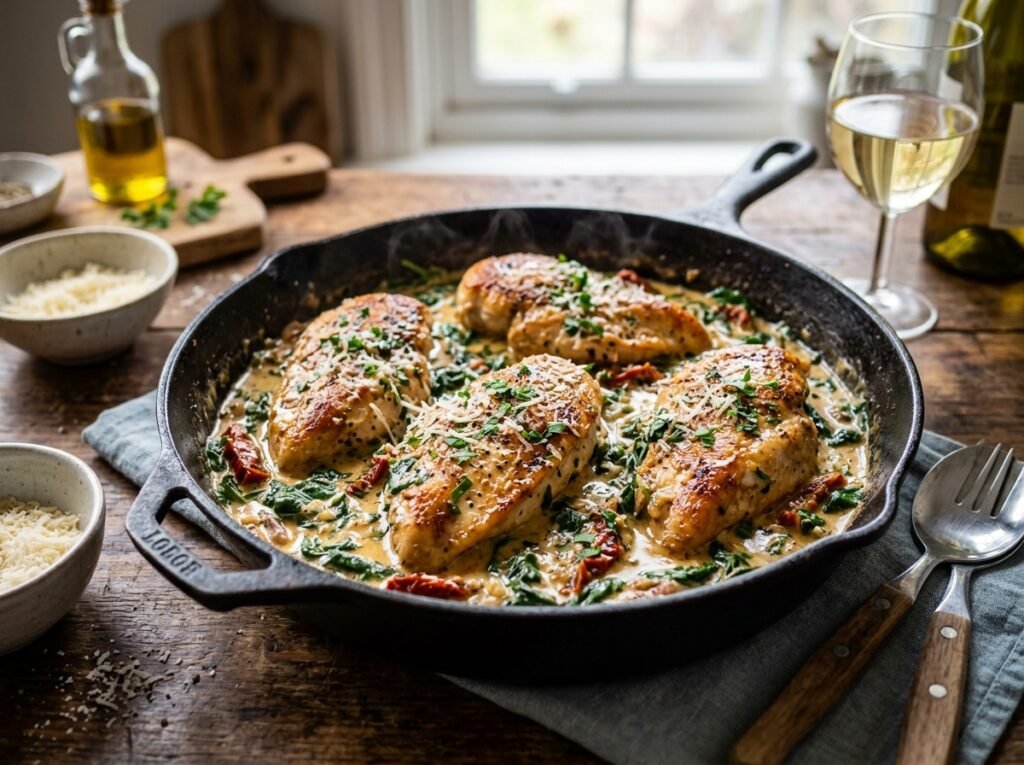
Once the spinach is fully wilted, nestle the seared chicken breasts back into the skillet. Spoon some of the sauce over the top. Let everything simmer together for two to three minutes. The chicken will finish cooking, absorbing some of the sauce flavor, and the sauce will cling to the meat.
Check the internal temperature one last time. You are looking for 165°F / 74°C in the thickest part. If you hit 160°F / 71°C and pull it off the heat, carryover cooking will take it the rest of the way.
Turn off the heat. Let the skillet sit for two minutes. This gives the sauce a chance to settle and thicken just a bit more.
Garnish and Serve
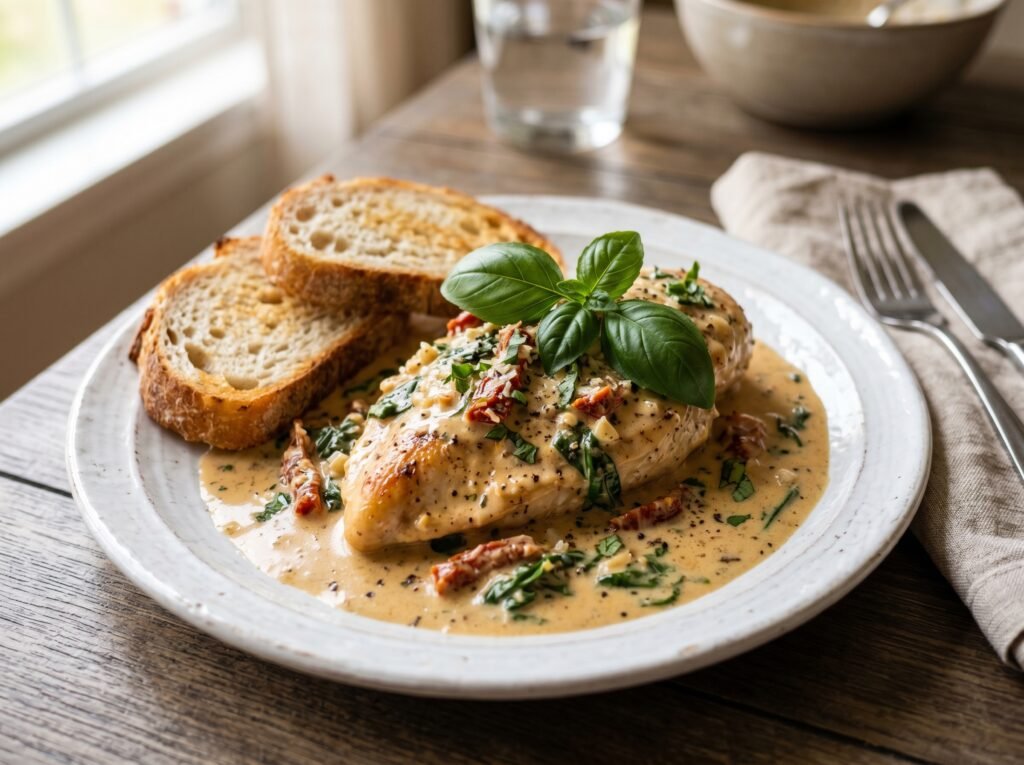
Tear fresh basil over the top. Do not chop it with a knife—tearing releases the oils without bruising the leaves, and it looks more rustic and inviting.
Serve this easy skillet chicken straight from the pan with crusty bread, garlic mashed potatoes, or over pasta. The sauce is rich enough to coat noodles beautifully, and the acidity from the tomatoes cuts through the cream so it never feels heavy.

Creamy Tuscan Chicken Skillet – A Delicious Restaurant-Style Dinner in Just 20 Minutes
Ingredients
Equipment
Method
- Pat the chicken breasts completely dry with paper towels. Season both sides evenly with garlic powder, Italian seasoning, sea salt, and black pepper.
- Heat the olive oil and 1 tablespoon of butter in your heavy skillet over medium-high heat. Add the chicken breasts and sear for 4 to 5 minutes on each side until deeply golden brown. Use your thermometer to check that the internal temperature reaches 165°F (74°C). Remove chicken and set aside on a plate.
- Lower the heat to medium. Add the remaining 1 tablespoon of butter to the same pan. Stir in the minced garlic and chopped sun-dried tomatoes. Sauté for about 1 minute until the garlic is highly fragrant but not browned.
- Pour in the chicken broth, using a wooden spoon to scrape up all the delicious browned bits (fond) stuck to the bottom of the skillet. Let it simmer for 2 minutes until reduced by half.
- Reduce heat to low. Pour in the heavy cream and bring to a gentle simmer for 2-3 minutes. Stir in the freshly grated Parmigiano-Reggiano cheese until completely melted and smooth.
- Toss in the fresh baby spinach and stir gently for 1 minute until it just begins to wilt. Slide the chicken and its accumulated juices back into the skillet. Spoon the rich cream sauce over the chicken and simmer for 1 final minute until everything is hot, bubbly, and cohesive. Serve immediately!
Notes
Recipe Note
Chef John’s Pro Tip for the Perfect Sauce: Never use pre-shredded cheese from a plastic green can or pouch. Those contain anti-caking agents (cellulose) that prevent the cheese from melting properly, which will make your cream sauce gritty or broken. Always grate a block of real Parmigiano-Reggiano fresh into the pan. If your sauce ever looks like it’s separating or turning greasy, remove it from the heat source immediately and whisk in one tablespoon of warm chicken broth or water to re-emulsify the fats.
Chef John’s Insight
“There is a quiet brilliance in one-pan cooking that gets overlooked. It is not just about convenience—it is about building layers. Every step in this skillet adds to the next. The sear creates fond. The fond flavors the sauce. The sauce finishes the chicken. Nothing is wasted. Nothing is rushed. This is how restaurants think about flavor, and it is exactly how you should think at home. The magic is not in exotic ingredients or complicated techniques. The magic is in respecting the process, controlling your heat, and giving each stage the time it needs. Tuscan cooking has always understood this: simplicity executed with precision is indistinguishable from elegance. The best food does not announce itself—it just makes you want another bite.“
— Chef John
Nutrition Table (Per Serving, Serves 4)
| Nutrient | Amount |
|---|---|
| Calories | 520 kcal |
| Protein | 42g |
| Total Fat | 34g |
| Saturated Fat | 18g |
| Carbohydrates | 9g |
| Dietary Fiber | 2g |
| Sugars | 4g |
| Sodium | 680mg |
| Cholesterol | 165mg |
Note: Nutrition values are estimates based on standard ingredient databases. Actual values may vary depending on specific brands and preparation methods.
Food Safety & Temperature Guide
| Cooking Stage | Safe Internal Temperature | USDA Guidance |
|---|---|---|
| Chicken breast (minimum safe) | 165°F / 74°C | USDA minimum for poultry |
| Chicken breast (pull temp for carryover) | 160°F / 71°C | Rests to 165°F / 74°C |
| Danger Zone (bacterial growth) | 40°F–140°F / 4°C–60°C | Avoid holding food in this range |
| Cream sauce simmer temp | 180°F–190°F / 82°C–88°C | Below boiling to prevent breaking |
| Safe refrigerator storage | Below 40°F / 4°C | Store within 2 hours of cooking |
Safe Handling Tips:
Always use a calibrated instant-read thermometer. Wash hands, cutting boards, and utensils after handling raw chicken. Do not let cooked chicken sit at room temperature for more than two hours. “USDA food safety guidelines”
Storage & Reheating Table
| Storage Method | Duration | Best Reheating Method |
|---|---|---|
| Refrigerator (in airtight container) | 3–4 days | Reheat gently in skillet over low heat with 2 tbsp chicken broth or cream to refresh sauce. Stir constantly. Do not microwave. |
| Freezer (sauce and chicken separated) | Up to 2 months | Thaw overnight in fridge. Reheat chicken and sauce separately, then combine. Cream sauces can split when frozen; whisk in fresh cream to re-emulsify. |
| Freezer (not recommended for cream-based) | Not ideal | Cream sauces often break upon thawing. If freezing, omit cream and add fresh when reheating. |
FAQ Section
Can I use chicken thighs instead of breasts?
Absolutely. Bone-in, skin-on thighs will give you even more flavor and stay juicier because of the higher fat content. Increase cooking time to about 25–30 minutes total, and check that the internal temperature hits 175°F / 79°C for the best texture. Boneless thighs work too, but reduce cook time to match breasts.
How do I stop my cream from curdling?
Keep the heat low after adding the cream. High heat causes the proteins in the cream to clump and separate. Stir gently but constantly, and never let the sauce come to a full boil. If you are using lemon juice or wine (acidic ingredients), add them before the cream so the acid has a chance to mellow out.
Can I make this dairy-free?
Yes, but it takes some adjustments. Use full-fat coconut cream instead of heavy cream, and skip the parmesan or use a cashew-based vegan parmesan. The flavor profile will shift—coconut adds subtle sweetness—but the texture can still be creamy and luscious. Add a squeeze of lemon at the end to brighten it up.
What if I do not have sun-dried tomatoes?
You can use halved cherry tomatoes instead. Sauté them with the garlic until they start to burst and release their juices. It will not have the same concentrated sweetness, but it still gives you the tomato element and a pop of color.
Can I prep this ahead of time?
You can sear the chicken and make the sauce a few hours ahead. Store them separately in the fridge. When ready to serve, gently reheat the sauce, add the spinach, then nestle the chicken in and warm it through. Do not fully cook the chicken ahead—it will dry out when reheated.
You Might Also Love
[7 Amazing Crispy Air Fryer Chicken Wings Recipe]
[Easy Mexican Street Corn Salad Recipe]
[Easy Crispy Honey Garlic Chicken Bites Recipe]