3 Mistakes That Make Air Fryer Salmon Dry (And How to Fix Them)
By Chef John | “Easy Recipes & Smart Cooking Hacks”
OPENING HOOK
There’s a special kind of disappointment that comes from overcooking salmon.
You start with a beautiful fillet—rich color, delicate marbling, something that feels like it should turn into a restaurant-quality meal. Then a few minutes too long in the air fryer, and suddenly it’s dry, chalky, and stringy. The kind of bite that makes you wish you had just ordered takeout. and air fryer salmon
I’ve ruined my fair share of salmon chasing that perfect texture. I have tested this method across dozens of batches, adjusting one variable at a time to isolate exactly what makes the difference.
What I discovered is that salmon doesn’t forgive shortcuts. It demands precision—but not complexity.
When you understand how heat interacts with its structure, everything shifts. You stop guessing cook times and start controlling moisture, fat, and texture.
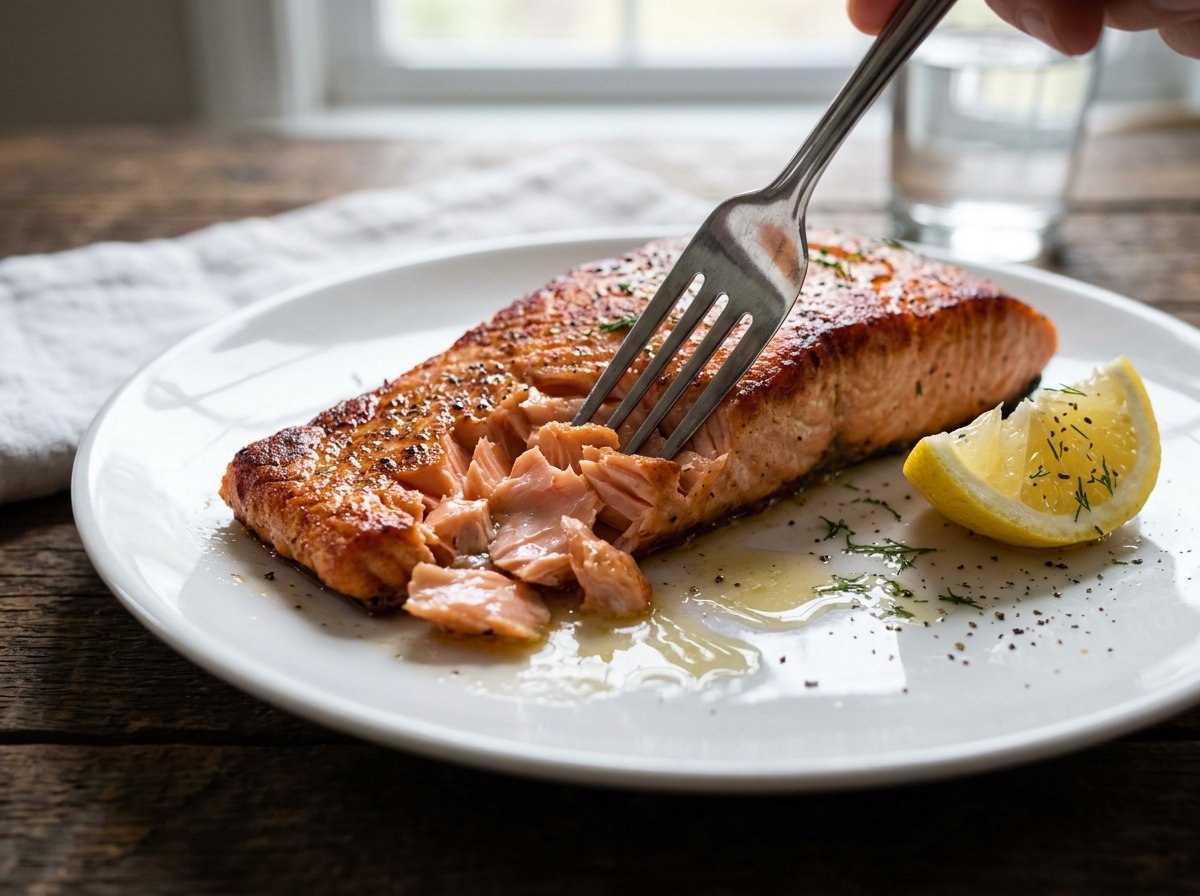
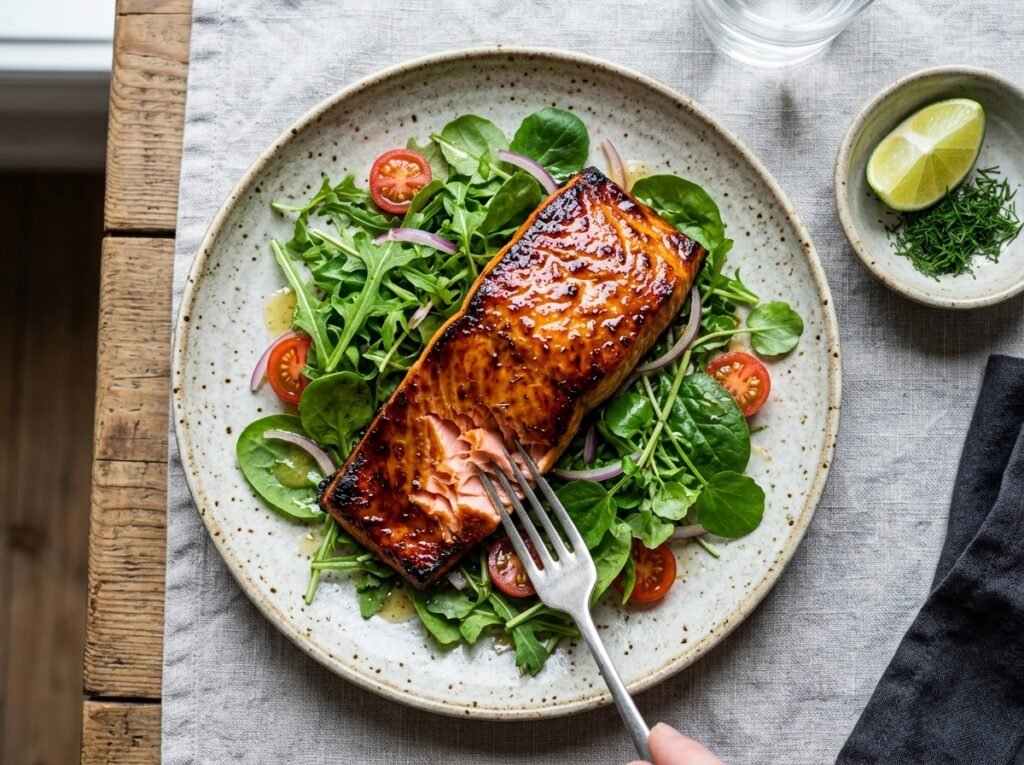
And that’s when you finally get that result everyone is after: juicy salmon fillets that flake cleanly, glisten with natural oils, and never feel dry.
THE CORE SCIENCE OF WHY SALMON DRIES OUT
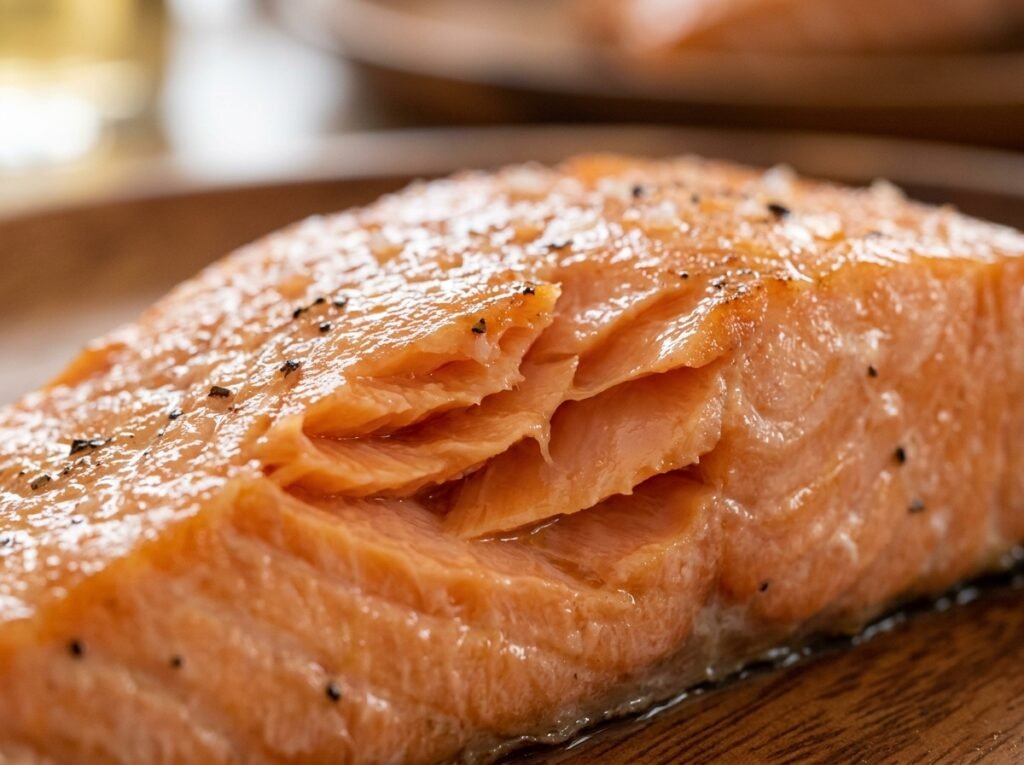
Salmon is structurally different from chicken or beef. Its muscle fibers are arranged in delicate sheets called myotomes, separated by thin layers of fat.
That fat is your insurance policy—but only if you protect it.
As salmon cooks, proteins begin to denature and tighten. This is normal. But when heat becomes excessive or prolonged, those muscle sheets contract aggressively, squeezing out both water and fat.
That’s when dryness begins.
At the same time, you may notice a white substance forming on the surface. That’s albumin, a protein that coagulates and leaks out when internal pressure builds.
Excessive Convection Heat+Protein Denaturation→Albumin Exudate+Dry Texture
The goal is to slow that process just enough to preserve moisture.
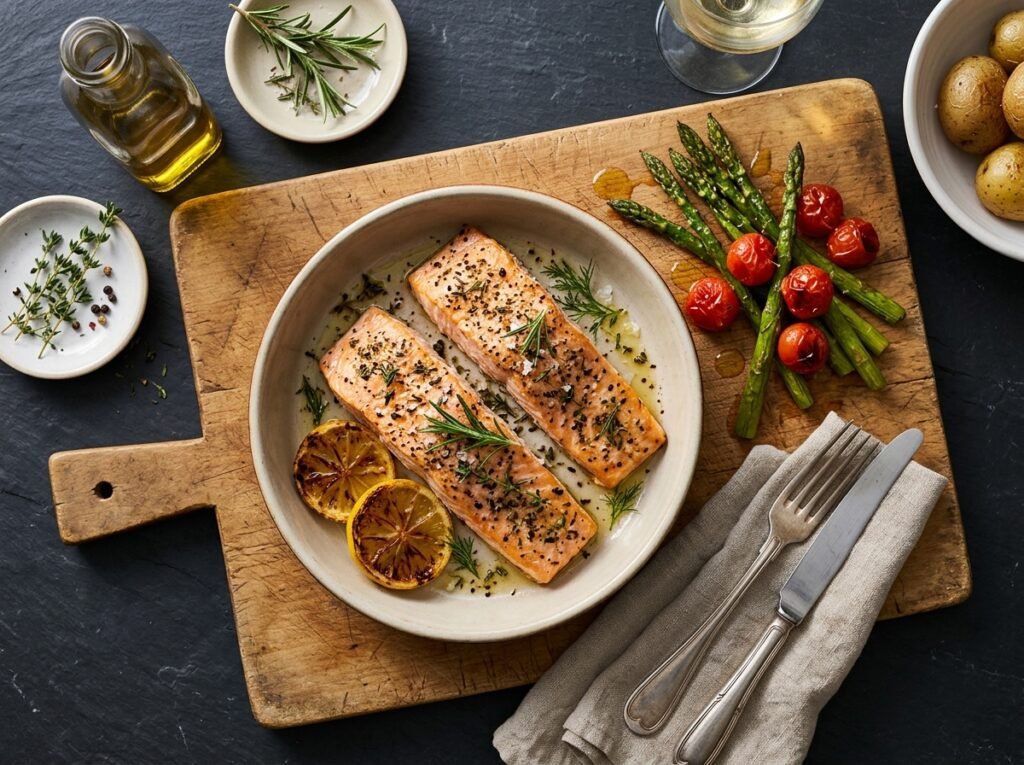
A light dry brine helps the fish retain internal water, while a thin oil or butter-based glaze forms a protective barrier against rapid evaporation caused by circulating hot air.
In simple terms: you’re shielding delicate proteins from overreacting to heat.
When done right, the fish cooks gently inside while the outside develops flavor—without ever drying outs.
PRO BUYING GUIDE (USA FOCUSED)
Start with the right salmon, because not all fillets behave the same.
At Whole Foods, Costco, or Central Market, you’ll typically find two main categories: wild-caught (Sockeye, Coho) and farm-raised Atlantic salmon.
Wild salmon is leaner and cooks faster. It’s more prone to drying if overexposed to heat, but delivers a deeper, more complex flavor.
Farm-raised salmon has higher fat content, making it more forgiving and naturally juicier. For beginners, it’s often the safer choice.
Thickness matters. Look for center-cut fillets around 1 inch / 2.5 cm thick for even cooking.
For cooking fat, use Chosen Foods Avocado Oil Spray or melt a bit of Kerrygold Pure Irish Butter for a richer finish. Both create a protective layer that slows moisture loss.
Avoid generic aerosol sprays—they often contain additives that can interfere with surface texture and damage air fryer coatings.
As for equipment, basket-style air fryers expose fish to more intense, direct airflow. That’s great for crisping—but it can dry fish quickly if you’re not careful.
Oven-style units provide gentler circulation, which can be more forgiving for delicate proteins like salmon.
INGREDIENTS TABLE
Component | US Customary | Metric | Culinary Purpose
Salmon Fillets | 4 (6 oz each) | 170 g each | Primary protein, rich fat content
Kosher Salt | 1 tsp | 5 g | Dry brine for moisture retention
Black Pepper | 1/2 tsp | 2 g | Flavor balance
Avocado Oil or Butter | 1 tbsp | 15 ml | Moisture barrier and flavor
Garlic Powder | 1/2 tsp | 2 g | Aromatic enhancement
Lemon Juice | 1 tbsp | 15 ml | Brightness and balance
THE 3 CRITICAL MISTAKES UNPACKED
The Mistake | What Actually Happens (The Science) | The Golden Fix
Overcooking | Proteins contract and expel moisture | Pull early and use carryover cooking
Skipping oil barrier | Surface dries too quickly | Apply light oil or butter coating
Cooking straight from fridge | Uneven internal temperature | Let fish rest 10–15 minutes
Using too high heat | Exterior overcooks before interior finishes | Cook at 380°F / 193°C
Ignoring thickness | Thin sections overcook rapidly | Use even center-cut fillets
No resting period | Juices redistribute poorly | Rest 3–5 minutes after cooking
STEP-BY-STEP METHOD
Phase 1: The Moisture Lock
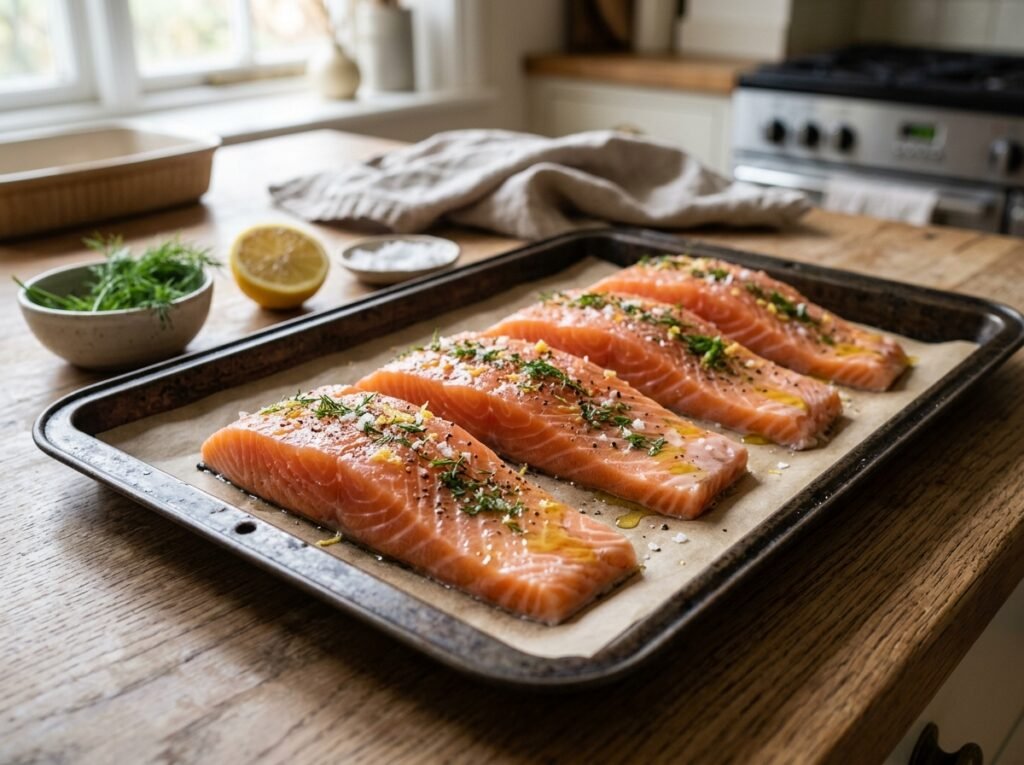
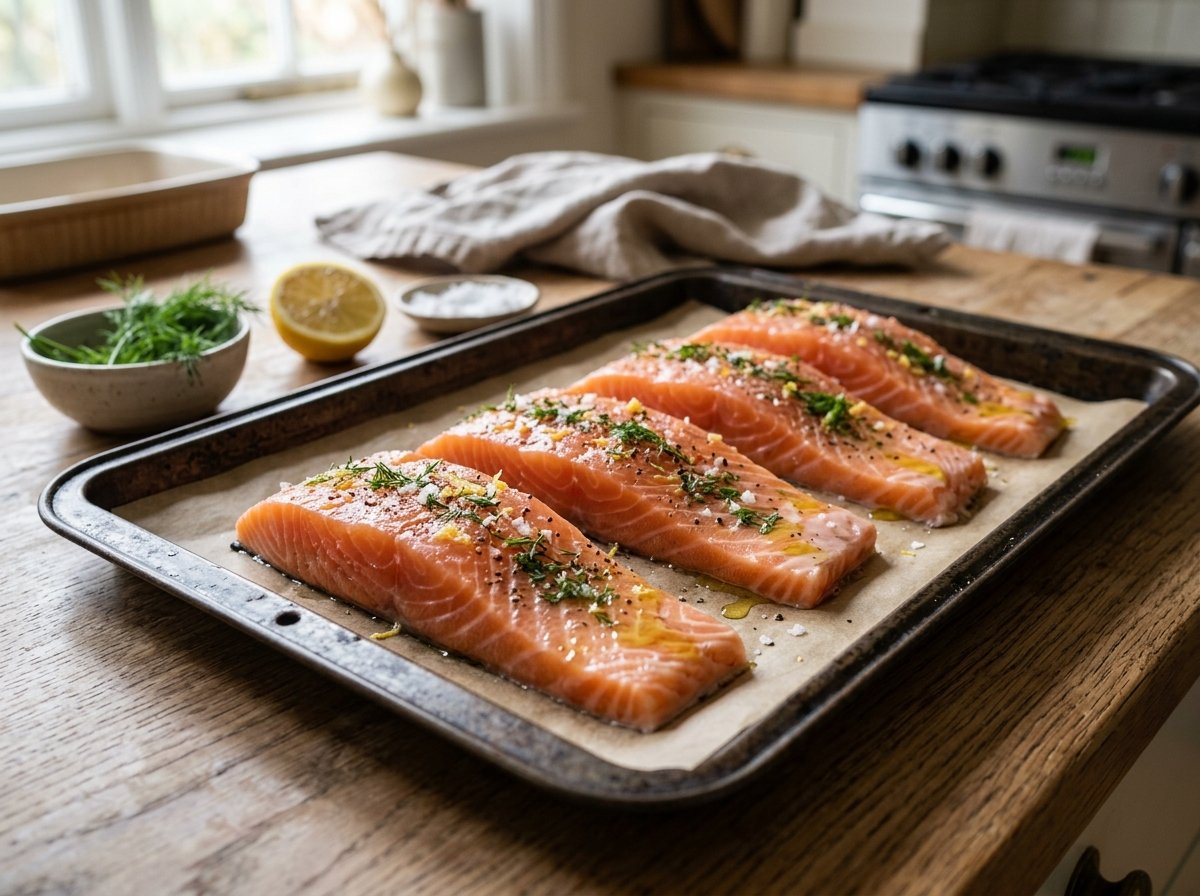
Begin by patting your salmon dry and seasoning it lightly with salt. Let it rest for about 10–15 minutes at room temperature.
This short dry brine allows the salt to dissolve into the surface and helps the fish retain moisture during cooking. It also reduces the shock of going from cold to hot, which can cause uneven cooking.
Phase 2: The Emulsion Glaze
Brush or spray a thin layer of oil over the surface, then add pepper, garlic powder, and a touch of lemon.
This coating acts as a thermal buffer. Instead of direct hot air stripping moisture away, the oil moderates heat transfer and preserves the fish’s natural fats.
Phase 3: The Rapid Air Convection
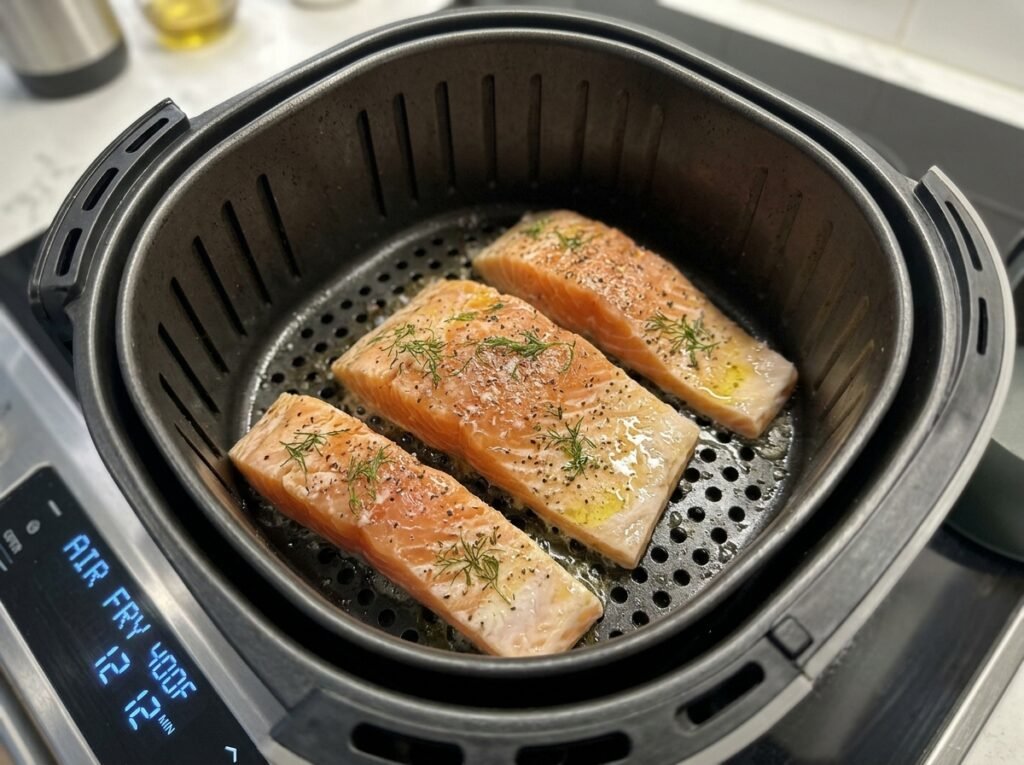
Preheat your air fryer to 380°F / 193°C. Place the fillets skin-side down and cook for about 7–10 minutes depending on thickness.
At this temperature, the exterior cooks efficiently without aggressively tightening the internal structure. The goal is controlled heat—not maximum heat.
You’ll see the flesh turn opaque and begin to flake gently.
Phase 4: The Residual Carryover Rest
Remove the salmon when it reaches about 125–135°F (52–57°C) internally.
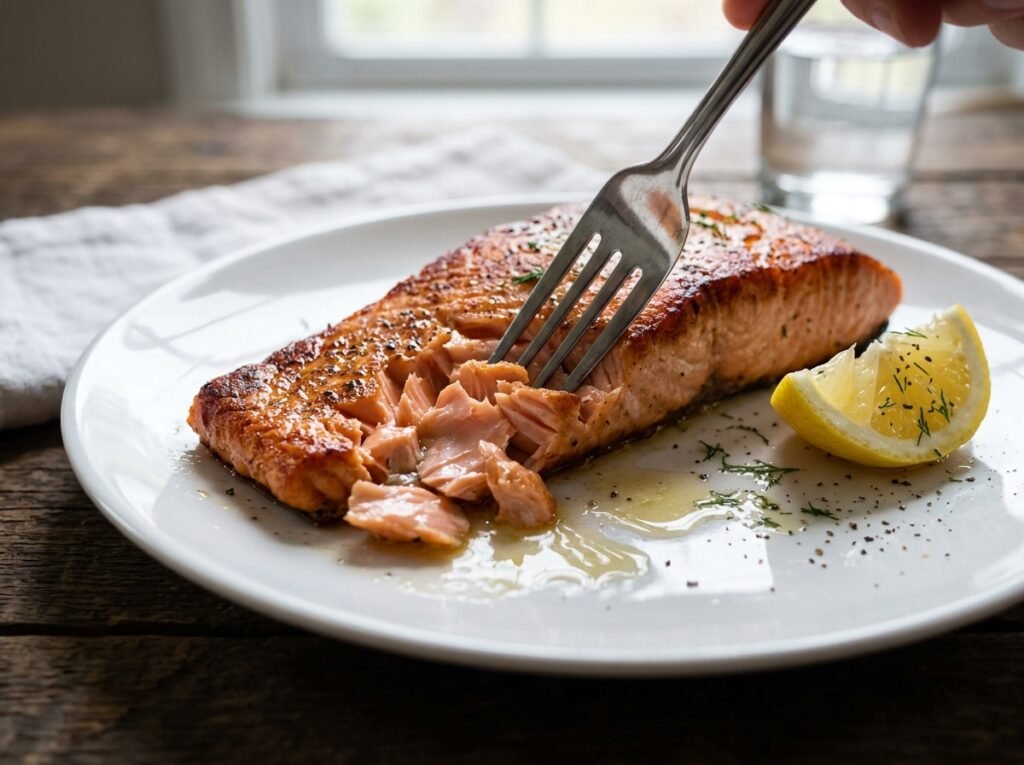
Let it rest for a few minutes. During this time, residual heat continues cooking the fish gently, finishing the process without drying it out.
That final rest is where texture transforms from good to exceptional.

3 Mistakes That Make Air Fryer Salmon Dry (And How to Fix Them)
Ingredients
Equipment
Method
- Place the raw salmon fillets skin-side down on a flat cutting board or clean plate.
- Use premium, heavy-duty paper towels to firmly press and absorb all surface water from the top and sides of the flesh.
- Sprinkle the kosher salt evenly across all exposed flesh surfaces, ensuring uniform coverage.
- Let the seasoned fish rest undisturbed at room temperature for exactly 10 minutes to allow the salt to dissolve and bind with the muscle fibers.
- In a small glass mixing bowl, vigorously whisk together the avocado oil, garlic powder, smoked paprika, and freshly cracked black pepper until a smooth, thin paste forms.
- Using a clean culinary pastry brush, paint the seasoned oil mixture evenly over the top and sides of the salmon flesh.
- Ensure every micro-crevice of the muscle sheets is covered to form a protective lipid barrier against hot convection currents.
- Preheat your basket-style or oven-style air fryer to 380°F / 193°C for a minimum of 5 full minutes to ensure stable internal heat distribution.
- Lightly mist the bottom grid of the air fryer basket with avocado oil spray to avoid any localized surface tearing.
- Arrange the glazed fillets inside the basket skin-side down, leaving at least 1 inch / 2.5cm of clearance space between each piece for maximum airflow.
- Slide the basket into position and cook undisturbed for 7 to 9 minutes, depending entirely on the thickness of your center cuts.
- Insert a digital instant-read thermometer probe into the thickest section of the largest salmon fillet.
- Verify the internal temperature registers between 130°F and 135°F (54°C to 57°C) for farm-raised fillets, or 125°F / 52°C for wild-caught varieties.
- Gently lift the fillets out of the air fryer basket using a wide fish spatula, keeping the crisp skin structure intact.
- Transfer the fish to a warm serving plate and let it rest quietly for 3 minutes to allow thermal equilibrium to finish before serving with fresh lemon wedges.
Notes
CHEF JOHN’S INSIGHT
:::writing block
Cooking salmon teaches patience in a way few ingredients do. It asks you to pay attention, to notice subtle changes in color, texture, and resistance. It does not reward guesswork, and it does not tolerate distraction.
What I appreciate most about salmon is that it reflects your decisions almost immediately. A little too much heat, and it tells you. A little too long, and it reminds you.
But when you get it right, when the flakes separate cleanly and the surface glistens instead of dries, there is a quiet satisfaction that feels earned.
It is not about perfection. It is about respect—for the ingredient and the process.
Treat delicate food gently, and it will reward you fully.
— By Chef John | “Easy Recipes & Smart Cooking Hacks”
:::
TECHNICAL DATA & FOOD SAFETY
Estimated Nutrition (Per Serving)
Nutrient | Amount
Calories | 280 kcal
Protein | 25 g
Fat | 18 g
Saturated Fat | 4 g
Omega-3s | 1.8 g
Carbs | 1 g
Sodium | 420 mg
Note: Values are estimates and vary by salmon type.
Food Safety Temperature Guide
USDA recommends cooking fish to 145°F / 63°C.
However, for optimal texture, pull salmon earlier:
- Wild salmon: 125°F / 52°C
- Farm-raised: 135°F / 57°C
Carryover cooking will bring it to a safe and juicy finish.
Avoid holding fish in the 40°F–140°F (4°C–60°C) danger zone.
Storage & Reheating Matrix
State | Fridge | Freezer | Best Reheat Method
Raw Prepped | 1–2 days | 2 months | Thaw in fridge overnight
Cooked | 3 days | Not ideal | Gentle oven at 275°F / 135°C
Flaked Leftovers | 3 days | 1 month | Reheat lightly or use cold
FAQ SECTION
Should I cook salmon with skin on?
Yes. The skin acts as a protective barrier and helps retain moisture.
What is the white stuff on salmon?
That’s albumin. It appears when proteins tighten and push out moisture.
Can I cook salmon from frozen?
You can, but results are less consistent. Thawing gives better texture control.
How do I prevent sticking?
Use parchment liners or lightly oil the basket—avoid aerosol sprays.
Why is my salmon dry even at short cook times?
Likely too much heat or no protective fat layer.
INTERNAL LINKING
[4 Secret Reasons Your Chicken Coating Falls Off]
[Hot Honey Chicken Tenders Recipe – Crispy Better Than Takeout]
[7 Minutes to the Ultimate Smash Burger Crust Secret]
[Crispy Hot Honey Chicken Sandwich Recipe]
[5 Pro-Level Secrets to the Ultimate Crispy Southern Fried Chicken]