7 Easy BBQ Recipes Perfect for Summer Cookouts
By Chef John | Easy Recipes & Smart Cooking Hacks
The Smell That Stops You in Your Tracks
There is a specific moment every summer that I wait for. Not the first pool day, not the fireworks — the first time the neighborhood fills with that unmistakable hickory smoke drifting over a fence line on a Saturday afternoon. That smell is a promise. It says someone is standing over a grill with tongs in hand, and something incredible is about to happen.
But here is the part nobody talks about. For every backyard cookout that delivers fall-off-the-bone ribs and juicy, smoke-kissed chicken, there are ten that end in tragedy. Meat that is bone-dry and leathery. Sauce that burned black and bitter at the first flash of flame. Chicken skin that looks like charred newspaper but somehow the inside is still raw in the middle. It happens every single summer, at millions of backyards across America.
I have calibrated dozens of grills and smokers over the past decade, tracking thermal dynamics and wood smoke absorption across hundreds of backyard cookouts to isolate what truly delivers tender, flavorful results every single time. These easy BBQ recipes are built on that obsessive testing — seven foolproof dishes that will make you the person every neighbor hopes gets invited to the neighborhood cookout.
The Science of Smoke and Sear
Understanding what happens inside a grill transforms you from someone who just heats meat into someone who actually cooks barbecue.
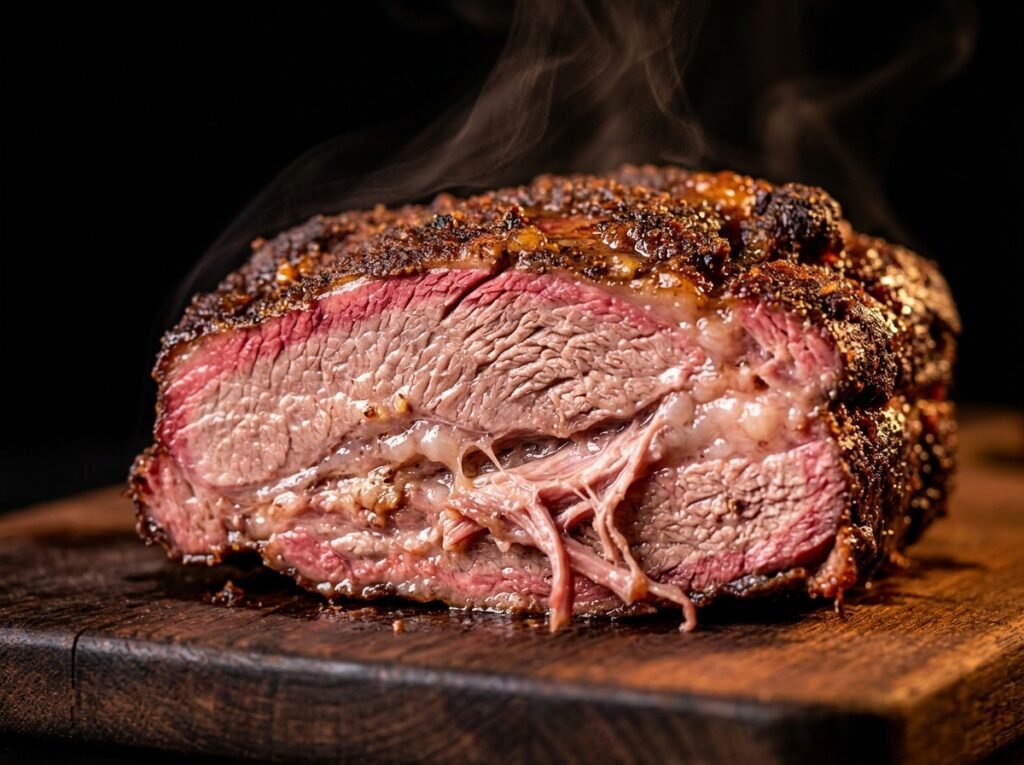
When tough cuts like pork shoulder or beef brisket hit low, slow heat — around 225°F to 250°F (107°C to 121°C) — something remarkable occurs at the molecular level. Collagen, the tough connective tissue that makes these cuts chewy when raw, begins to denature and convert into gelatin at temperatures between 160°F and 185°F (71°C and 85°C). This is not instant. It takes time — often 6 to 10 hours — but the result is that silky, pulling-apart tenderness that defines great barbecue. The internal temperature must push well past the USDA safe zone, all the way to roughly 195°F to 205°F (90°C to 96°C) for pulled pork or brisket, because that is where the collagen-to-gelatin transformation fully completes.
Now here is where many backyard cooks destroy their work. They slather sweet, sugar-heavy BBQ sauce on their meat at the beginning of the cook. At temperatures above 300°F (149°C), the sugars in the sauce undergo pyrolysis — thermal decomposition that turns caramel into carbon. Your sauce does not caramelize. It burns. It goes from sweet and smoky to acrid and bitter in minutes.
Collagen (tough)Low Heat + Time (160–185°F)Gelatin (tender)
There is also the phenomenon of the smoke ring — that beautiful pink band just beneath the surface of properly smoked meat. It forms when nitrogen dioxide gas from burning wood dissolves into the moisture on the meat’s surface and reacts with myoglobin, the protein responsible for the red color in raw meat. It does not indicate doneness, but it is the visual signature of real smoke exposure.
In simple terms: cook with patience and low heat for tough cuts. Save the sauce for the last 15 to 20 minutes. And if you want that gorgeous pink smoke ring, make sure your meat surface is moist when it goes into the smoke.
Pro Buying & Equipment Guide — What to Get and Where
The Meat
Great barbecue starts at the meat counter, not the grill. The cut you choose and where you buy it will determine 80 percent of your final result.
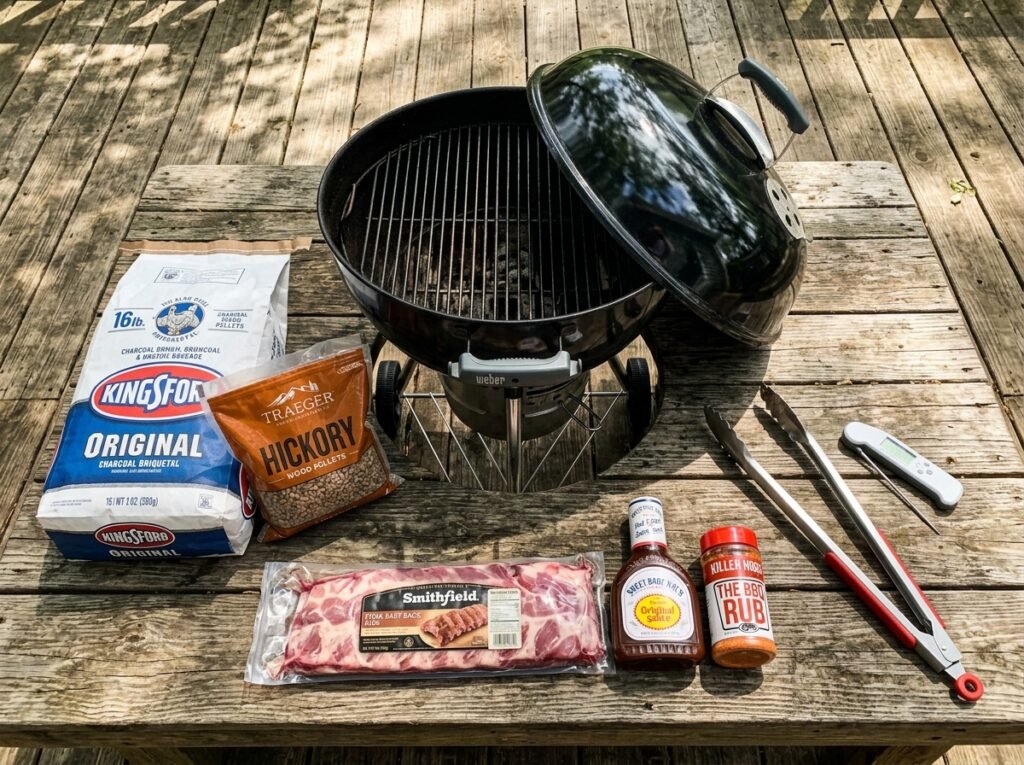
For ribs, look for Smithfield St. Louis-style spare ribs — widely available at Costco, Walmart, Kroger, and Sam’s Club. They have more fat and connective tissue than baby backs, which means more flavor and a more forgiving cook. For pulled pork, a whole bone-in pork shoulder (also called Boston butt) weighing 8 to 10 pounds (3.6 to 4.5kg) is the gold standard. Costco’s Kirkland Signature bone-in pork shoulder is consistently excellent and often priced under $2 per pound (450g). For chicken, Certified Angus Beef does not apply here — instead, look for whole chicken leg quarters at Walmart (Great Value brand, often under $1 per pound) or Kroger’s private-label brand. Dark meat with bone and skin is naturally more forgiving on the grill than lean breast meat.
Sauces and Rubs
- Sweet Baby Ray’s Original — The most popular BBQ sauce in America for a reason. Thick, sweet, tangy, and available at every Walmart, Target, and Kroger. A reliable default.
- Stubb’s Original Bar-B-Q Sauce — Slightly less sweet, more vinegar-forward. Excellent on pulled pork. Available at most major grocery chains.
- Killer Hogs The BBQ Rub — A balanced sweet-and-savory dry rub from a competition pitmaster. Available online and at some Ace Hardware locations.
- McCormick Grill Mates Barbecue Seasoning — An easy, reliable all-purpose rub you can grab at any Walmart or Kroger in a pinch.
Fuel and Equipment
Your heat source defines your smoke flavor:
- Kingsford Original Charcoal Briquettes — The backyard standard. Available at Home Depot, Lowe’s, Walmart, and every grocery store in America. Consistent, affordable, and easy to control.
- Jealous Devil Lump Charcoal — A step up for serious cooks. Burns hotter and cleaner. Available at Home Depot and Lowe’s.
- Traeger Wood Pellets (Hickory or Mesquite) — For pellet grill owners. Traeger grills themselves are available at Costco, Home Depot, and Lowe’s.
- Weber Original Kettle 22-inch (about $115 at Walmart or Home Depot) — The most iconic charcoal grill ever made. Simple, effective, and the backbone of backyard barbecue culture.
For propane grills, the Weber Spirit II E-310 (available at Home Depot and Lowe’s) is the best mid-range option for consistent heat control. It will not produce smoke flavor on its own, but a small smoker box with wood chips solves that quickly.
Master Ingredients Conversion Table
| Ingredient | US Customary | Metric |
|---|---|---|
| Baby back ribs | 3 lbs | 1.35kg |
| St. Louis spare ribs | 4 lbs | 1.8kg |
| Bone-in pork shoulder | 8 lbs | 3.6kg |
| Chicken leg quarters | 2 lbs | 900g |
| Chicken thighs (bone-in) | 1.5 lbs | 680g |
| Beef brisket (point cut) | 4 lbs | 1.8kg |
| BBQ sauce | 1 cup | 240ml |
| Apple cider vinegar | ½ cup | 120ml |
| Yellow mustard (binder) | 2 tbsp | 30ml |
| Brown sugar (packed) | ¼ cup | 50g |
| Paprika | 2 tbsp | 16g |
| Garlic powder | 1 tbsp | 7g |
| Onion powder | 1 tsp | 3g |
| Kosher salt | 1 tbsp | 15g |
| Black pepper | 1 tsp | 3g |
| Cayenne pepper | ½ tsp | 1g |
| Honey | 2 tbsp | 42g |
| Butter | 2 tbsp | 28g |
| Wood chunks/chips | 2 cups | Enough to sustain smoke for 1–2 hours |
The 7 Easy BBQ Recipes
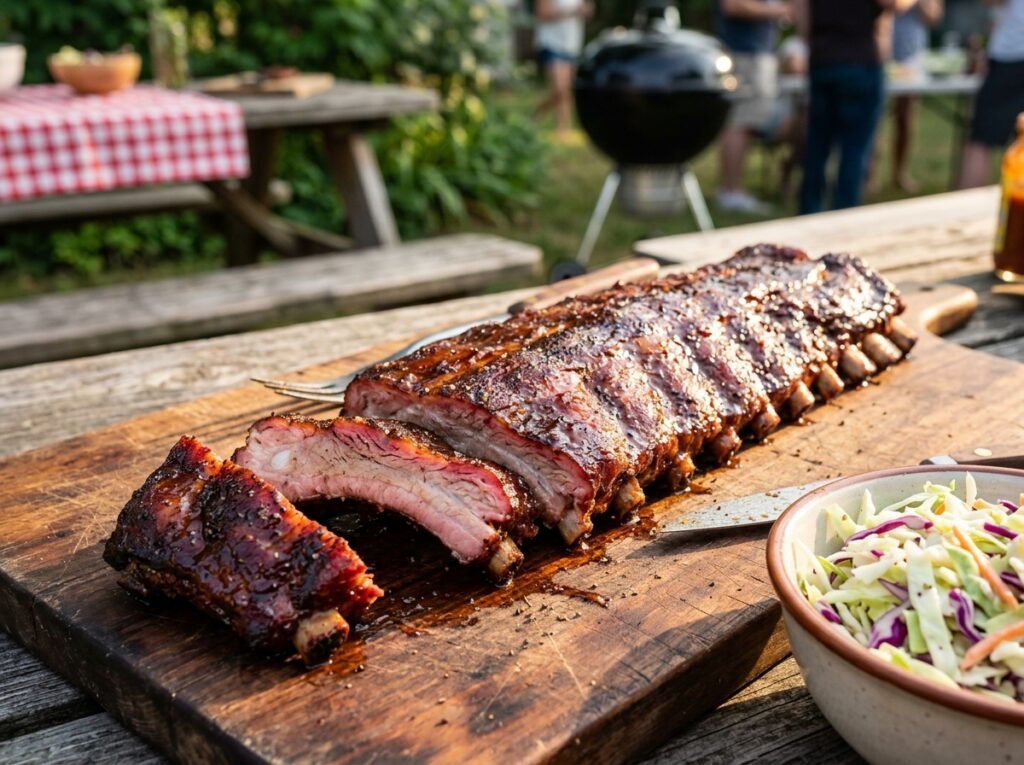
Recipe 1 — Foolproof Sweet & Smoky Baby Back Ribs
These ribs require zero babysitting if you follow the 3-2-1 method. Three hours of smoke, two hours wrapped tightly in foil with apple cider vinegar and brown sugar, and one final hour unwrapped to set a glossy, caramelized bark. The result is meat that pulls cleanly off the bone without falling off — the hallmark of perfectly cooked ribs. This is the recipe that turns backyard amateurs into neighborhood legends.
Recipe 2 — 3-Ingredient Juicy BBQ Chicken Quarters
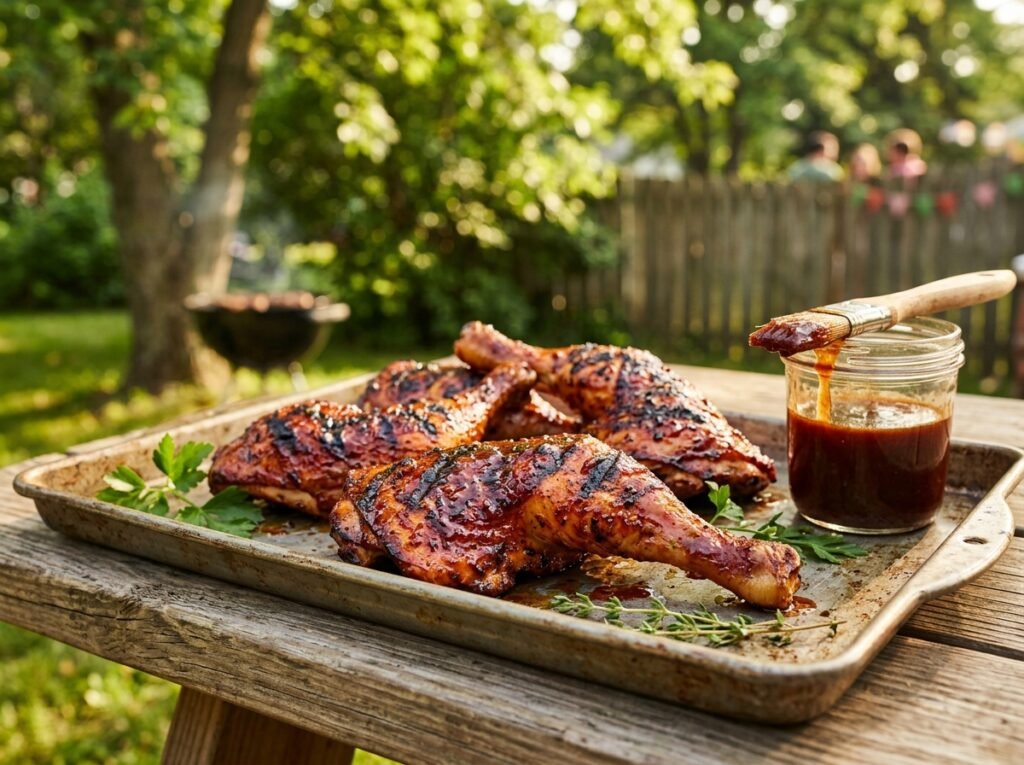
This is the lowest-effort, highest-reward recipe on the entire list. Season chicken leg quarters with a generous coat of your favorite all-purpose rub, grill them over indirect heat until the internal temperature hits 165°F (74°C), then paint them with thick BBQ sauce during the last 10 minutes. Three ingredients. No marinade. No brine. No babysitting. Just perfectly smoky, sticky, juicy chicken every single time.WPRM Data Block:
Key Flavor Theme: Sweet, smoky, tangy, fall-off-the-bone
Prep Time: 20 minutes
Cook Time: 6 hours
Total Time: 6 hours 20 minutes
Yield: 4–6 servings
Cooking Method: Smoker or charcoal grill (indirect)
WPRM Data Block:
- Prep Time: 10 minutes
- Cook Time: 45 minutes
- Total Time: 55 minutes
- Yield: 4 servings
- Cooking Method: Grilling (indirect heat + sauce finish)
- Key Flavor Theme: Smoky, sweet, sticky, crowd-pleasing
Recipe 3 — The Ultimate Slow-Smoked Pulled Pork
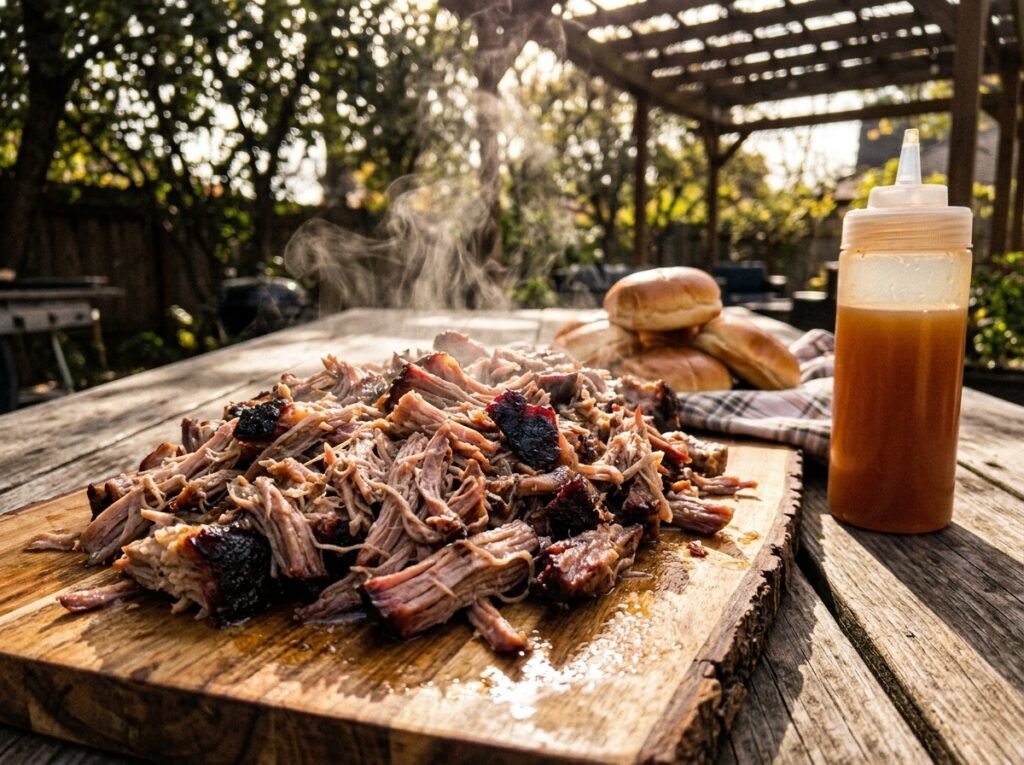
A whole bone-in pork shoulder rubbed with brown sugar, paprika, garlic, and pepper, smoked low and slow at 225°F (107°C) for 8 to 10 hours until the internal temperature reaches 195°F (90°C) and a thermometer probe slides in like butter. The bark is dark and deeply caramelized. The interior is a tangle of juicy, gelatinous strands that need nothing more than a soft bun and a spoonful of tangy vinegar sauce. This is the centerpiece of every serious summer cookout.
WPRM Data Block:
- Prep Time: 20 minutes
- Cook Time: 10 hours
- Total Time: 10 hours 20 minutes
- Yield: 12–16 servings
- Cooking Method: Smoking (low and slow at 225°F/107°C)
- Key Flavor Theme: Deeply smoky, sweet, savory, tangy
Recipe 4 — Grilled Italian Sausage & Pepper Subs
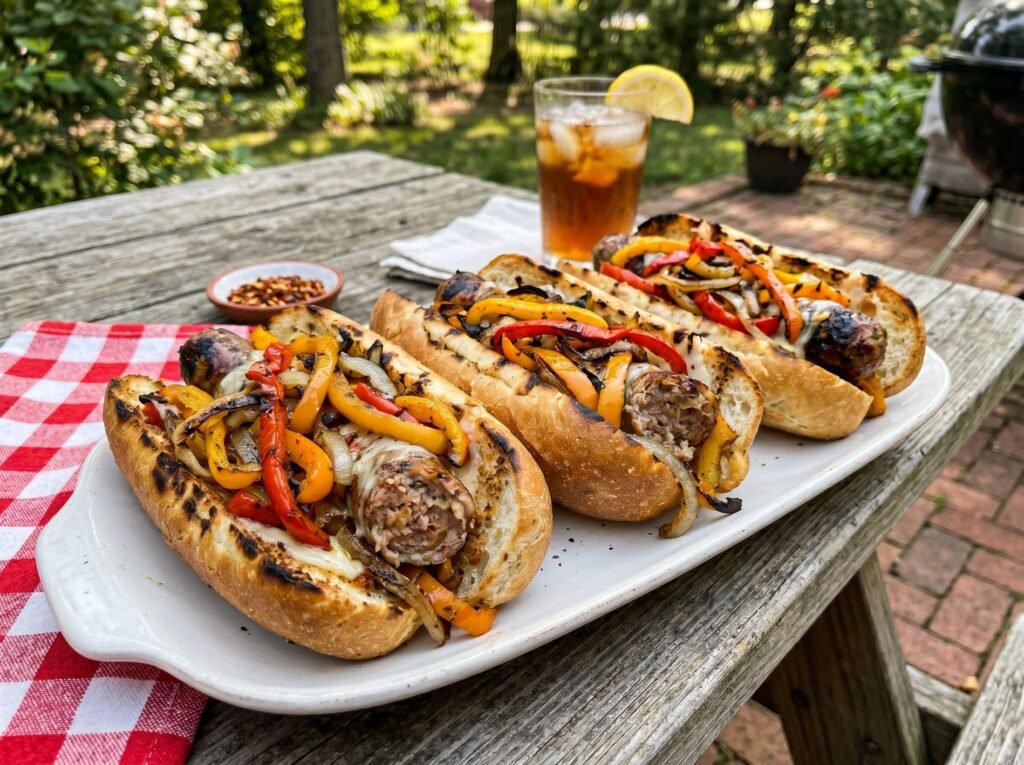
This is the easiest crowd feeder on the list. Grill a pack of sweet or hot Italian sausages over medium heat while peppers and onions cook on the cooler side of the grill until soft and charred at the edges. Pile everything onto a toasted hoagie roll, drizzle with a little hot honey or mustard, and serve. Fifteen minutes of active work, zero stress, and every single person at the cookout asks for seconds.
WPRM Data Block:
- Prep Time: 10 minutes
- Cook Time: 20 minutes
- Total Time: 30 minutes
- Yield: 4–6 servings
- Cooking Method: Grilling (direct and indirect zones)
- Key Flavor Theme: Savory, sweet, smoky, hearty
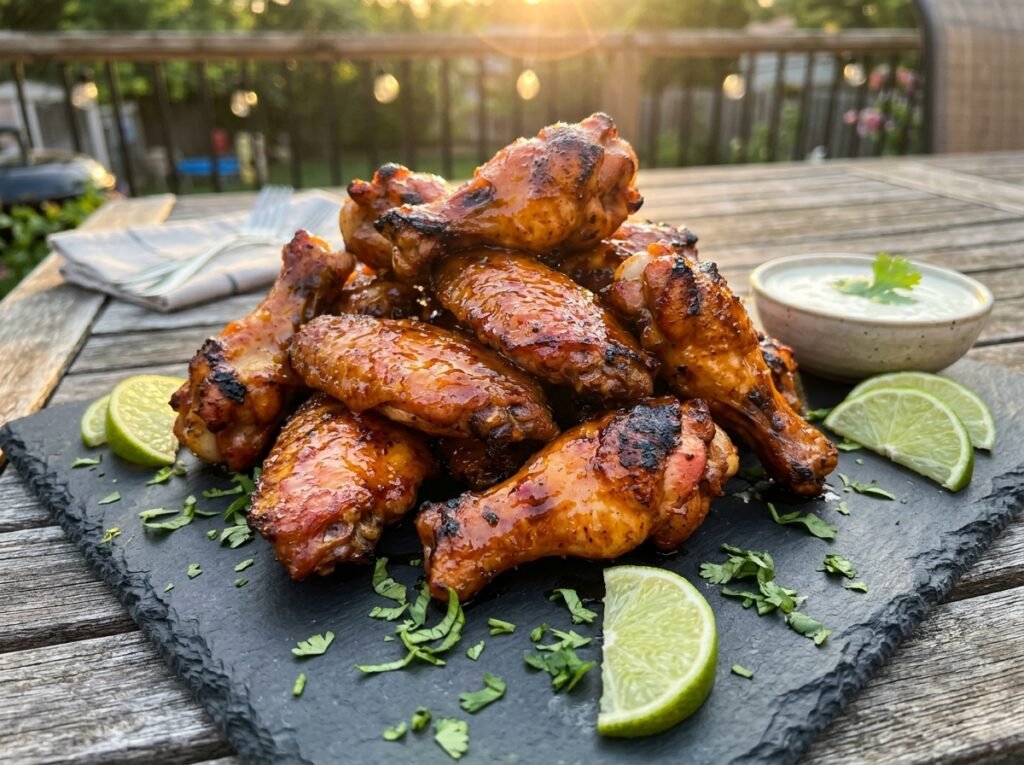
Recipe 5 — Honey Chipotle Smoked Chicken Wings
These are not your typical Buffalo wings. They get a dry brine, a full hour in the smoker at 275°F (135°C) for deep smoke penetration, and then a quick 5-minute char over direct flame to crisp the skin. The honey chipotle glaze — just honey, adobo sauce from a can of chipotles, and a squeeze of lime — goes on at the very end and caramelizes into a sticky, sweet-heat coating. They disappear faster than any other dish at a summer cookout.
WPRM Data Block:
- Prep Time: 15 minutes (includes dry brine)
- Cook Time: 1 hour 15 minutes
- Total Time: 1 hour 30 minutes
- Yield: 4–6 servings
- Cooking Method: Smoking + direct-flame char finish
- Key Flavor Theme: Sweet, smoky, spicy, sticky
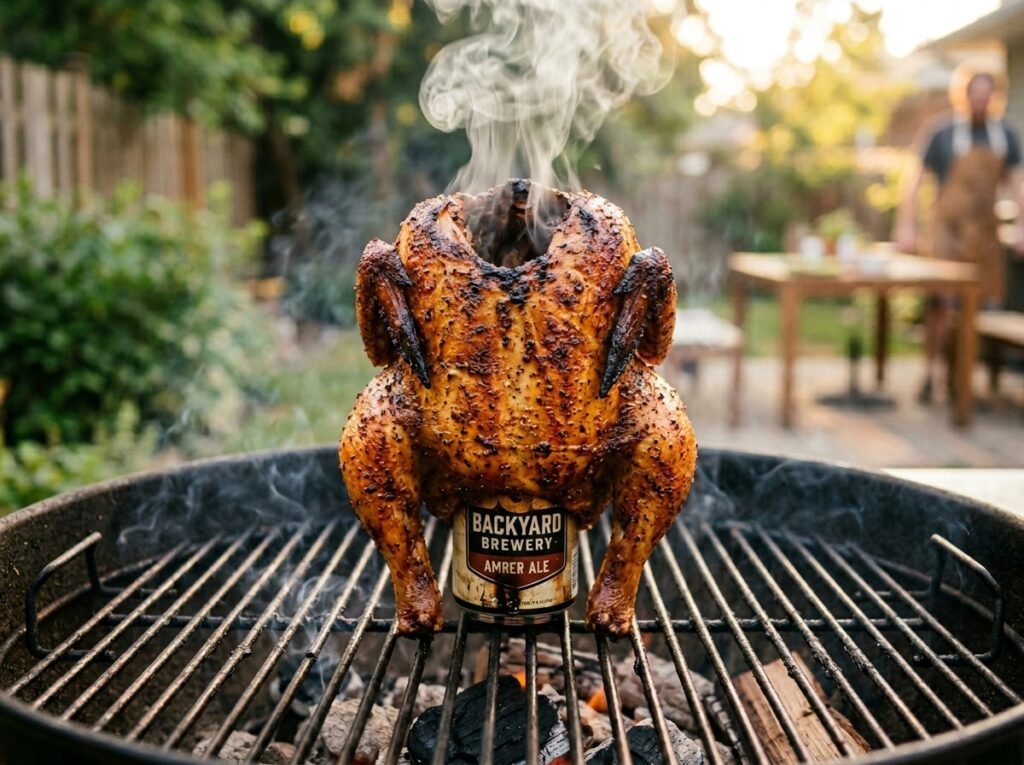
Recipe 6 — Simple Beer-Can BBQ Chicken
Stand a whole chicken upright on a half-empty can of beer — or root beer for the adventurous — and let it roast on the grill with indirect heat. The beer steams from the inside, keeping the breast meat impossibly moist while the skin crisps and chars from the outside. Season with a simple paprika-garlic-golden-brown-sugar rub, set it on the grill for about an hour, and you have the most dramatic and conversation-starting dish at any summer party.
WPRM Data Block:
- Prep Time: 15 minutes
- Cook Time: 1 hour 15 minutes
- Total Time: 1 hour 30 minutes
- Yield: 4 servings
- Cooking Method: Grilling (indirect heat with steam)
- Key Flavor Theme: Juicy, aromatic, smoky, herb-infused
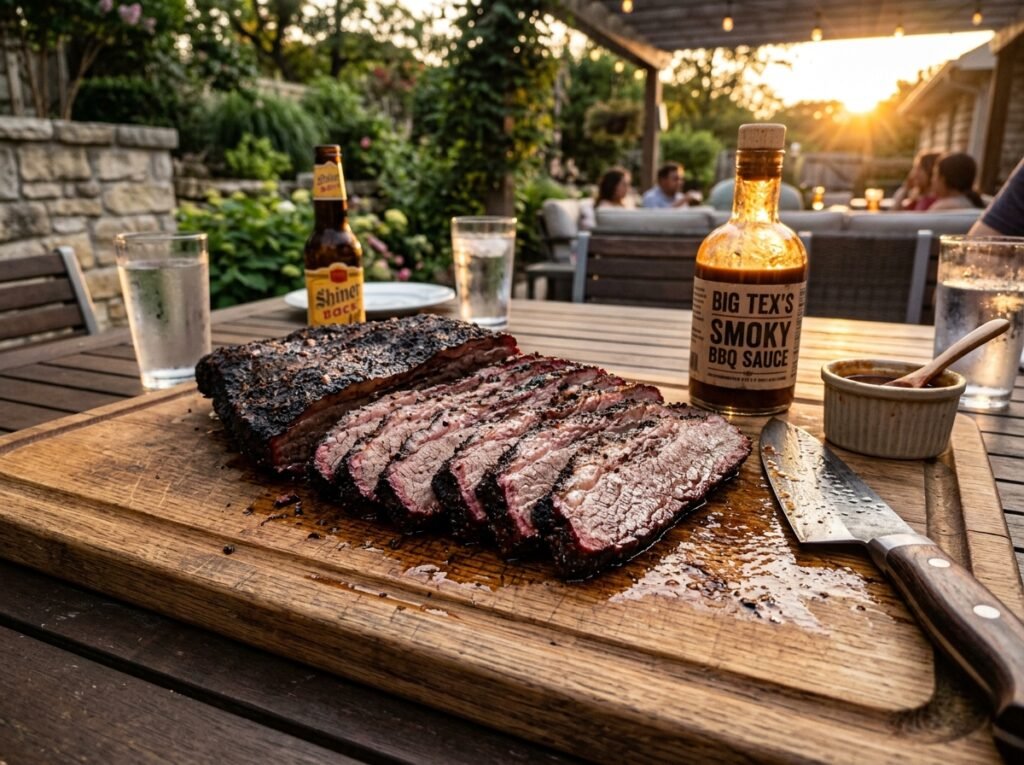
Recipe 7 — Grilled BBQ Beef Brisket Flat
You do not need a 200-gallon offset smoker to make brisket. A whole brisket flat — trimmed, rubbed, and cooked on a standard charcoal kettle grill using the snake method — delivers shockingly good results in about 5 hours. The key is patience: low indirect heat until the internal temp reaches 203°F (95°C), then a long rest wrapped in butcher paper. Sliced thin against the grain, it is smoky, beefy, and tender enough to pull apart with your fingers. This recipe makes you the hero of every Fourth of July.
WPRM Data Block:
- Prep Time: 25 minutes
- Cook Time: 5 hours
- Total Time: 5 hours 25 minutes (plus 1-hour rest)
- Yield: 8–10 servings
- Cooking Method: Smoking on charcoal kettle (snake method)
- Key Flavor Theme: Deeply beefy, smoky, savory, rich
Common Mistakes That Ruin Backyard BBQ
| The Mistake | What Actually Happens (The Science) | The Fix |
|---|---|---|
| Putting BBQ sauce on at the start of the cook | Sugars in the sauce pyrolyze above 300°F (149°C), turning caramel into bitter carbon; you get burnt, acrid bark | Apply sauce only during the last 15–20 minutes of cooking, or serve it on the side |
| Opening the grill lid constantly to “check” | Each lid lift drops the grill temperature by 20–50°F, extending cook time and disrupting steady thermal conditions | Trust your thermometer, not your eyes; only open the lid when you need to flip or sauce |
| Cooking chicken directly over high flame the whole time | Outside char develops long before the interior reaches 165°F (74°C); you get blackened skin over raw, bloody meat | Use a two-zone setup — cook through on the indirect side, then sear directly over flame at the end |
| Skipping the rest period for brisket and pork | Juices are still concentrated in the center; slicing immediately causes them to pour out onto the cutting board instead of redistributing | Rest large cuts for at least 30 to 60 minutes, wrapped in butcher paper or foil, before slicing |
| Using thin, watery commercial BBQ sauce as a basting liquid | The high water content steams the surface, preventing bark formation and diluting the smoky flavor you spent hours building | Use thick, reduced sauces for basting; thin vinegar-based sauces work better as finishing drizzles or dipping sauces |
| Not trimming excess fat before cooking brisket | Thick fat caps insulate the meat unevenly, creating pockets of rendered fat that pool and prevent even smoke penetration | Trim the fat cap to roughly ¼ inch (6mm) before rubbing, allowing even heat and smoke exposure across the surface |
The Master Grill Zone Technique — Prose Method
Every great BBQ cookout depends on one foundational skill: setting up a two-zone fire. Without it, you are just burning meat over flames and hoping for the best. With it, you have complete control over the cooking process from start to finish.
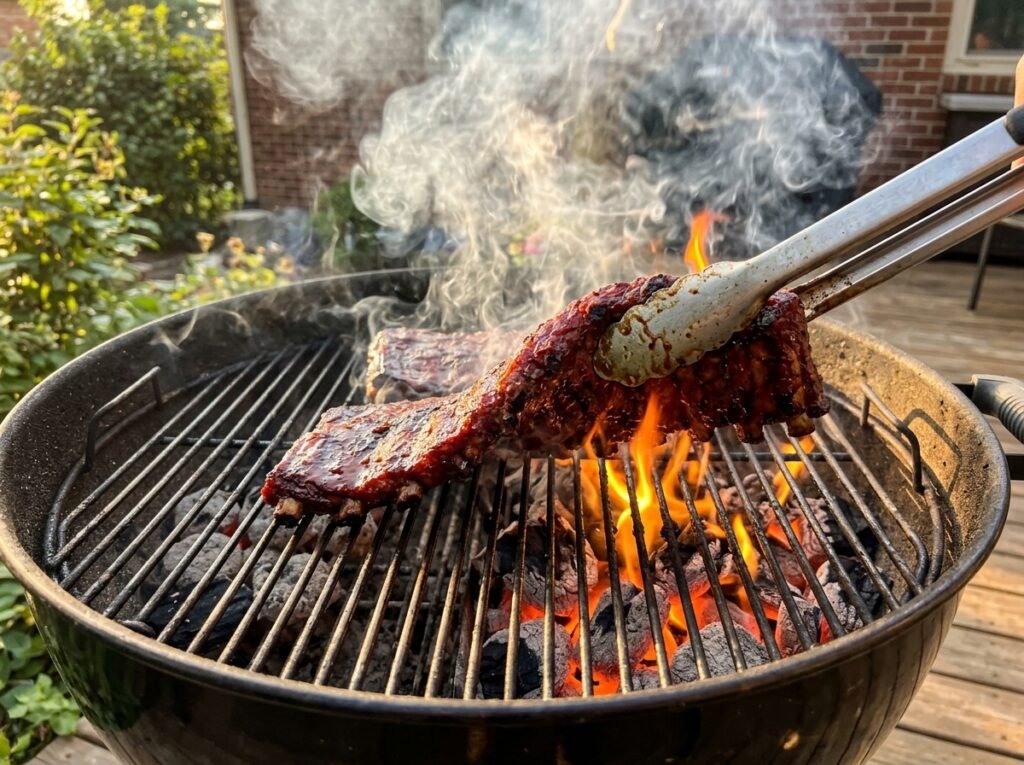
Here is how it works on a standard charcoal kettle grill like the Weber 22-inch. Open the bottom vents fully and light a chimney starter filled with charcoal. Wait 15 minutes until the top coals are fully ashed over — they should glow orange with a thin layer of white ash. Pour those lit coals onto only one side of the grill, creating a concentrated mound of intense direct heat on the left half and an empty, cooler zone on the right half. That is your two-zone setup: direct heat for searing, indirect heat for slow cooking.
Place your meat — whether it is ribs, chicken quarters, or a brisket flat — on the cooler indirect side first, with the lid on and the top vent positioned directly over the meat. This forces the hot air and smoke to travel across the food before exiting, creating a convection oven effect inside the kettle. The temperature inside should stabilize between 225°F and 275°F (107°C and 135°C) depending on how much charcoal you used and how open the vents are.
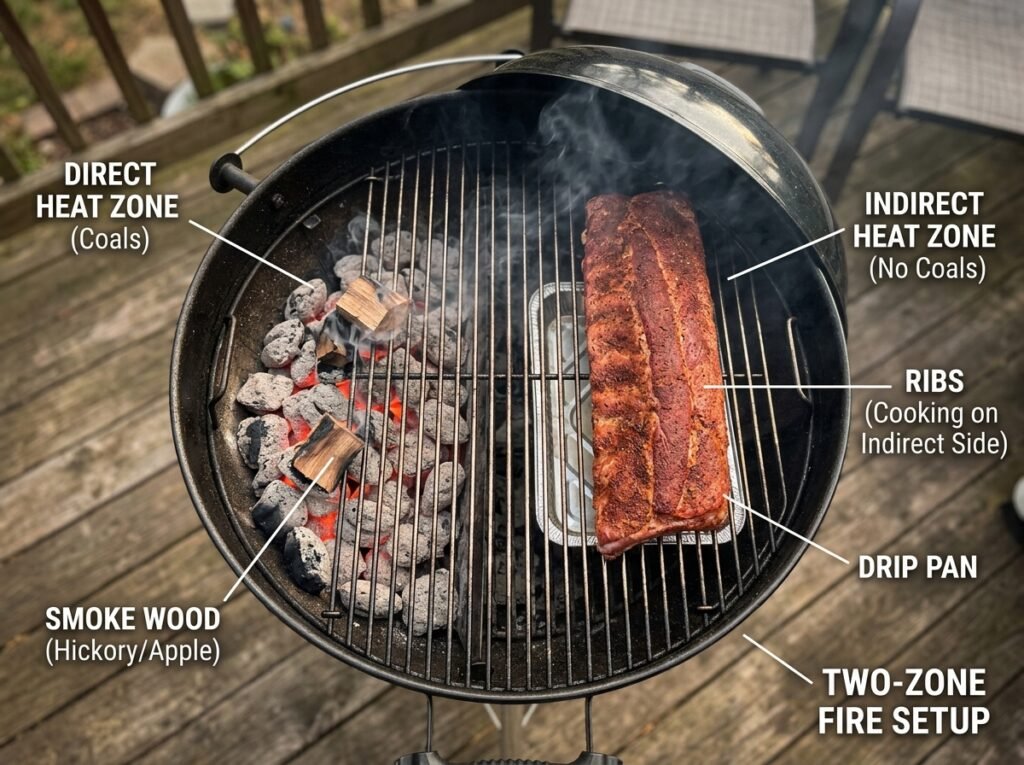
Leave the meat alone on the indirect side for the majority of the cook. Resist every urge to open the lid and poke at it. When the internal temperature is within about 10 degrees of your target, move the meat directly over the coals for a final sear. This is where the bark develops, the sugars caramelize, and the surface transforms into that dark, craggy, intensely flavorful crust. Watch it closely here — direct heat moves fast, and what took hours to build can go from perfect to burnt in 60 seconds

Perfect Crispy Air Fryer Chicken Wings
Ingredients
Equipment
Method
- Remove your chicken wings from their retail packaging and place them onto a clean cutting board. Take multiple layers of heavy-duty paper towels and press down firmly on the meat to absorb all visible surface moisture. For the absolute best results, arrange the wings in a single layer on a wire rack set over a baking sheet and leave them uncovered in your refrigerator for 2 hours to dry out the skin tissues.
- In a small mixing bowl, thoroughly combine the kosher salt, garlic powder, smoked paprika, black pepper, and aluminum-free baking powder. Place your dried wings into a separate large bowl and sprinkle the seasoning mixture evenly over the poultry. Toss the wings vigorously until every square inch of skin is lightly and evenly coated with the dust.
- Preheat your air fryer to 360°F / 182°C for 5 full minutes. Lightly spritz the bottom of the clean air fryer basket with avocado oil spray to prevent skin adhesion. Arrange the seasoned chicken wings in a single, uncrowded layer, ensuring they do not touch. Slide the basket into place and cook at this temperature for 15 minutes to melt away the fat layers under the skin.
- Pull out the basket and use a pair of silicone tongs to flip each individual wing over. Increase the air fryer temperature setup to 400°F / 204°C and cook for an additional 10 to 12 minutes. This rapid thermal energy transfer activates the Maillard reaction, transforming the rendered skin into an ultra-crispy, deep golden brown shell.
- Remove the blistering hot wings immediately from the basket and transfer them into a clean, warm stainless steel mixing bowl. Pour your choice of buffalo sauce or wing glaze down the inside walls of the bowl and toss the wings quickly until coated. Serve immediately to enjoy the ultimate crunch before the moisture from the sauce can soften the crust.
Notes
Chef John’s Insight
There is a reason barbecue has never gone out of fashion in this country. It is not fast. It is not convenient. It asks you to stand in the heat for hours, tending a fire, checking temperatures, adjusting vents. And that is exactly the point. In a world that rewards speed and efficiency, barbecue demands patience. It demands that you slow down enough to notice when the smoke turns from white and acrid to thin and blue. It demands that you trust a process you cannot rush. And when you finally pull that meat apart and see the steam rise and hear the people you love reach for a second helping before they have finished the first — that is when you understand what this whole thing is really about.
— Chef John, Food Hacks Hub
Nutrition & Food Safety Guide
Estimated Nutrition Per Serving (Averaged Across Standard Meat Recipes)
| Nutrient | Per Serving (approx.) |
|---|---|
| Calories | 450–620 kcal |
| Protein | 34–45g |
| Total Fat | 24–38g |
| Saturated Fat | 8–14g |
| Total Carbohydrates | 8–18g |
| Sodium | 680–1,050mg |
| Cholesterol | 110–160mg |
Values are estimates based on standard cuts with dry rub and moderate BBQ sauce. Exact nutrition varies by recipe, cut, and sauce amount.
USDA Food Safety Temperature Guide
| Protein | USDA Minimum Safe Temp | BBQ Target Temp | Notes |
|---|---|---|---|
| Pork ribs | 145°F (63°C) | 195–203°F (90–95°C) | USDA safe at 145°F, but collagen does not fully convert to gelatin until 195°F+ |
| Pork shoulder (pulled) | 145°F (63°C) | 195–203°F (90–95°C) | Same principle — you are cooking for texture, not just safety |
| Chicken (quarters/pieces) | 165°F (74°C) | 175–180°F (79–82°C) | Dark meat is better slightly above minimum for tenderness |
| Beef brisket | 145°F (63°C) | 200–205°F (93–96°C) | Brisket must reach 200°F+ for the collagen breakdown that creates tenderness |
| The Danger Zone | 40°F–140°F (4°C–60°C) | — | Never leave cooked BBQ at room temperature beyond 2 hours; 1 hour if outdoor temps exceed 90°F (32°C) |
USDA minimum safe temperature guidelines
Storage & Reheating Matrix
| Leftover Type | Refrigerator | Freezer | Best Reheat Method |
|---|---|---|---|
| Pulled pork (shredded, sauced) | Up to 4 days | Up to 3 months (portioned in freezer bags with juices) | Low oven at 250°F (121°C) in a covered foil pan with a splash of apple cider vinegar; 20–25 minutes |
| Pulled pork (shredded, unsauced) | Up to 4 days | Up to 3 months | Same low oven method; add sauce or vinegar mop after reheating |
| BBQ chicken (bone-in pieces) | Up to 3 days | Up to 2 months | Oven at 325°F (163°C) on a wire rack over a sheet pan, covered with foil for the first 15 minutes, then uncovered to re-crisp skin |
| Ribs (bone-in, sauced) | Up to 4 days | Up to 2 months (wrap individually in foil, then freezer bag) | Low oven at 275°F (135°C) wrapped in foil with a tablespoon of water, 25–30 minutes until internal temp reaches 165°F (74°C) |
| Brisket (sliced) | Up to 5 days | Up to 3 months (vacuum-seal slices with a thin layer of rendered fat or beef broth) | Low oven at 250°F (121°C) in a foil pouch with a splash of beef broth; 15–20 minutes. Do not microwave — it will turn leathery |
FAQ — Real Questions, Straight Answers
Q: Does a gas grill produce real smoke flavor?
Not on its own. Propane burns clean, which means no smoke. However, you can add genuine smoke flavor to any gas grill by using a small smoker box filled with dry wood chips (soaked for 30 minutes is optional — many pitmasters prefer dry chips for faster smoke production). Place the box directly over a burner on high heat, close the lid, and wait for visible smoke. Then reduce the heat and add your meat. You will not get the deep penetration of a dedicated smoker, but you will taste real wood smoke on the surfaces.
Q: How do I keep chicken from drying out on the grill?
The two most important moves are using a two-zone fire and cooking dark meat with the bone in and skin on. Start the chicken on the indirect side where the temperature is lower and more even. The bone insulates the meat nearest to it, and the skin acts as a self-basting barrier that locks in moisture. Do not cook past 175°F (79°C) for dark meat or 165°F (74°C) for breast meat. And always, always let it rest for 5 to 10 minutes before cutting into it.
Q: What is the “Texas Crutch” and should I use it?
The Texas Crutch is wrapping meat — typically brisket or ribs — in aluminum foil (or butcher paper) partway through the cook, usually when the internal temperature hits around 150°F to 165°F (65°C to 74°C). This is the stall zone where evaporative cooling from surface moisture balances out the heat input, and the temperature stops climbing for hours. Wrapping traps that moisture, pushes through the stall faster, and keeps the meat juicy. The trade-off is that the bark softens slightly. Butcher paper is the better choice — it breathes enough to preserve some bark while still accelerating the cook.
Q: Can I prep any of these recipes the night before?
Absolutely, and you should. Dry rubs work best when applied the night before and refrigerated uncovered on a wire rack. The salt draws out surface moisture overnight, which then gets reabsorbed along with the seasoning, creating a deeper flavor and a drier surface for better bark formation. Pulled pork can be smoked a full day ahead, shredded, and reheated in a low oven the day of your cookout. In fact, pulled pork almost always tastes better the next day after the flavors have had time to meld during the rest.
What to Pair With These Cookout Recipes
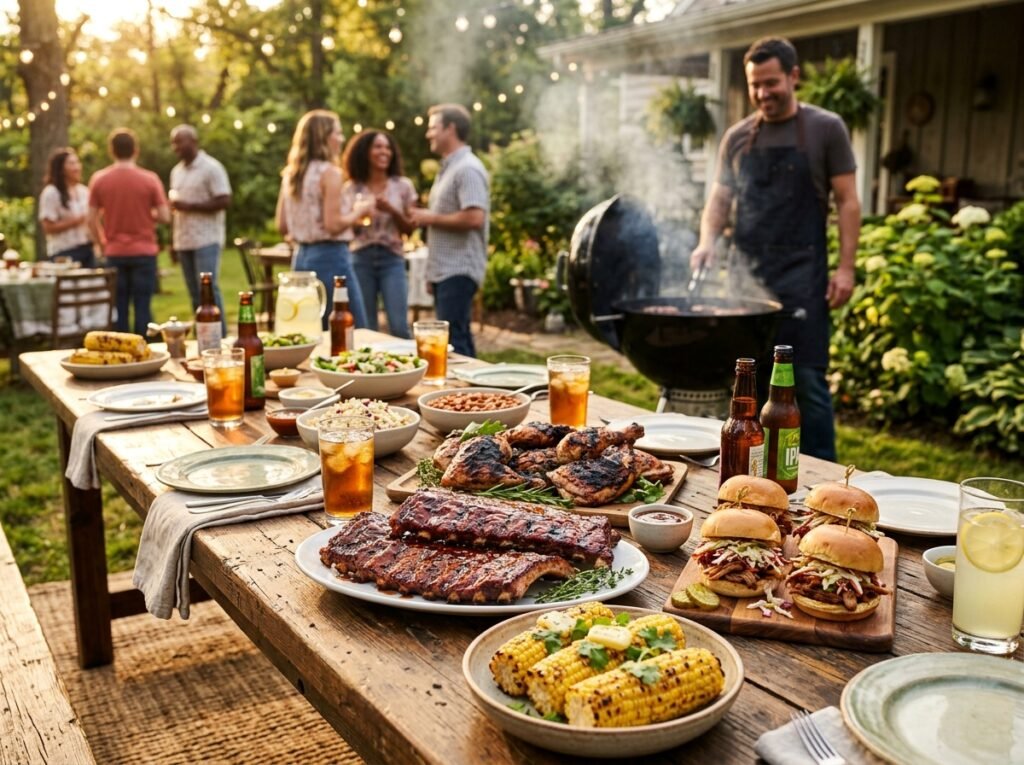
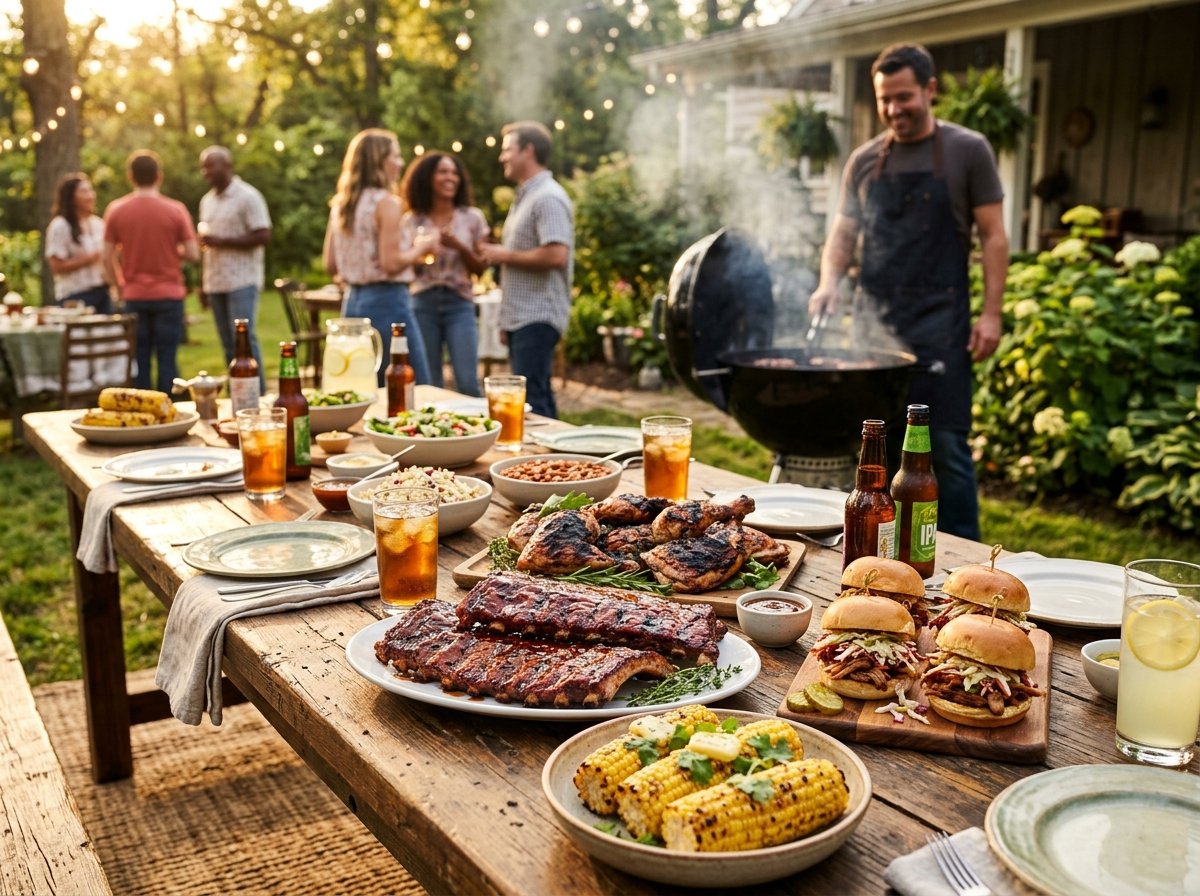
Every great BBQ spread needs a couple of sides that balance the richness of slow-smoked meat. A batch of smoky grilled corn on the cob — charred directly over the flames, then slathered with mayo, cotija cheese, chili powder, and a squeeze of lime — takes about 15 minutes and disappears faster than the main course. For a drink pairing that actually cools you down on a hot July afternoon, nothing beats a batch of fresh-squeezed watermelon agua fresca — just watermelon, lime, a touch of sugar, and cold water blended and strained. Both are easy enough to prep while your meat is on the smoker, and they turn a simple backyard cookout into something genuinely memorable.
Best Loaded Chicken Taco Fries Recipe
Best Crack Chicken Stuffed Bread Recipe